
United States Safes and Vaults Market Size, Share, Trends and Forecast by Type, Function Type, Application, End User, and Region, 2026-2034
United States Safes and Vaults Market Summary:
The United States safes and vaults market size was valued at USD 963 Million in 2025 and is projected to reach USD 1,464 Million by 2034, growing at a compound annual growth rate of 4.76% from 2026-2034.
The market is driven by rising security concerns among residential and commercial users, increasing incidences of burglary and theft, growing awareness about comprehensive asset protection solutions, and stringent regulatory requirements for secure storage in financial institutions. Additionally, technological advancements in locking mechanisms, expanding demand from the banking and retail sectors, and the growing emphasis on responsible firearm storage practices are collectively bolstering the United States safes and vaults market share.
Key Takeaways and Insights:
- By Type: Mechanical dominates the market with a share of 52% in 2025, driven by consumer preference for reliability, durability, and power-independent operation, making traditional dial combination locks ideal for long-term asset protection.
- By Function Type: Cash management safes lead the market with a share of 30% in 2025, owing to extensive adoption across retail, financial institutions, and commercial enterprises requiring efficient cash handling and automated currency management.
- By Application: Commercial represents the largest segment with a market share of 63% in 2025, driven by heightened security demands across banking, retail, hospitality, and corporate sectors seeking comprehensive asset protection solutions.
- By End User: Banking sector dominates the market with a share of 55% in 2025, owing to stringent regulatory compliance, substantial cash handling operations, and the need to secure sensitive documents and high-value assets.
- Key Players: The United States safes and vaults market exhibits a consolidated competitive structure, with established domestic manufacturers and international players competing across premium and mid-range segments through product innovation, distribution network expansion, and after-sales service differentiation.
The United States safes and vaults market is witnessing robust growth driven by escalating security concerns across residential and commercial sectors. Rising crime rates and burglary incidents have heightened awareness about protecting valuables, cash, firearms, and important documents from unauthorized access and theft. The banking and financial services sector continues to invest heavily in advanced vault systems to comply with stringent regulatory mandates and ensure comprehensive customer asset protection. Furthermore, growing disposable incomes have enabled households to invest in premium security solutions offering enhanced protection features. According to reports, in December 2025, Champion Safe Company reported a 130% year-over-year increase in orders from Balport Lock and Safe, highlighting growing demand for high-security safes across U.S. residential and retail markets. Moreover, the retail sector expansion, coupled with increasing cash transaction volumes in certain business segments, is creating sustained demand for depository and cash management safes across the country.
United States Safes and Vaults Market Trends:
Integration of Smart Technology in Security Solutions
The market is experiencing a significant shift toward technologically advanced safes incorporating smart features and connectivity options. Manufacturers are integrating smartphone compatibility, remote monitoring capabilities, and real-time alert systems into their product offerings. These innovations enable users to monitor safe access, receive notifications about unauthorized attempts, and manage multiple units from centralized platforms. As per sources, in January 2026, Lockly announced its Smart Safe XL with AI-enhanced biometric access, keypad, fingerprint, and smartphone app control, highlighting growing U.S. demand for connected, technologically advanced safe solutions. Furthermore, the convergence of traditional security mechanisms with digital interfaces is attracting tech-savvy consumers seeking enhanced control over their valuable storage solutions while maintaining robust physical protection standards.
Growing Demand for Fire and Water-Resistant Storage Solutions
Consumer preferences are increasingly shifting toward multi-functional safes offering comprehensive protection against various threats beyond burglary. Fire-resistant and water-resistant safes have gained substantial traction as natural disasters and accidental damages pose significant risks to important documents, digital media, and irreplaceable valuables. Manufacturers are responding by developing products with enhanced insulation materials, superior sealing mechanisms, and certified protection ratings. In April 2025, Master Lock unveiled its Premium 2‑Hour Fireproof Safe line engineered to resist extreme fire, water, and impact, underscoring strong consumer demand for robust environmental hazard protection.
Expansion of Gun Safe Segment Amid Responsible Ownership Emphasis
The emphasis on responsible firearm ownership and safe storage practices is driving notable growth in the gun safes and vaults segment. Legislative initiatives promoting secure firearm storage, combined with increasing awareness among gun owners about preventing unauthorized access, are accelerating market expansion. According to sources, in 2025, NSSF’s “Gun Storage Check Week,” held during National Suicide Prevention Month, reminded U.S. gun owners to review secure firearm storage practices, partnering with AFSP and VA to promote responsible storage. Manufacturers are developing specialized products with quick-access features for home defense scenarios while maintaining child-resistant designs.
Market Outlook 2026-2034:
The United States safes and vaults market is poised for steady revenue growth during the forecast period, supported by persistent security concerns, technological advancements, and expanding end-user applications. The commercial sector, particularly banking and retail establishments, will continue driving substantial demand for sophisticated vault systems and cash management solutions. Residential adoption is expected to accelerate as homeowners increasingly prioritize protecting valuables, documents, and firearms. Manufacturers focusing on innovation, product diversification, and enhanced customer service capabilities are well-positioned to capitalize on emerging opportunities across various market segments. The market generated a revenue of USD 963 Million in 2025 and is projected to reach a revenue of USD 1,464 Million by 2034, growing at a compound annual growth rate of 4.76% from 2026-2034.
United States Safes and Vaults Market Report Segmentation:
|
Segment Category |
Leading Segment |
Market Share |
|
Type |
Mechanical |
52% |
|
Function Type |
Cash Management Safes |
30% |
|
Application |
Commercial |
63% |
|
End User |
Banking Sector |
55% |
Type Insights:
To get more information on this market, Request Sample
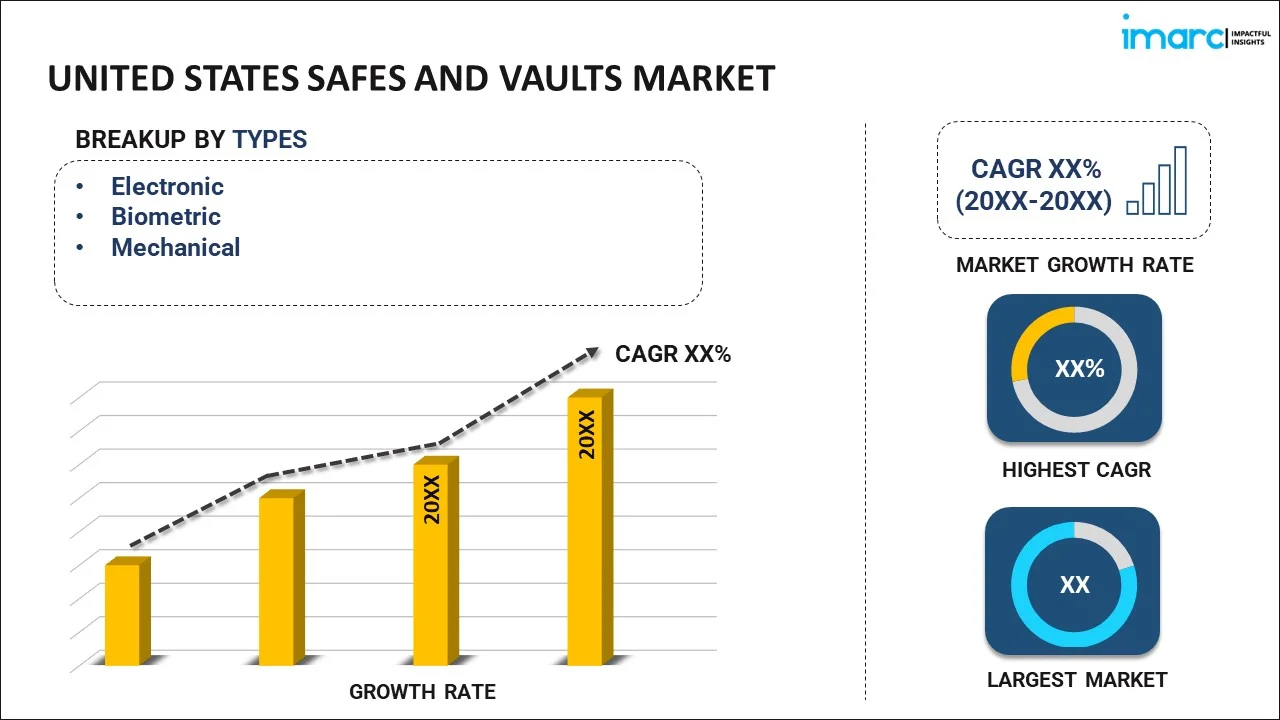
- Electronic
- Biometric
- Mechanical
Mechanical dominates with a market share of 52% of the total United States safes and vaults market in 2025.
Mechanical commands the leading position in the United States market, attributed to their time-tested reliability, operational simplicity, and proven durability across decades of usage. These products do not require batteries or electronic components, eliminating concerns about power failures or technological malfunctions during critical access situations. Users consistently appreciate the straightforward combination dial or key-based mechanisms that provide dependable security without maintenance complexities or technological vulnerabilities. According to reports, The Key Safe Company entered the U.S. market with its Wolflok mechanical key safe, featuring patented illuminated push-button technology and achieving LPCB LPS1175 Issue 8 A10 & B1 security ratings.
Mechanical offers an exceptional longevity and robust construction, making them a preferred choice for long-term storage applications in both residential and commercial settings across the country. The absence of electronic vulnerabilities appeals strongly to security-conscious consumers wary of potential hacking, system failures, or obsolescence concerns. Cost-effectiveness compared to advanced electronic alternatives, combined with lower maintenance requirements and widespread availability, further strengthens the segment's dominant market position across diverse customer demographics.
Function Type Insights:
- Cash Management Safes
- Depository Safes
- Gun Safes and Vaults
- Vaults and Vault Doors
- Media Safes
- Others
Cash management safes lead with a share of 30% of the total United States safes and vaults market in 2025.
Cash management safes dominate the function type segment, driven by extensive deployment across retail establishments, financial institutions, and commercial enterprises handling significant cash volumes in their daily operations. These specialized safes incorporate advanced features facilitating secure cash deposits, organized storage compartments, and efficient retrieval processes essential for streamlined business operations. Their robust design accommodates high-frequency access requirements while maintaining stringent security protocols protecting against internal shrinkage and external theft threats.
The expanding retail landscape and persistent cash usage across various transaction categories sustain strong demand for comprehensive cash management solutions throughout the country. Businesses increasingly recognize the critical importance of minimizing cash shrinkage, streamlining accounting processes, and ensuring employee safety through secure cash handling equipment. Advanced models offering smart counting capabilities, currency validation features, and detailed reporting functionalities are gaining substantial traction among enterprises seeking operational efficiency alongside robust security measures.
Application Insights:
- Residential
- Commercial
Commercial exhibits a clear dominance with a 63% share of the total United States safes and vaults market in 2025.
Commercial dominates the market, encompassing substantial demand from diverse business verticals including banking, retail, hospitality, healthcare, corporate offices, and manufacturing facilities nationwide. Commercial establishments require comprehensive security infrastructure protecting cash reserves, sensitive documents, proprietary data storage media, and valuable inventory assets. Regulatory compliance mandates in financial services and other heavily regulated sectors necessitate significant investment in certified vault systems meeting specific security standards and audit requirements. According to reports, in January 2024, RBR Data Services reported Glory held 54% of the U.S. teller cash recycler market, demonstrating high adoption of automated cash-handling and secure storage solutions by commercial financial institutions.
Commercial users typically demand higher-capacity solutions incorporating advanced features supporting multiple authorized users, comprehensive audit trail capabilities, and seamless integration with broader security management systems. The substantial scale of commercial operations justifies considerable investments in premium security equipment, driving higher average transaction values compared to residential purchases across all product categories. Growing business expansion activities, new establishment openings, and increasing emphasis on asset protection continue propelling robust segment growth throughout the forecast period.
End User Insights:
- Banking Sector
- Non Banking Sector
Banking sector leads with a market share of 55% of the total United States safes and vaults market in 2025.
The banking sector represents the largest end-user segment, reflecting the industry's fundamental and non-negotiable requirement for secure storage infrastructure protecting critical assets. Banks deploy extensive vault systems safeguarding substantial cash reserves, customer valuables stored in safe deposit boxes, important legal documents, and sensitive data storage equipment. Stringent regulatory frameworks mandate specific security standards that financial institutions must consistently maintain, ensuring steady and predictable demand for compliant vault solutions and regular equipment upgrades.
The banking sector continuously enhances their security infrastructure responding to evolving threat landscapes, technological advancements, and increasingly sophisticated criminal methodologies. Branch network expansions, particularly in underserved regions and growing suburban communities, create ongoing demand for new vault installations and security system deployments. Additionally, the expanding wealth management and private banking segments drive increased safe deposit box capacity requirements as affluent customers increasingly seek secure storage solutions for valuable assets outside their primary residences.
Regional Insights:
To get more information on this market, Request Sample
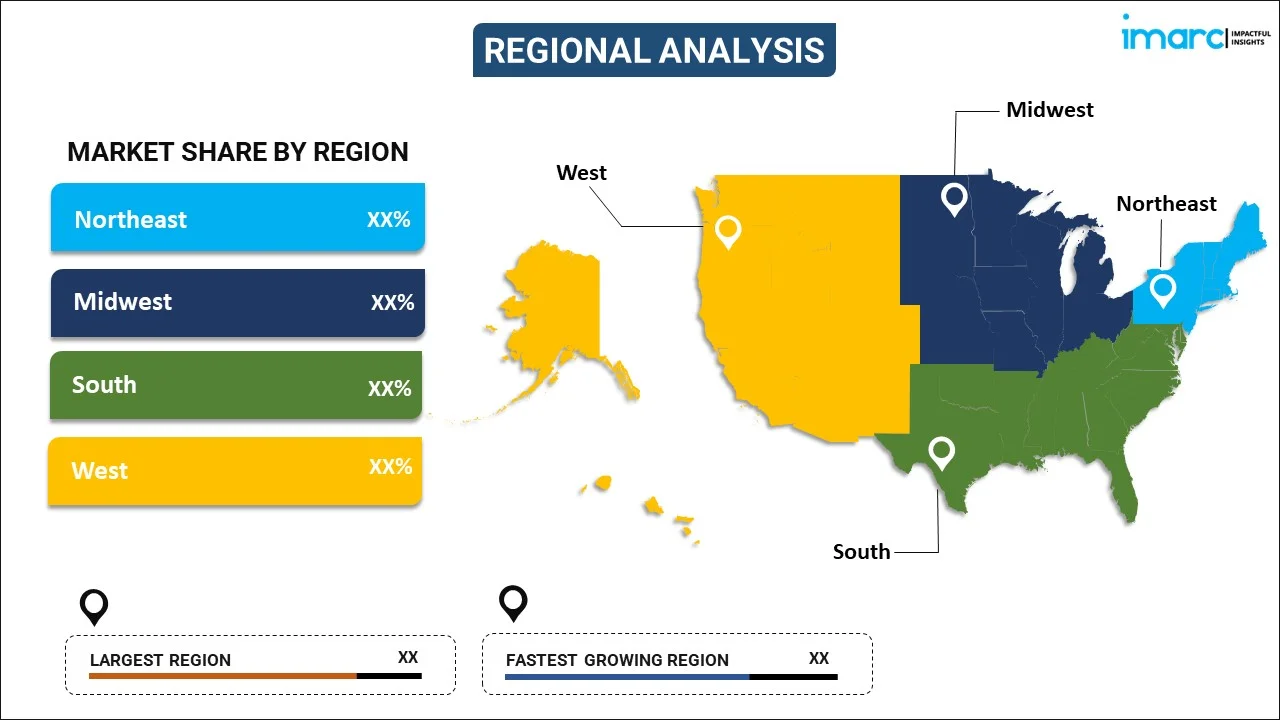
- Northeast
- Midwest
- South
- West
Northeast represents a significant market for safes and vaults, driven by concentrated banking and financial services infrastructure in major metropolitan areas. High population density, substantial commercial activity, and elevated property crime concerns in urban centers fuel demand for security solutions. The region's affluent demographics support premium product adoption, while established retail and hospitality sectors require comprehensive cash management systems.
Midwest market benefits from a strong manufacturing base and expanding commercial development driving security equipment demand. The region's agricultural economy creates specialized storage needs, while growing suburban communities increasingly invest in residential safes. Banking sector expansion in secondary cities, combined with robust retail activity, supports steady market growth across various product categories and price segments.
South represents a rapidly growing market driven by population migration, economic development, and expanding commercial infrastructure. The region's strong firearm ownership culture significantly contributes to gun safe demand. Growing banking networks, retail expansion, and increasing residential construction activities create substantial opportunities. Rising security awareness among homeowners and businesses propels adoption across urban and suburban areas.
West demonstrates strong market potential driven by technology-centric demographics favoring advanced electronic and smart safe solutions. High real estate values and affluent populations support premium product adoption. The region's active banking sector, thriving retail environment, and substantial firearm ownership rates collectively drive demand. California and other populous states represent major consumption centers within this regional market.
Market Dynamics:
Growth Drivers:
Why is the United States Safes and Vaults Market Growing?
Escalating Crime Rates and Asset Protection Awareness
The United States safes and vaults market is substantially driven by escalating security consciousness among residential and commercial users responding to persistent crime threats across the nation. Burglary, theft, and property crimes continue affecting communities nationwide, compelling individuals and businesses to invest in reliable security solutions protecting valuables, cash, documents, and firearms from unauthorized access. According to reports, in 2024, the FBI reported that property crime declined 13.1% and violent crime fell 10.3% during January–June 2024, highlighting that despite recent decreases, crime remains a significant concern prompting continued investment in secure storage solutions. Moreover, media coverage of criminal incidents heightens public awareness about vulnerability, accelerating protective measure adoption.
Stringent Banking and Financial Sector Security Mandates
Rigorous regulatory frameworks governing the banking and financial services sector mandate specific security infrastructure standards, creating consistent demand for certified vault systems and safes across the country. Financial institutions must comply with federal and state regulations requiring secure storage for cash reserves, customer valuables, and sensitive documents at all operational locations. Regulatory audits assess compliance with prescribed security standards, compelling institutions to maintain and upgrade their vault equipment regularly. As per sources, JPMorgan Chase announced plans to phase out all U.S. safe deposit boxes, highlighting evolving institutional approaches to secure storage while reinforcing demand for alternative certified vault and safe solutions.
Increasing Focus on Secure Firearm Storage Practices
The growing emphasis on responsible firearm ownership and safe storage practices represents a significant growth driver for the gun safes and vaults segment nationwide. Legislative initiatives at state and local levels promoting or mandating secure firearm storage, combined with grassroots advocacy for gun safety, influence purchasing decisions among firearm owners substantially. Parents and households with children increasingly recognize the critical importance of preventing unauthorized access to firearms, driving demand for child-resistant and quick-access safe solutions. Educational campaigns promoting secure storage further support market expansion.
Market Restraints:
What Challenges the United States Safes and Vaults Market is Facing?
High Initial Investment Costs
The substantial upfront costs associated with quality safes and vault systems present barriers for price-sensitive consumers and small businesses with limited budgets. Premium products offering advanced features, superior fire ratings, and robust construction command significant prices that may deter potential buyers seeking basic protection solutions. Budget constraints often lead to purchase deferrals or selection of lower-quality alternatives.
Space and Installation Constraints
Physical space limitations in residential settings and commercial establishments restrict safe adoption, particularly for larger vault systems requiring dedicated installation areas. Structural considerations, including floor load capacity and anchoring requirements, complicate installations in certain buildings. Rental properties and apartment dwellers face additional restrictions limiting permanent security equipment installation, reducing addressable market potential.
Competition from Alternative Security Solutions
The market faces competitive pressure from alternative security approaches including surveillance systems, alarm services, and off-site storage options such as bank safe deposit boxes and specialized storage facilities. Consumers evaluating security investments may allocate budgets toward comprehensive alarm monitoring services or advanced camera systems rather than physical safes, particularly when protecting lower-value items.
Competitive Landscape:
The United States safes and vaults market features a diverse competitive structure comprising established domestic manufacturers, international players, and specialized regional producers serving distinct market segments. Competition occurs across multiple dimensions including product quality, technological innovation, pricing strategies, distribution network coverage, and customer service capabilities. Leading market participants leverage brand recognition, extensive dealer networks, and comprehensive product portfolios spanning residential and commercial applications. Innovation efforts focus on integrating smart technologies, enhancing fire and burglary ratings, and developing user-friendly features differentiating offerings in crowded market segments. Manufacturers increasingly emphasize after-sales support, warranty programs, and installation services to build customer loyalty and competitive advantage.
Recent Developments:
- In August 2024, Console Vault, LLC launched its Elite Electronic Lock, an advanced in-vehicle safe featuring a 10-digit programmable keypad, USB charging, and three-month battery life, enhancing convenience and security while addressing growing consumer demand for intelligent vehicle-safe solutions.
United States Safes and Vaults Market Report Coverage:
| Report Features | Details |
|---|---|
| Base Year of the Analysis | 2025 |
| Historical Period | 2020-2025 |
| Forecast Period | 2026-2034 |
| Units | Million USD |
|
Scope of the Report |
Exploration of Historical Trends and Market Outlook, Industry Catalysts and Challenges, Segment-Wise Historical and Future Market Assessment:
|
| Types Covered | Electronic, Biometric, Mechanical |
| Function Types Covered | Cash Management Safes, Depository Safes, Gun Safes and Vaults, Vaults and Vault Doors, Media Safes, Others |
| Applications Covered | Residential, Commercial |
| End Users Covered | Banking Sector, Non Banking Sector |
| Region Covered | Northeast, Midwest, South, West |
| Customization Scope | 10% Free Customization |
| Post-Sale Analyst Support | 10-12 Weeks |
| Delivery Format | PDF and Excel through Email (We can also provide the editable version of the report in PPT/Word format on special request) |
Key Questions Answered in This Report
The United States safes and vaults market size was valued at USD 963 Million in 2025.
The United States safes and vaults market is expected to grow at a compound annual growth rate of 4.76% from 2026-2034 to reach USD 1,464 Million by 2034.
Mechanical held the largest market share, attributed to proven reliability, operational simplicity, absence of battery dependencies, cost-effectiveness compared to electronic alternatives, lower maintenance requirements, and widespread consumer preference for traditional locking mechanisms offering durable long-term security solutions.
Key factors driving the United States safes and vaults market include rising security concerns amid crime incidents, regulatory compliance requirements in the banking sector, growing emphasis on responsible firearm storage, technological advancements in locking systems, and expanding commercial infrastructure.
Major challenges include high initial investment costs deterring budget-conscious buyers, space and installation constraints in residential and rental properties, competition from alternative security solutions, consumer preference shifts toward electronic surveillance, and market saturation in certain segments.
Need more help?
- Speak to our experienced analysts for insights on the current market scenarios.
- Include additional segments and countries to customize the report as per your requirement.
- Gain an unparalleled competitive advantage in your domain by understanding how to utilize the report and positively impacting your operations and revenue.
- For further assistance, please connect with our analysts.
 Request Customization
 Speak to an Analyst
 Request Brochure
 Inquire Before Buying
Benefits of Customization
- Personalize this research
- Triangulate with your data
- Get data as per your format and definition
- Gain a deeper dive into a specific application, geography, customer, or competitor
- Any level of personalization
Get in Touch With Us
UNITED STATES
Phone: +1-201-971-6302
INDIA
Phone: +91-120-433-0800
UNITED KINGDOM
Phone: +44-753-714-6104
Email: sales@imarcgroup.com
Client Testimonials




.webp)




.webp)












