
United States Maritime Information Market Size, Share, Trends and Forecast by Application, End User, and Region, 2026-2034
United States Maritime Information Market Summary:
The United States maritime information market size was valued at USD 574.1 Million in 2025 and is projected to reach USD 935.6 Million by 2034, growing at a compound annual growth rate of 5.58% from 2026-2034.
The United States maritime information market is experiencing stable expansion as stakeholders across government and commercial sectors increasingly prioritize real-time vessel monitoring, data-driven decision-making, and operational efficiency. Growing investments in port modernization, digital transformation initiatives, and advanced tracking technologies are strengthening market dynamics. Rising maritime trade volumes, heightened security requirements, and the integration of artificial intelligence with legacy systems are also reshaping how organizations manage maritime operations, positioning the region as a leader in maritime intelligence solutions and driving sustained growth in market share.
Key Takeaways and Insights:
- By Application: Maritime information analytics dominates the market with a share of 36% in 2025, driven by increasing demand for predictive insights, route optimization, and fuel efficiency analytics that enable vessel operators and port authorities to make data-driven operational decisions.
- By End User: Commercial leads the market with a share of 61% in 2025, reflecting strong adoption across shipping companies, port operators, and logistics providers seeking enhanced cargo tracking, fleet management capabilities, and improved supply chain visibility.
- Key Players: Key players drive the United States maritime information market by investing in advanced analytics platforms, expanding satellite AIS coverage, developing AI-powered tracking solutions, and forming strategic partnerships to enhance real-time vessel monitoring capabilities across commercial and government sectors.
The United States maritime information market is advancing rapidly as digitalization transforms vessel tracking, port operations, and cargo logistics management. Maritime stakeholders increasingly rely on integrated platforms combining Automatic Identification System data, satellite communications, and predictive analytics to optimize operations and ensure regulatory compliance. The growing emphasis on supply chain visibility, environmental monitoring, and maritime security continues to drive adoption across diverse applications. Government agencies are prioritizing investments in comprehensive maritime domain awareness capabilities to enhance national security and border protection. In 2023, the U.S. Department of Transportation provided grants totaling USD 662 Million under the Port Infrastructure Development Program (PIDP), accelerating digital infrastructure deployment nationwide. Commercial operators are leveraging real-time intelligence solutions to reduce operational costs, improve vessel turnaround times, and enhance cargo tracking accuracy. The convergence of IoT sensors, cloud computing, and machine learning technologies is enabling unprecedented operational efficiency, positioning the United States as a global leader in maritime information services and driving sustained market growth throughout the forecast period.
United States Maritime Information Market Trends:
Artificial Intelligence and Machine Learning Integration in Maritime Analytics
The United States maritime information market is witnessing significant transformation through the integration of artificial intelligence and machine learning technologies into analytics platforms. These advanced capabilities enable predictive maintenance forecasting, automated anomaly detection, and intelligent route optimization that enhance operational efficiency across commercial and government applications. Maritime operators are increasingly adopting AI-powered solutions to process vast quantities of vessel data, weather information, and cargo tracking details in real-time. In November 2025, S&P Global completed its acquisition of ORBCOMM's Automatic Identification System business, expanding global vessel-tracking coverage and reinforcing its analytics value chain to deliver enhanced maritime intelligence services.
Satellite-Based AIS Expansion for Enhanced Global Vessel Tracking
Satellite-based Automatic Identification System technology is experiencing substantial expansion as maritime stakeholders demand comprehensive vessel visibility beyond coastal coverage areas. The deployment of advanced satellite constellations enables real-time tracking across open oceans, supporting enhanced maritime domain awareness and supply chain transparency. This technological evolution addresses limitations of terrestrial AIS networks while providing global coverage essential for international shipping operations. In November 2024, Kpler announced its acquisition of Spire Global’s business of Maritime for approximately USD 241 Million, significantly enhancing satellite AIS capabilities and strengthening real-time maritime data analytics offerings for commodity and shipping market participants.
Smart Port Digitalization and IoT Adoption
Smart port initiatives are reshaping the United States maritime information market as port authorities invest heavily in digital infrastructure, IoT sensors, and integrated management systems. These modernization efforts enable automated cargo handling, predictive berth scheduling, and enhanced terminal productivity through data-driven operations. The convergence of 5G connectivity, digital twin technology, and cloud-based platforms is accelerating port transformation nationwide. Advanced visualization tools and real-time monitoring capabilities are further strengthening operational decision-making while reducing vessel turnaround times and optimizing resource allocation across terminal facilities.
Market Outlook 2026-2034:
The United States maritime information market outlook remains highly favorable as technological innovation and regulatory developments continue shaping industry dynamics throughout the forecast period. Increasing investments in maritime security infrastructure, growing trade volumes through major ports, and expanding commercial applications are expected to sustain robust growth trajectories. The market generated a revenue of USD 574.1 Million in 2025 and is projected to reach a revenue of USD 935.6 Million by 2034, growing at a compound annual growth rate of 5.58% from 2026-2034. Government initiatives prioritizing maritime domain awareness, coupled with private sector investments in advanced analytics platforms, vessel tracking technologies, and port modernization projects, are expected to accelerate market expansion. The integration of emerging technologies including artificial intelligence, blockchain, and autonomous systems will continue transforming maritime operations, creating new opportunities for innovative solution providers while enhancing operational efficiency across the maritime ecosystem.
United States Maritime Information Market Report Segmentation:
|
Segment Category |
Leading Segment |
Market Share |
|
Application |
Maritime Information Analytics |
36% |
|
End User |
Commercial |
61% |
Application Insights:
To get detailed segment analysis of this market, Request Sample
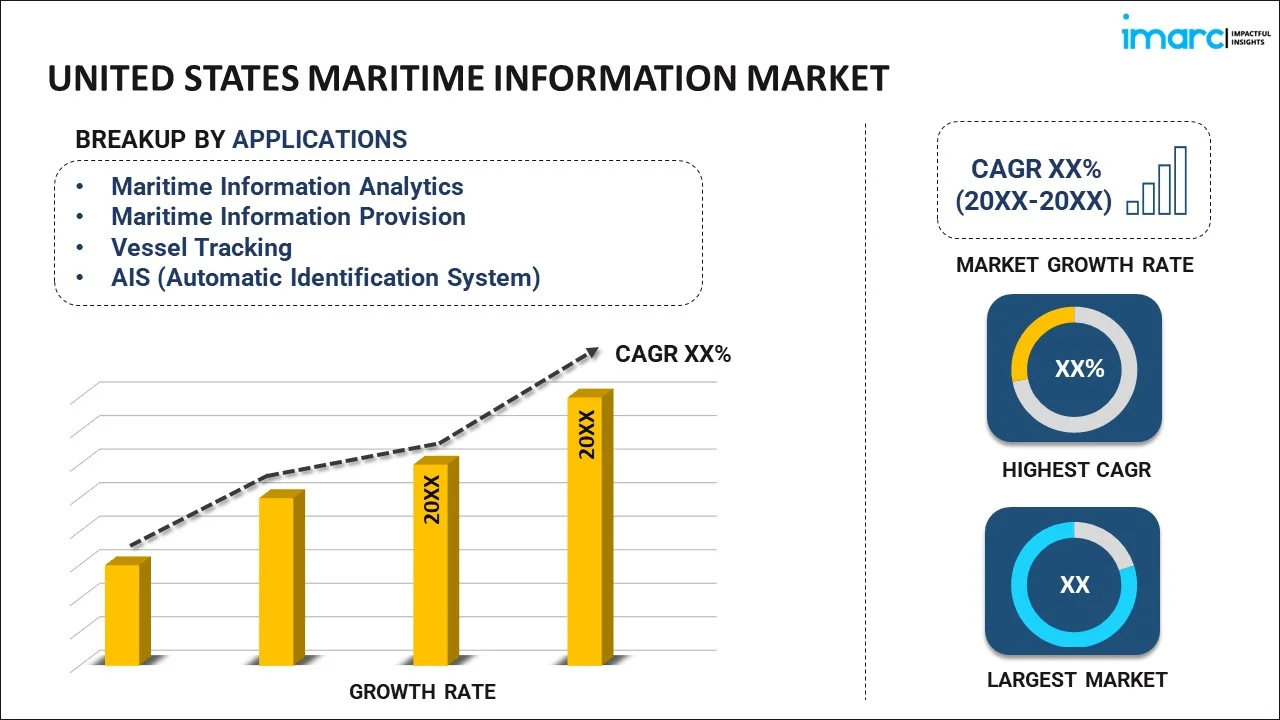
- Maritime Information Analytics
- Maritime Information Provision
- Vessel Tracking
- AIS (Automatic Identification System)
Maritime information analytics dominates with a market share of 36% of the total United States maritime information market in 2025.
Maritime information analytics has established clear dominance within the application segment as commercial operators and government agencies increasingly prioritize data-driven decision-making capabilities. The growing complexity of global supply chains, coupled with escalating requirements for operational visibility, has accelerated demand for sophisticated analytics platforms that transform raw maritime data into actionable intelligence. These solutions enable stakeholders to optimize vessel routing, predict maintenance requirements, assess cargo risks, and enhance overall fleet performance through advanced algorithmic processing and visualization capabilities.
The segment benefits from continuous technological advancement as artificial intelligence and machine learning capabilities become increasingly embedded within analytics platforms. Maritime operators leverage these tools to process vast datasets from multiple sources including AIS transponders, satellite imagery, weather systems, and port management platforms. In December 2024, Windward partnered with Dataminr to deliver real-time correlations between vessel behavior and geopolitical or weather events, demonstrating the industry's commitment to enhancing predictive analytics capabilities and providing comprehensive maritime intelligence solutions to commercial and government clients.
End User Insights:
- Government
- Defense
- Intelligence and Security
- Search and Rescue
- Government Agency
- Others
- Commercial
- Port Management
- Business Intelligence
- Commercial Fishing
- Commercial Shipping
- Hydrographic and Charting
- Commercial Offshore
- Others
Commercial leads with a share of 61% of the total United States maritime information market in 2025.
The commercial segment has established clear leadership within the end user category as shipping companies, port operators, logistics providers, and offshore energy companies increasingly deploy maritime information solutions to enhance operational efficiency and competitive positioning. The growing complexity of international trade, combined with customer expectations for real-time cargo visibility, has driven substantial investment in vessel tracking, fleet management, and supply chain analytics platforms across diverse commercial applications. Business intelligence capabilities enable commercial stakeholders to identify market trends, assess competitive dynamics, and optimize strategic planning processes.
Commercial users benefit from comprehensive maritime intelligence that enables optimized routing decisions, reduced fuel consumption, improved berth scheduling, and enhanced cargo security throughout the supply chain. Port management represents a particularly dynamic subsegment as terminal operators invest in smart port technologies to handle increasing trade volumes while meeting sustainability objectives. Commercial shipping and offshore energy operations further contribute to segment growth as operators seek advanced monitoring capabilities that enhance asset utilization, ensure regulatory compliance, and minimize operational risks across increasingly complex global maritime networks and interconnected supply chain ecosystems.
Regional Insights:
To get detailed segment analysis of this market, Request Sample
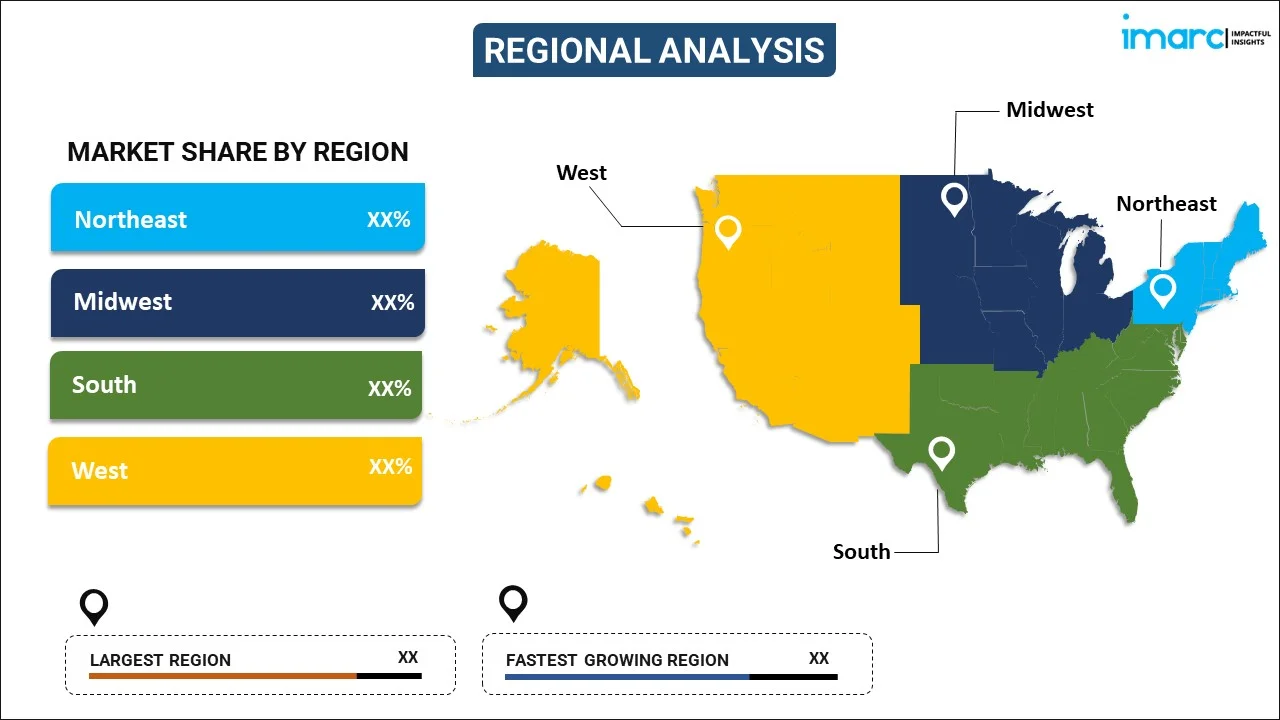
- Northeast
- Midwest
- South
- West
Northeast benefits from its strategic position along the Atlantic seaboard, hosting major container ports that serve densely populated metropolitan areas and facilitate substantial international trade flows. Maritime information demand is driven by congested waterways, complex vessel traffic management requirements, and growing investments in port modernization initiatives that enhance cargo handling efficiency and supply chain visibility across the region.
Midwest contributes to the maritime information market through its extensive inland waterway network and Great Lakes shipping activities that support agricultural exports and bulk commodity transportation. Maritime information solutions enable efficient barge traffic coordination, port scheduling optimization, and cargo tracking across interconnected river systems that connect heartland producers with coastal export terminals and international markets.
South commands significant market presence driven by the concentration of major Gulf Coast ports that serve as critical gateways for international trade, petrochemical exports, and energy logistics operations. Maritime information demand is fueled by extensive terminal networks, complex vessel traffic patterns, and growing investments in digital infrastructure modernization that enhance operational efficiency across diverse commercial maritime applications.
West represents a vital maritime information market driven by major Pacific Coast ports that serve as primary gateways for transpacific trade connecting North American markets with Asia. Maritime information solutions support complex container terminal operations, vessel traffic management, and supply chain coordination while addressing congestion challenges and enabling efficient cargo movement across the region's extensive port infrastructure.
Market Dynamics:
Growth Drivers:
Why is the United States Maritime Information Market Growing?
Escalating Government Investments in Maritime Domain Awareness
The United States maritime information market is experiencing robust growth driven by substantial government investments in maritime domain awareness capabilities that enhance national security, border protection, and operational effectiveness. Federal agencies continue prioritizing advanced tracking systems, integrated sensor networks, and data analytics platforms that provide comprehensive visibility across vast maritime territories. The strategic importance of maintaining maritime superiority has accelerated funding allocations for next-generation surveillance and intelligence systems. In November 2025, the U.S. Coast Guard Research and Development Center issued a comprehensive Request for Information seeking cutting-edge technologies and services to establish Maritime Domain Dominance across more than 95,000 Miles of coastline and 4 Million square miles of maritime approaches. The One Big Beautiful Bill Act allocated USD 170 Million specifically for improving maritime domain awareness including cyber domain capabilities, positioning federal agencies to execute broader detection and enforcement authorities while supporting commercial maritime operations.
Rising Port Activity and Global Trade Volumes
Increasing port activity and expanding global trade volumes are driving substantial demand for maritime information solutions that optimize cargo handling, vessel scheduling, and supply chain coordination. Major United States ports continue experiencing elevated container throughput requiring advanced tracking, analytics, and management capabilities to maintain operational efficiency. The growing complexity of international shipping networks, combined with customer expectations for real-time visibility, has accelerated adoption of sophisticated maritime information platforms. Port authorities are responding to rising cargo volumes and projected long-term growth by investing in digital infrastructure and information systems that support expanded capacity requirements. Terminal operators recognize that sustained trade expansion necessitates comprehensive technology modernization to prevent congestion and maintain competitive service levels. Port authorities nationwide are allocating substantial capital toward modernization projects that integrate maritime information technologies with physical infrastructure improvements, ensuring facilities remain capable of handling future demand while delivering enhanced operational performance across increasingly complex logistics networks.
Expanding Regulatory Compliance Requirements
Strengthening regulatory frameworks governing maritime operations are compelling vessel operators, port facilities, and shipping companies to invest in comprehensive information systems that ensure compliance while enhancing operational capabilities. Federal mandates increasingly require sophisticated tracking, reporting, and cybersecurity capabilities that drive adoption of advanced maritime information solutions. The International Maritime Organization's evolving safety and environmental standards further reinforce compliance-driven technology investments across the industry. The U.S. Coast Guard's final rule updating cybersecurity requirements for U.S.-flagged vessels takes effect in July 2025, establishing minimum cybersecurity standards aimed at enhancing risk detection and improving response capabilities. These requirements include developing cybersecurity plans, designating cybersecurity officers, and implementing comprehensive incident reporting protocols, creating substantial market opportunities for maritime information solution providers.
Market Restraints:
What Challenges the United States Maritime Information Market is Facing?
Escalating Cybersecurity Threats to Maritime Systems
The convergence of operational technology and information technology systems across maritime infrastructure has created expanded attack surfaces that attract sophisticated cybercriminals. Maritime operators face increasing threats from ransomware attacks, data breaches, and system intrusions that can compromise vessel navigation, port operations, and cargo management. Major ports experience substantial volumes of cyber intrusion attempts on a continuous basis, highlighting the scale of threats confronting maritime infrastructure and necessitating substantial defensive investments that constrain technology adoption budgets.
High Implementation Costs and Integration Complexity
Deploying comprehensive maritime information systems requires substantial capital investment in hardware, software, integration services, and ongoing maintenance that presents barriers for smaller operators and regional ports. Legacy infrastructure compatibility challenges, workforce training requirements, and extended implementation timelines further increase total cost of ownership. New federal cybersecurity mandates impose significant compliance costs affecting thousands of vessels and port facilities nationwide, highlighting the considerable investment burden facing maritime stakeholders seeking to modernize their operations while meeting evolving regulatory requirements.
Data Interoperability and Standardization Challenges
The maritime industry's fragmented technology landscape creates persistent challenges in achieving seamless data exchange between diverse systems, platforms, and stakeholders across global supply chains. Varying data formats, proprietary protocols, and inconsistent standards complicate integration efforts while limiting the full potential of maritime information investments. Many vessels continue operating with legacy systems that were not designed with modern cybersecurity or interoperability requirements, creating technology gaps that impede comprehensive situational awareness and coordinated response capabilities.
Competitive Landscape:
The United States maritime information market features a competitive landscape characterized by established technology providers, specialized analytics firms, and emerging innovators competing across diverse application segments. Market participants are pursuing organic growth through product development alongside strategic acquisitions that expand capabilities and customer reach. Companies are differentiating through advanced analytics features, comprehensive data coverage, integration flexibility, and specialized industry expertise. The competitive environment has intensified as major players consolidate vessel tracking and maritime intelligence assets while investing in artificial intelligence capabilities. Strategic partnerships between technology providers, government agencies, and maritime operators are fostering innovation and expanding market opportunities across commercial and defense applications.
United States Maritime Information Market Report Coverage:
| Report Features | Details |
|---|---|
| Base Year of the Analysis | 2025 |
| Historical Period | 2020-2025 |
| Forecast Period | 2026-2034 |
| Units | Million USD |
| Segment Coverage | Exploration of Historical Trends and Market Outlook, Industry Catalysts and Challenges, Segment-Wise Historical and Future Market Assessment:
|
| Applications Covered | Maritime Information Analytics, Maritime Information Provision, Vessel Tracking, AIS (Automatic Identification System) |
| End Users Covered |
|
| Regions Covered | Northeast, Midwest, South, West |
| Customization Scope | 10% Free Customization |
| Post-Sale Analyst Support | 10-12 Weeks |
| Delivery Format | PDF and Excel through Email (We can also provide the editable version of the report in PPT/Word format on special request) |
Key Questions Answered in This Report
The United States maritime information market size was valued at USD 574.1 Million in 2025.
The United States maritime information market is expected to grow at a compound annual growth rate of 5.58% from 2026-2034 to reach USD 935.6 Million by 2034.
Maritime information analytics dominated the market with a share of 36%, driven by increasing demand for predictive insights, route optimization capabilities, and data-driven operational decision-making across commercial and government sectors.
Key factors driving the United States maritime information market include escalating government investments in maritime domain awareness, rising port activity and global trade volumes, expanding regulatory compliance requirements, and growing adoption of AI-powered analytics platforms.
Major challenges include escalating cybersecurity threats to maritime systems, high implementation costs and integration complexity, data interoperability issues, legacy system compatibility constraints, and workforce training requirements for advanced technology platforms.
Need more help?
- Speak to our experienced analysts for insights on the current market scenarios.
- Include additional segments and countries to customize the report as per your requirement.
- Gain an unparalleled competitive advantage in your domain by understanding how to utilize the report and positively impacting your operations and revenue.
- For further assistance, please connect with our analysts.
 Request Customization
 Speak to an Analyst
 Request Brochure
 Inquire Before Buying
Benefits of Customization
- Personalize this research
- Triangulate with your data
- Get data as per your format and definition
- Gain a deeper dive into a specific application, geography, customer, or competitor
- Any level of personalization
Get in Touch With Us
UNITED STATES
Phone: +1-201-971-6302
INDIA
Phone: +91-120-433-0800
UNITED KINGDOM
Phone: +44-753-714-6104
Email: sales@imarcgroup.com
Client Testimonials




.webp)




.webp)












