
United States Graphite Electrodes Market Size, Share, Trends and Forecast by Product Type, Application, and Region, 2026-2034
United States Graphite Electrodes Market Summary:
The United States graphite electrodes market size was valued at USD 2,050.56 Million in 2025 and is projected to reach USD 3,060.58 Million by 2034, growing at a compound annual growth rate of 4.55% from 2026-2034.
The United States graphite electrodes market is experiencing steady expansion driven by the growing adoption of electric arc furnace steelmaking technology. Rising environmental consciousness and sustainability initiatives are accelerating the transition from traditional blast furnaces to cleaner production methods. Infrastructure development, automotive manufacturing growth, and industrial modernization continue to fuel demand for high-performance electrodes across diverse metallurgical applications nationwide.
Key Takeaways and Insights:
- By Product Type: Ultra-high power (UHP) dominates the market with a share of 48% in 2025, owing to its exceptional thermal and electrical conductivity, which are necessary for contemporary high-capacity electric arc furnaces. The industry gains from the growing use of mega-furnace installations, which increases the need for electrodes that can withstand high current densities without compromising structural integrity.
- By Application: Electric arc furnace leads the market with a share of 70% in 2025. This dominance is driven by the expanding scrap-based steelmaking infrastructure across the country, lower capital requirements compared to integrated steel plants, and the ability to produce high-quality steel grades with significantly reduced carbon emissions.
- Key Players: Key players drive the United States graphite electrodes market by expanding production capacities, securing vertical integration into needle coke supply chains, and investing in advanced manufacturing technologies. Their focus on product quality optimization, technical support services, and strategic partnerships with steel producers strengthens market position and ensures consistent supply availability.
The United States graphite electrodes market is propelled by the accelerating transition toward sustainable steel production methods across the domestic manufacturing landscape. Electric arc furnace technology has gained substantial momentum as steel producers seek to reduce their environmental footprint while maintaining operational efficiency and product quality. The abundant availability of ferrous scrap metal, combined with competitive electricity prices in key steelmaking regions, creates favorable conditions for EAF-based production expansion. Government policies supporting decarbonization initiatives and circular economy principles further reinforce the shift toward scrap-intensive steelmaking processes. The automotive sector's growing demand for advanced high-strength steel grades suitable for lightweighting applications drives investment in modern electrode manufacturing capabilities. Infrastructure modernization projects under federal funding programs stimulate construction steel demand, benefiting electrode consumption. Additionally, the aerospace and defense industries require specialized metallurgical applications where graphite electrodes play essential roles. Technological advancements in electrode manufacturing, including improved graphitization processes and enhanced oxidation resistance, continue to elevate product performance standards across the market.
United States Graphite Electrodes Market Trends:
Accelerating Shift Toward Sustainable Steelmaking
The United States steel industry is witnessing a transformative shift toward electric arc furnace-based production as manufacturers prioritize decarbonization objectives. This transition reflects growing environmental consciousness among industrial consumers and regulatory pressure to reduce greenhouse gas emissions from traditional blast furnace operations. Major steel producers are increasingly investing in EAF capacity expansions, driving sustained demand for high-quality graphite electrodes. The trend aligns with broader sustainability goals across manufacturing sectors seeking lower-carbon supply chain solutions.
Rising Demand for Ultra-High Power Electrode Grades
Market participants are increasingly favoring ultra-high power graphite electrodes to support advanced steelmaking operations requiring superior performance characteristics. Modern mega-furnace installations demand electrodes capable of handling extreme current densities while maintaining thermal stability and mechanical strength. This preference reflects the broader industry trend toward larger capacity furnaces designed to maximize production efficiency and minimize operational costs. Manufacturers continue investing in premium electrode grades to meet evolving technical specifications. One of the biggest EAF-based steelmaking investments in North America, US Steel's Big River 2 expansion in Osceola, Arkansas, doubles the company's electric steelmaking capacity for flat-rolled products to more than 6 million tons annually. It has two electric arc furnaces and an endless casting and rolling line.
Vertical Integration and Supply Chain Optimization
Leading electrode manufacturers are pursuing strategic vertical integration into needle coke production to secure critical raw material supplies and enhance cost competitiveness. This approach addresses supply chain vulnerabilities exposed by global feedstock shortages and price volatility affecting the petroleum-based needle coke market. Companies with integrated production capabilities enjoy sustainable competitive advantages in product quality and pricing stability. The trend reinforces the importance of reliable domestic supply chains for essential industrial materials. For instance, GrafTech International, in its Fourth Quarter 2024 earnings release (February 2025), stated it is "the only large-scale graphite electrode producer that is substantially vertically integrated into petroleum needle coke" through its Seadrift facility in Texas, providing competitive advantages in product quality and cost while positioning the company to benefit from accelerating demand for needle coke driven by lithium-ion battery applications.
Market Outlook 2026-2034:
The United States graphite electrodes market demonstrates promising growth potential throughout the forecast period, supported by robust fundamentals in the domestic steel manufacturing sector. Ongoing investments in electric arc furnace capacity expansions position the market for sustained demand growth as steelmakers prioritize sustainable production methods. Infrastructure development initiatives under government programs will stimulate construction steel demand, while automotive sector lightweighting trends drive advanced steel grade requirements. The market outlook remains favorable as environmental regulations continue encouraging the adoption of cleaner steelmaking technologies reliant on graphite electrode consumption. The market generated a revenue of USD 2,050.56 Million in 2025 and is projected to reach a revenue of USD 3,060.58 Million by 2034, growing at a compound annual growth rate of 4.55% from 2026-2034.
United States Graphite Electrodes Market Report Segmentation:
|
Segment Category |
Leading Segment |
Market Share |
|
Product Type |
Ultra-high Power (UHP) |
48% |
|
Application |
Electric Arc Furnace |
70% |
Product Type Insights:
To get detailed segment analysis of this market, Request Sample
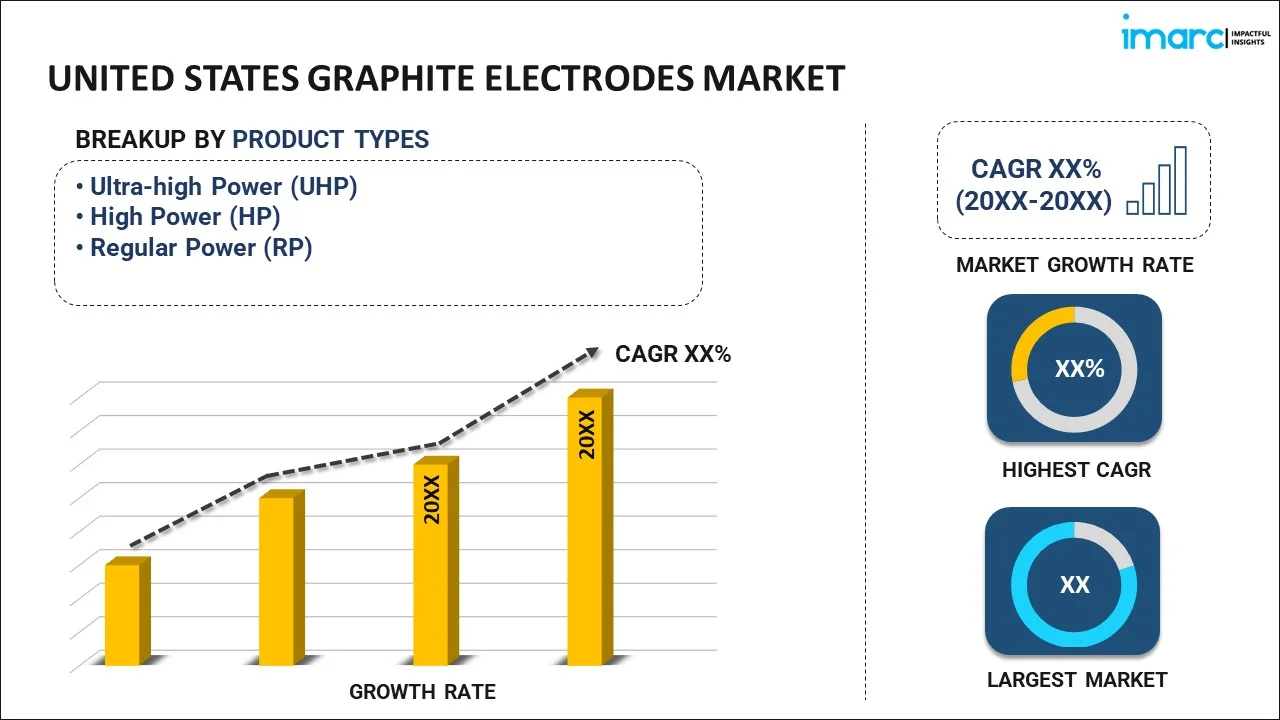
- Ultra-high Power (UHP)
- High Power (HP)
- Regular Power (RP)
Ultra-high power (UHP) dominates with a market share of 48% of the total United States graphite electrodes market in 2025.
Ultra-high power graphite electrodes represent the premium product category essential for modern electric arc furnace steelmaking operations requiring superior electrical and thermal performance characteristics. These electrodes contain the highest petroleum needle coke content among electrode grades, enabling them to handle elevated current densities necessary for large-capacity furnace operations. The segment benefits from the ongoing modernization of domestic steelmaking infrastructure as manufacturers upgrade to mega-furnace installations capable of producing significantly higher output per heat cycle.
According to the US Energy Information Administration, the majority of steel in the United States is now produced using electric arc furnaces, highlighting the substantial shift toward sustainable steelmaking practices. This transition directly benefits UHP electrode demand as these furnaces require premium electrode grades for efficient operation at extreme temperatures. The continued expansion of EAF capacity across major steelmaking regions reinforces the dominant position of ultra-high power electrodes within the domestic market.
Application Insights:
- Electric Arc Furnace
- Ladle Furnace
- Non-Steel Application
Electric arc furnace leads with a share of 70% of the total United States graphite electrodes market in 2025.
Electric arc furnaces represent the dominant application segment for graphite electrodes in the United States, driven by the extensive scrap-based steelmaking infrastructure established across the country. These furnaces utilize graphite electrodes to conduct electrical current and generate high-temperature arcs necessary for melting ferrous scrap metal into new steel products. The technology offers significant advantages including lower capital requirements, operational flexibility, and substantially reduced carbon emissions compared to traditional integrated steelmaking methods using blast furnaces.
The United States is projected to add nearly 16.1 million short tons per year of new EAF capacity from the fourth quarter of 2023 through 2025, with the flat-rolled sector accounting for approximately 14.1 million short tons of the additions. This substantial capacity expansion reflects the domestic steel industry's commitment to sustainable production methods and positions the electric arc furnace application segment for continued growth. Major steelmakers continue investing in greenfield and brownfield EAF projects to meet evolving market demands for lower-carbon steel products.
Regional Insights:
To get detailed regional analysis of this market, Request Sample
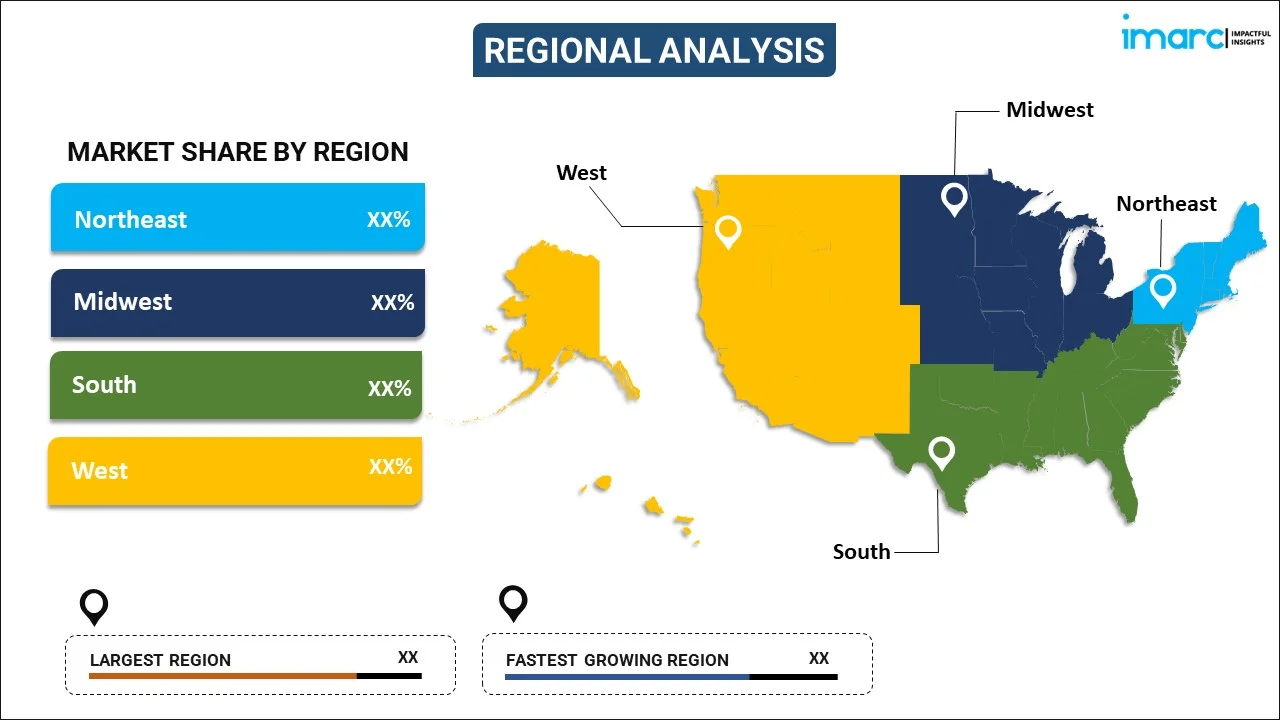
- Northeast
- Midwest
- South
- West
The Northeast has a considerable foothold in the US graphite electrode industry, underlined by the steel manufacturing plants already in the region as well as its proximity to other key industrial locations. The region benefits from in-region availability of ferrous scrap products from populous metropolitan locations, in addition to well-developed transportation systems supporting operations. Likewise, ongoing capital improvement projects within the region support its stronghold in the industry.
The Midwest represents a major graphite electrode-using center based upon the long-established steel-producing profile represented in various states such as Illinois, Ohio, and Indiana. The Midwest represents an excellent position based upon the availability and competitive operating costs represented by the considerable amounts of available electrical energy generated using shale gas. Major capacity-expanding initiatives are underway in further solidifying the Midwest's position in steel producing.
The South has emerged as the epicenter of electric arc furnace steelmaking expansion in the United States, driven by favorable energy costs, business-friendly regulatory environments, and proximity to growing end-use markets. Major greenfield investments in states including Arkansas, Alabama, and Texas position the South for substantial market share growth. The region attracts significant capital investment for advanced steelmaking facilities.
The West contributes to the United States graphite electrodes market through specialized steel manufacturing operations serving construction, infrastructure, and industrial applications. Growing population centers and infrastructure development projects in California and surrounding states create sustained demand for steel products. Recent investments in new mini-mill capacity, including rebar production facilities, expand the regional electrode consumption base.
Market Dynamics:
Growth Drivers:
Why is the United States Graphite Electrodes Market Growing?
Expansion of Electric Arc Furnace Steelmaking Capacity
The United States graphite electrodes market is experiencing robust growth driven by substantial investments in electric arc furnace steelmaking capacity across the country. Major steelmakers are committing billions of dollars to greenfield and brownfield EAF projects designed to meet evolving market demands for sustainable steel production. The shift toward scrap-based steelmaking reflects broader industry recognition of the environmental and economic advantages offered by EAF technology compared to traditional blast furnace operations. In February 2023, Nucor Corporation announced plans for a $3.1 Billion sheet mill in West Virginia with an annual capacity of 3 Million Tons, representing one of the most significant recent investments. These capacity additions directly translate into increased demand for high-quality graphite electrodes essential for furnace operations.
Growing Automotive and Infrastructure Demand
Demand for graphite electrodes is expected to receive a boost from the growing demand scenario for automotive manufacturing and infrastructure development activities. These segments require upgraded materials for their manufacturing processes, and automotive manufacturers require high-strength steel grades for lightweight automotive components to reduce fuel consumption and cut emissions during vehicular activity. These materials also require upgraded electric arc steel melting units fitted with premium-quality graphite electrodes to manufacture materials compatible to these requirements. Funding is provided for infrastructure development through government programs, which helps boost infrastructure steel demand for use in transport corridors, energy infrastructure development, and public infrastructure projects. It helps boost support for manufacturing development programs; steel manufacture is upgraded to support growing demand for these materials to meet ever-upgraded and enhanced requirements for steel grades.
Environmental Regulations Favoring Sustainable Production
Graphite electrode demand benefits from increasingly stringent environmental regulations and corporate sustainability commitments that favor electric arc furnace technology. Government policies reduce industrial carbon emissions by promoting EAF steelmaking methods, which emit around seventy percent less carbon dioxide than blast furnace methods of producing steel. Supply chain decarbonization, compelled by consumer pressure for environmentally friendly products, involves major industrial consumers such as automotive manufacturers and construction companies moving toward lower-carbon steel inputs. The regulatory pressures, together with market dynamics, speed the transition toward EAF-based production in the domestic steel industry. Sustainability certifications create competitiveness in serving environmentally conscious customers. It was the confluence of regulatory imperatives, market appetites, and inherent advantage that provided a propitious climate for graphite electrode market growth.
Market Restraints:
What Challenges the United States Graphite Electrodes Market is Facing?
Needle Coke Supply Constraints and Price Volatility
The market, which relies on supply from petroleum needle coke, a foundational input that comprises over forty percent of its cost, has been plagued by a number of pressing concerns, all which relate to supply constraints associated with petroleum needle coke, as its use in materials which shape a large part of the cost of graphite electrodes leads to extreme cost fluctuations in a short period of time, especially when competition from lithium-ion batteries throws a wrench in supply sourcing of petroleum needle coke raw materials by graphitic electrode companies.
Competition from Imported Electrodes
Domestic manufacturers of electrode products face competition in the form of imported products from other manufacturing companies in the country or other countries in the region, especially those whose production costs are lower than those in the domestic country and those whose capacity has grown significantly. There are quality differences in domestic-produced electrode products relative to the quality of the products in the import category; however, some price-sensitive buyers would settle for lower-grade products in a scenario of narrowed margins.
Steel Industry Cyclicality and Demand Fluctuations
The graphite electrodes market is still related to the cyclical pattern of the steel industry. There might be fluctuations because of the conditions of the economy. When the production of steel is low, the demand for graphite is also reduced, creating downwards pressure on the price due to the competition to receive these orders. The overcapacity of steel materials production worldwide is also considered to be one of the factors affecting the graphite market.
Competitive Landscape:
The competitive scenario in the USA Graphite Electrodes industry is intense, with established local players and multinational companies striving to maintain and gain shares of the total demand from local steel majors. The dominant graphite players use their vertical integration advantages in needle coke manufacturing operations to gain competitive edge and secure raw material availability advantages. The players compete on service and product attributes and brand reliability in servicing demanding customer requirements. They also engage in forging alliances with local steel majors to strengthen product demand stability and relations. They invest heavily in R&D activities to enhance product characteristics of graphite electrodes, including reduced consumption rates, oxidation rates, and operational life. They have established geographic footprints, and the operational flexibility required to serve demanding customers simultaneously from various locations.
Recent Developments:
- In August 2024, NLMK Indiana commissioned a 118-ton electric arc furnace renovated by Primetals Technologies at its Portage, Indiana facility. The entire closure period before the first heat took six weeks, and the furnace has since exhibited consistent performance metrics, approaching the 5,000 heats threshold while demonstrating improved operational efficiency.
United States Graphite Electrodes Market Report Coverage:
| Report Features | Details |
|---|---|
| Base Year of the Analysis | 2025 |
| Historical Period | 2020-2025 |
| Forecast Period | 2026-2034 |
| Units | Million USD |
| Scope of the Report |
Exploration of Historical Trends and Market Outlook, Industry Catalysts and Challenges, Segment-Wise Historical and Future Market Assessment:
|
| Product Types Covered | Ultra-high Power (UHP), High Power (HP), Regular Power (RP) |
| Applications Covered | Electric Arc Furnace, Ladle Furnace, Non-Steel Application |
| Region Covered | Northeast, Midwest, South, West |
| Customization Scope | 10% Free Customization |
| Post-Sale Analyst Support | 10-12 Weeks |
| Delivery Format | PDF and Excel through Email (We can also provide the editable version of the report in PPT/Word format on special request) |
Key Questions Answered in This Report
The United States graphite electrodes market size was valued at USD 2,050.56 Million in 2025.
The United States graphite electrodes market is expected to grow at a compound annual growth rate of 4.55% from 2026-2034 to reach USD 3,060.58 Million by 2034.
Ultra-high power (UHP) dominated the market with a share of 48%, driven by superior electrical and thermal conductivity required for modern mega-furnace installations and high-capacity steelmaking operations.
Key factors driving the United States graphite electrodes market include expanding electric arc furnace steelmaking capacity, growing automotive and infrastructure demand for steel, and environmental regulations favoring sustainable production methods.
Major challenges include needle coke supply constraints and price volatility, competition from imported electrodes, steel industry cyclicality affecting demand, raw material cost fluctuations, and capacity utilization pressures during economic downturns.
Need more help?
- Speak to our experienced analysts for insights on the current market scenarios.
- Include additional segments and countries to customize the report as per your requirement.
- Gain an unparalleled competitive advantage in your domain by understanding how to utilize the report and positively impacting your operations and revenue.
- For further assistance, please connect with our analysts.
 Request Customization
 Speak to an Analyst
 Request Brochure
 Inquire Before Buying
Benefits of Customization
- Personalize this research
- Triangulate with your data
- Get data as per your format and definition
- Gain a deeper dive into a specific application, geography, customer, or competitor
- Any level of personalization
Get in Touch With Us
UNITED STATES
Phone: +1-201-971-6302
INDIA
Phone: +91-120-433-0800
UNITED KINGDOM
Phone: +44-753-714-6104
Email: sales@imarcgroup.com
Client Testimonials




.webp)




.webp)












