
United States Corn Glucose Market Size, Share, Trends and Forecast by Type, End-Use Industry, and Region, 2026-2034
United States Corn Glucose Market Summary:
The United States corn glucose market size reached 6.27 Million Tons in 2025 and is projected to reach 7.43 Million Tons by 2034, growing at a compound annual growth rate of 1.90% from 2026-2034.
The United States corn glucose market continues to experience steady growth, driven by extensive applications across diverse industries. Corn glucose serves as a versatile ingredient offering functional benefits including enhanced flavor profiles, improved texture, and extended shelf life in various product formulations. The market benefits from abundant domestic corn supplies and well-established wet milling infrastructure concentrated in the Midwest region.
Key Takeaways and Insights:
- By Type: HFCS 55 dominates the market with a share of 46% in 2025, owing to its superior sweetness intensity and stability characteristics that make it the preferred choice for carbonated beverage production. Its liquid form facilitates smooth blending in large-scale manufacturing operations while maintaining consistent taste profiles across product batches.
- By End-Use Industry: Food and beverages lead the market with a share of 60% in 2025. This dominance is driven by extensive utilization in processed foods, confectionery products, and soft drink manufacturing where corn glucose serves multiple functional roles including sweetening, texture enhancement, and moisture retention.
- Key Players: Key players drive the United States corn glucose market by expanding production capacities, investing in advanced enzymatic processing technologies, and strengthening nationwide distribution networks. Their focus on sustainable manufacturing practices and product innovation ensures consistent supply while meeting evolving customer specifications.
The United States corn glucose market demonstrates resilient growth prospects supported by the nation's position as a leading corn producer globally. The market benefits from sophisticated wet milling infrastructure that enables efficient conversion of corn starch into various glucose-based products including high fructose corn syrup, dextrose, and specialty glucose syrups. According to the USDA National Agricultural Statistics Service, United States corn production reached 14.9 Billion bushels in 2024, providing abundant raw material supplies for glucose manufacturing operations. The domestic market continues to evolve with manufacturers investing in technological advancements including advanced enzymatic processes and membrane filtration systems that enhance product purity while reducing production costs. Industry participants are increasingly focusing on sustainability initiatives, with major facilities implementing energy-efficient technologies that reduce carbon footprints compared to traditional production methods. The pharmaceutical sector represents an emerging growth avenue as glucose derivatives gain acceptance in oral drug delivery systems and medical nutrition applications. Market dynamics reflect balanced considerations between cost-effective sweetener solutions and evolving consumer preferences toward healthier ingredient alternatives.
United States Corn Glucose Market Trends:
Technological Advancements in Enzymatic Processing
The corn glucose industry is witnessing significant technological improvements in enzymatic conversion processes. Manufacturers are implementing immobilized glucose isomerase systems that enhance conversion efficiency while reducing catalyst dependency. Advanced membrane filtration technologies are being deployed to improve product purity and stability, achieving greater separation accuracy and minimizing impurities. These innovations support premium applications across food, beverage, and pharmaceutical sectors while optimizing operational costs and environmental performance through reduced energy consumption and waste generation.
Expanding Pharmaceutical and Nutraceutical Applications
Corn glucose derivatives are gaining increased acceptance in pharmaceutical formulations, representing one of the fastest-growing application segments. High-purity dextrose serves as a critical component in parenteral nutrition, intravenous solutions, and oral rehydration therapies. Glucose-based excipients are increasingly utilized in tablet manufacturing, capsule production, and drug delivery systems where they improve physical properties including hardness, disintegration, and dissolution characteristics. This trend reflects broader healthcare industry requirements for reliable, palatable, and functional pharmaceutical ingredients. As reported by the American Hospital Association, about 60% of the IV fluids used by US hospitals are produced at the Baxter International facility in Marion, North Carolina, which produces 1.5 million bags every day. Dextrose solutions are critical components in parenteral nutrition, hydration therapy, and critical care applications across the American healthcare system. The FDA's drug shortage database indicates that several concentrations of dextrose have been declared essential pharmaceutical supplies since 2022.
Clean-Label and Non-GMO Product Development
Market participants are responding to evolving consumer preferences by developing clean-label and non-GMO certified corn glucose products. Manufacturers are investing in identity-preserved corn sourcing systems that enable traceability and transparency throughout supply chains. Product innovation includes glucose variants derived from specialty corn varieties that meet certification requirements for organic and natural product formulations. These developments address retail and consumer demands for ethically sourced, transparently labeled ingredients while maintaining functional performance in food and beverage applications.
Market Outlook 2026-2034:
The United States corn glucose market outlook remains favorable throughout the forecast period, supported by sustained demand from food processing, pharmaceutical, and industrial application sectors. The market benefits from the country's robust agricultural foundation and advanced processing capabilities that ensure reliable raw material availability and manufacturing efficiency. Growth prospects are reinforced by ongoing investments in production capacity expansion and technological modernization across major manufacturing facilities. The pharmaceutical sector presents particularly promising opportunities as glucose derivatives continue gaining regulatory acceptance for medical applications. The market size was estimated at 6.27 Million Tons in 2025 and is expected to reach 7.43 Million Tons by 2034, growing at a compound annual growth rate of 1.90% from 2026-2034.
United States Corn Glucose Market Report Segmentation:
|
Segment Category |
Leading Segment |
Market Share |
|
Type |
HFCS 55 |
46% |
|
End-Use Industry |
Food and Beverages |
60% |
Type Insights:
To get detailed segment analysis of this market, Request Sample
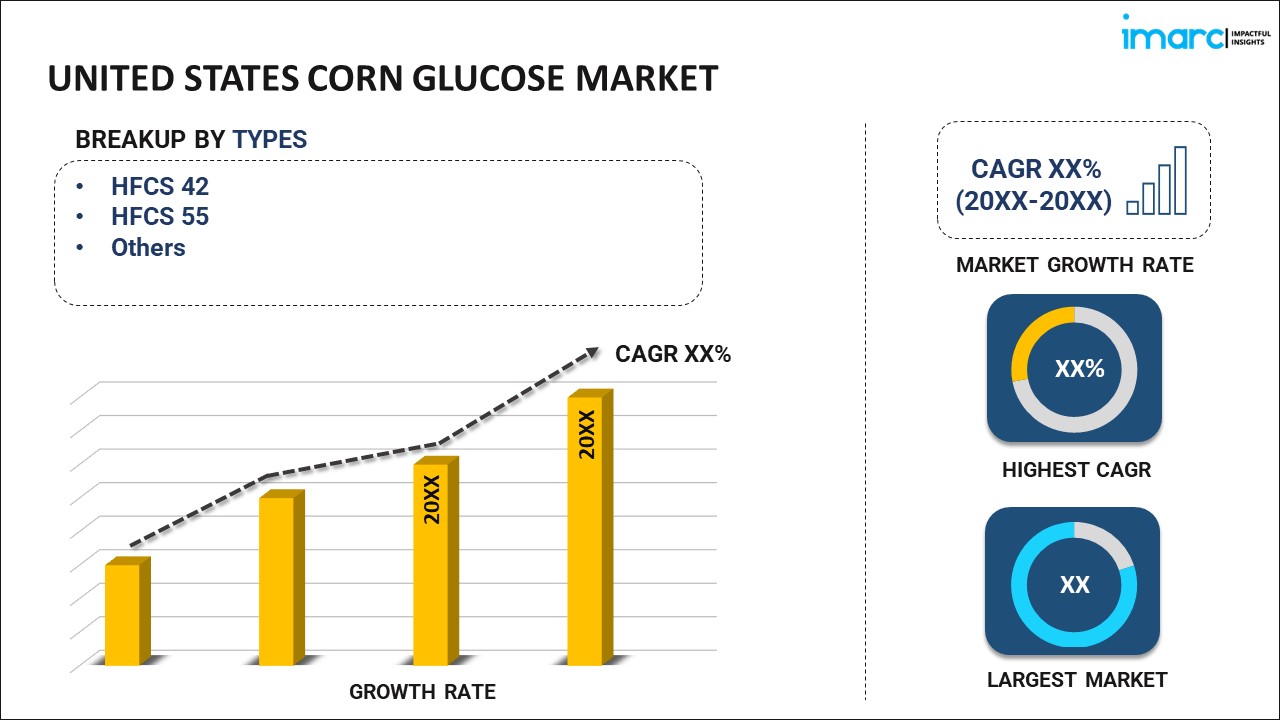
- HFCS 42
- HFCS 55
- Others
HFCS 55 dominates with a market share of 46% of the total United States corn glucose market in 2025.
HFCS 55, characterized by its higher fructose content, has established itself as the preferred sweetener for carbonated soft drink manufacturing across the United States. Its superior sweetness intensity and flavor enhancement properties compared to crystalline sugar make it particularly suitable for beverage applications. The liquid form eliminates dissolution challenges inherent in solid sweeteners, ensuring smooth blending during large-scale production processes. Major beverage manufacturers rely extensively on HFCS 55 due to its stability across varying temperatures, which simplifies cold storage and transportation logistics for distributors operating in diverse climate conditions throughout the country.
The segment benefits from continuous technological improvements in production efficiency and quality control. In October 2024, Cargill celebrated the debut of its corn syrup production line at its Fort Dodge, Iowa facility, marking significant expansion in domestic manufacturing capacity. The facility employs state-of-the-art energy-efficient technologies that reduce carbon dioxide emissions by approximately 50% compared to traditional corn syrup production methods. Such investments reinforce supply reliability while addressing growing sustainability requirements from food and beverage manufacturers seeking environmentally responsible sourcing options.
End-Use Industry Insights:
- Food and Beverages
- Pharmaceuticals
- Personal Care Products
- Paper Products
- Others
Food and beverages lead with a share of 60% of the total United States corn glucose market in 2025.
The food and beverages segment maintains its dominant position driven by extensive utilization of corn glucose across diverse product categories including processed foods, confectionery, baked goods, and carbonated beverages. Corn glucose serves multiple functional roles beyond sweetening, including texture enhancement, moisture retention, browning promotion, and shelf-life extension. The segment benefits from the established preference for liquid sweeteners in large-scale manufacturing operations where consistent quality and ease of handling are paramount considerations. Cost advantages relative to alternative sweeteners reinforce adoption across food processing facilities nationwide.
The beverage industry drives robust demand for corn glucose, which remains the primary sweetener in soft drink production. This segment thrives through innovations that harmonize taste with functional requirements. Simultaneously, manufacturers are investing in specialized glucose variants tailored for bakery, dairy, and confectionery applications. These advancements in customized formulations ensure that corn glucose remains a versatile and essential ingredient, meeting the specific technical needs and evolving quality standards of the modern food sector.
Regional Insights:
To get detailed segment analysis of this market, Request Sample
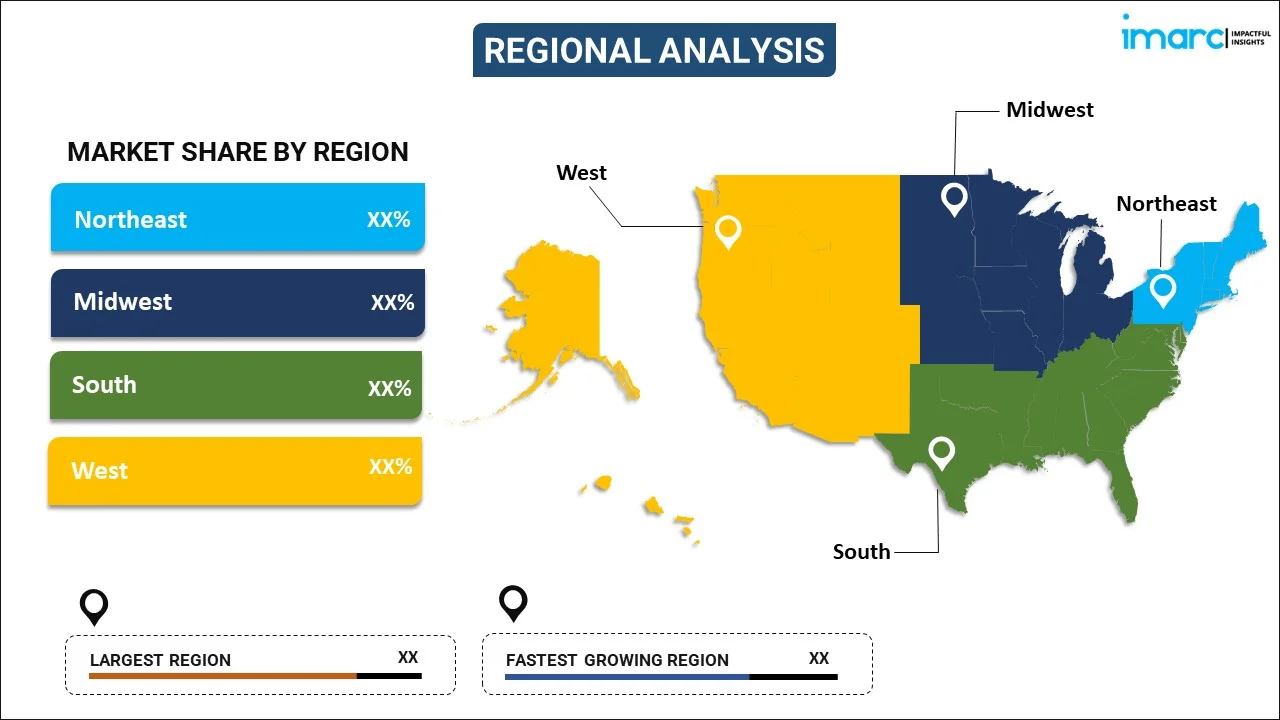
- Northeast
- Midwest
- South
- West
The Northeast represents a significant consumption hub for corn glucose products driven by concentrated food and beverage manufacturing operations, pharmaceutical production facilities, and dense urban population centers requiring processed food ingredients across diverse industrial applications.
The Midwest dominates the United States corn glucose market owing to its strategic concentration of corn production and processing infrastructure. Iowa, Illinois, and Nebraska collectively produce over half of the nation's corn output, providing abundant raw material supplies for wet milling operations.
The South demonstrates growing demand for corn glucose derivatives supported by expanding food processing industries, beverage manufacturing operations, and confectionery production facilities across Texas, Georgia, and Florida metropolitan areas requiring consistent sweetener supplies.
The West exhibits steady corn glucose consumption driven by food and beverage manufacturing clusters in California, emerging craft beverage industries, and health-focused product formulations requiring specialty glucose ingredients for functional food and nutraceutical applications.
Market Dynamics:
Growth Drivers:
Why is the United States Corn Glucose Market Growing?
Cost-Effectiveness Compared to Alternative Sweeteners
Corn glucose maintains significant cost advantages over alternative sweeteners including cane sugar and beet sugar, positioning it as the preferred choice for manufacturers seeking to optimize production economics. The abundant domestic corn supply, supported by extensive agricultural infrastructure and favorable growing conditions in the Corn Belt states, ensures reliable raw material availability at competitive prices. Government agricultural policies provide additional support for corn production, contributing to price stability that benefits downstream glucose manufacturing operations. The USDA predicts corn prices will reach approximately $4.35 per bushel for the projected marketing year (2024-2025), remaining below long-term averages and strengthening the economic viability of corn glucose production. Food and beverage manufacturers particularly value these cost advantages in large-scale production environments where ingredient costs significantly impact overall profitability and product pricing strategies.
Expanding Food Processing and Beverage Industry
The food processing and beverage industry’s steadily advancing growth creates a constant demand for corn glucose in the United States. The processed food index shows a rising consumption rate of convenience food products owing to a change in lifestyles, which reveal a constant need for convenience food items such as ready-to-eat foodstuff, packaged snacks, and convenience meals. Corn glucose plays a critical functional function as a sweetening agent, texturing agent, moisture retention agent, and shelf-life extender in these processed food items. The beverage segment has an increased demand for corn glucose owing to its intense utilization of glucose-derived sweeteners in carbonated beverages like soft drinks, flavored waters, and functional beverages owing to its stable nature and low expenses compared to traditional sweetening agents like sugar. The convenience food index in urban communities and working professionals also generates new channels of demand. The global corn wet milling services market is also set to escalate in growth in the forecast period owing to rapidly advancing glucose derivative consumption in food processing industries worldwide.
Growing Pharmaceutical Industry Utilization
The pharmaceutical sector represents an increasingly important growth avenue for corn glucose derivatives, driven by expanding applications in drug formulations and medical nutrition products. High-purity dextrose derived from corn starch serves as a critical ingredient in parenteral nutrition solutions, intravenous preparations, and oral rehydration therapies. Glucose-based excipients are gaining acceptance in tablet manufacturing, capsule production, and drug delivery systems where they improve physical properties including hardness, disintegration, and dissolution characteristics. The American Hospital Association reports that substantial volumes of dextrose-containing intravenous solutions are utilized annually in hospitals nationwide, with demand increasing due to aging population demographics and rising hospitalization rates. Pharmaceutical formulators value glucose derivatives for their stability, palatability, and compatibility with active pharmaceutical ingredients. This expanding application base represents the fastest-growing demand segment, diversifying market opportunities beyond traditional food and beverage channels.
Market Restraints:
What Challenges the United States Corn Glucose Market is Facing?
Health Concerns and Changing Consumer Perceptions
The development of consumer awareness about the health implications of excessive consumption of sweeteners is the main constraint to the growth of the corn glucose market. High fructose intake has been implicated in metabolic health issues such as obesity, type 2 diabetes, and other conditions by different studies. This growing health awareness has spurred some consumers into either cutting down on the consumption of products containing sweeteners or looking for its alternatives, which in turn has impacted buying behavior and strategies for product reformulation by food manufacturers.
Competition from Alternative Sweeteners
There are challenges posed in the traditional glucose corn market due to the rapidly growing demand in the alternative sweetener sector. Natural sweeteners such as Stevia, Monk Fruit Sugar, and Allulose are gaining grounds as health-conscious and calorie-reduced alternatives. The food and beverages sector is witnessing significant investments in R&D activities focusing on modifying food formulations using such alternatives or blending them with conventional glucose corn sugar.
Regulatory Scrutiny and Policy Uncertainties
The market for corn glucose is expected to be challenged by regulatory issues arising from sugared use that has become more pronounced in recent times. Some of these challenges include legislative moves aimed at reducing the use of added sugar that may affect the usage behavior of some of these products.
Competitive Landscape:
The competitive scenario of the United States corn glucose market is moderately consolidated, with key participants being large multinational companies that have captured considerable market shares due to large production capacities and well-established distribution networks. Key players in the market strive to maintain their competitive edge by continuously advancing technology, enhancing operational efficiencies, and ensuring reliability throughout the value chain. To seize new opportunities emerging in the sector, companies are adopting strategic measures such as capacity addition, sustainable manufacturing process, and diversification of product offerings. Investment in innovative enzymatic transformation technologies and clean-label product development are among the major competitive differentiators. In addition, strategic partnerships and joint ventures facilitate market penetration, while vertical integration secures raw material supplies. Innovation within value-added glucose variants for pharmaceutical and industrial applications opens up opportunities regarding value differentiation and premium positioning.
Recent Developments:
- In February 2024, Ingredion Incorporated introduced NOVATION Indulge 2940 starch, expanding its portfolio of clean-label texturizers. This launch marked the introduction of the first non-GMO functional native corn starch designed to deliver distinct texture for gelling and co-texturizing applications, particularly in dairy, alternative dairy products, and desserts.
United States Corn Glucose Market Report Coverage:
| Report Features | Details |
|---|---|
| Base Year of the Analysis | 2025 |
| Historical Period | 2020-2025 |
| Forecast Period | 2026-2034 |
| Units | Million Tons |
| Segment Coverage |
Exploration of Historical Trends and Market Outlook, Industry Catalysts and Challenges, Segment-Wise Historical and Future Market Assessment:
|
| Types Covered | HFCS 42, HFCS 55, Others |
| End-Use Industries Covered | Food and Beverages, Pharmaceuticals, Personal Care Products, Paper Products, Others |
| Regions Covered | Northeast, Midwest, South, West |
| Customization Scope | 10% Free Customization |
| Post-Sale Analyst Support | 10-12 Weeks |
| Delivery Format | PDF and Excel through Email (We can also provide the editable version of the report in PPT/Word format on special request) |
Key Questions Answered in This Report
The United States corn glucose market size reached 6.27 Million Tons in 2025.
The United States corn glucose market is expected to grow at a compound annual growth rate of 1.90% from 2026-2034 to reach 7.43 Million Tons by 2034.
HFCS 55 dominated the market with a share of 46%, driven by its superior sweetness intensity and stability characteristics that make it the preferred choice for carbonated beverage manufacturing applications.
Key factors driving the United States corn glucose market include cost advantages over alternative sweeteners, expanding food processing and beverage industry demand, growing pharmaceutical utilization, and abundant domestic corn production supplies.
Major challenges include health concerns regarding excessive sweetener consumption, growing competition from alternative sweeteners such as stevia and monk fruit, regulatory scrutiny around added sugar reduction, and evolving consumer preferences toward natural and lower-calorie ingredients.
Need more help?
- Speak to our experienced analysts for insights on the current market scenarios.
- Include additional segments and countries to customize the report as per your requirement.
- Gain an unparalleled competitive advantage in your domain by understanding how to utilize the report and positively impacting your operations and revenue.
- For further assistance, please connect with our analysts.
 Request Customization
 Speak to an Analyst
 Request Brochure
 Inquire Before Buying
Benefits of Customization
- Personalize this research
- Triangulate with your data
- Get data as per your format and definition
- Gain a deeper dive into a specific application, geography, customer, or competitor
- Any level of personalization
Get in Touch With Us
UNITED STATES
Phone: +1-201-971-6302
INDIA
Phone: +91-120-433-0800
UNITED KINGDOM
Phone: +44-753-714-6104
Email: sales@imarcgroup.com
Client Testimonials




.webp)




.webp)












