
North America Pretzel Market Size, Share, Trends and Forecast by Content, Type, Packaging Type, Distribution Channel, and Country, 2026-2034
North America Pretzel Market Summary:
The North America pretzel market size was valued at USD 1.90 Billion in 2025 and is projected to reach USD 2.50 Billion by 2034, growing at a compound annual growth rate of 3.10% from 2026-2034.
The market growth is primarily driven by evolving consumer preferences toward healthier snacking alternatives, with pretzels increasingly positioned as a baked, lower-fat option compared to traditional fried snacks. The convergence of innovative flavor development, premium artisanal positioning, and expanding distribution through e-commerce channels is fundamentally reshaping the competitive landscape. Rising demand for protein-enriched and gluten-free variants, coupled with strategic investments in manufacturing capacity expansion, creates substantial opportunities for market participants seeking to capitalize on the premiumization trend sweeping the North American snack food industry.
Key Takeaways and Insights:
- By Content: Salted pretzels dominate the market with a share of 73% in 2025, driven by consumer preference for classic savory flavor profiles, widespread retail availability, and versatility as both standalone snacks and accompaniments to beverages and dips.
- By Type: Hard leads the market with a share of 66% in 2025, owing to its extended shelf life, portability advantages, and strong distribution networks enabling efficient storage, transportation, and retail channel penetration across diverse markets.
- By Packaging Type: Bags represent the largest segment with a market share of 62% in 2025. This dominance is because of cost efficiency, user familiarity, lightweight portability, and optimal shelf space utilization across retail channels.
- By Distribution Channel: Supermarkets and hypermarkets dominate the market with a share of 56% in 2025, benefiting from broad product assortments, competitive pricing strategies, and established consumer shopping patterns.
- Key Players: The North America pretzel market exhibits moderate competitive intensity, with multinational snack food corporations competing alongside specialized pretzel manufacturers and artisanal brands across diverse price segments and distribution channels. Some of the key players in the market include Conagra Brands, Inc, Dot’s Pretzels (The Hershey Company), Frito-Lay North America, Inc (Pepsi Co), Herr Foods Inc, J&J Snack Foods Corporation, Mars Incorporated, Mr. Pretzels, Old Dutch Foods, Inc, Soft Pretzel Franchise Systems Inc, Snyder’s-Lance, Inc. (Campbell Soup Company), Unique Snacks, and Utz Brands, Inc.
The North American pretzel market is driven by strong demand for convenient and ready-to-eat (RTE) snack foods, supported by changing consumer lifestyles and rising on-the-go consumption. The growing preference for savory and flavorful snack options is further strengthening pretzel popularity, while continuous product innovation in formats, fillings, and seasonings is expanding category appeal. For instance, in 2025, J&J Snack Foods announced a refreshed SUPERPRETZEL® recipe featuring a bolder Bavarian-style flavor and softer texture. The upgrade followed nationwide consumer research aimed at enhancing the brand’s classic 50-year-old soft pretzel while maintaining its vegan-friendly appeal. Rolling out through spring 2025, the reformulation highlighted how established pretzel brands are innovating to meet evolving snack taste expectations. Health-oriented reformulation, including lower-fat and whole-grain variants, is also contributing to increased adoption among health-conscious consumers. Retail expansion across supermarkets, convenience outlets, and e-commerce platforms ensures wider accessibility and higher sales volumes. Marketing investments and cultural familiarity further reinforce demand, as brands promote both bold new flavors and classic pretzel traditions.
North America Pretzel Market Trends:
Premiumization and Artisanal Product Positioning
Premium and artisanal pretzels are gaining significant traction as consumers seek elevated snacking experiences beyond traditional offerings. This trend encompasses gourmet flavors, organic ingredients, and sophisticated packaging that enables manufacturers to command higher price points. In line with this trend, in 2025, La Brea Bakery, America’s top artisan bread brand, announced a new Soft Pretzel bread line featuring Pretzel Buns, Pretzel Sausage Buns, and Pretzel Baguettes made with simple, clean ingredients. The launch aimed to elevate the pretzel category by offering premium, artisan-style bread options for at-home consumers. Scheduled to hit shelves later in 2025, the products reflect rising demand for restaurant-quality bakery items with versatile meal applications.
Flavor Innovation and Sweet-Savory Convergence
Product manufacturers are expanding beyond traditional salted varieties into innovative flavored, filled, and coated pretzel formats that blur boundaries between sweet and savory categories. This includes combinations, such as honey mustard, jalapeño cheddar, chocolate-dipped, and peanut butter-filled options targeting adventurous palates. Producers are responding to this demand by introducing novel products through innovative flavors, healthier baked options, and convenient portion-sized packaging designed to attract evolving consumer preferences. In 2026, Paris Baguette introduced a limited-time lineup of Salted Caramel Pretzel treats to meet growing demand for sweet-and-salty flavor combinations. This seasonal menu innovation reflects how pretzel-based offerings are expanding beyond snacks into indulgent dessert and café-style formats across North America.
Strengthening Brand Competition and Marketing Investments
The North America pretzel market growth is driven by intensifying competition among leading snack brands and their increasing investments in marketing and distribution expansion. Companies are focusing on stronger brand awareness, differentiated flavor offerings, and targeted promotional strategies to capture evolving consumer preferences. In 2025, Snyder’s of Hanover increased marketing investment in Canada as competition in the pretzel category intensified, launching its “Pushing the Limits of Flavour” campaign to expand national distribution through bold flavored pretzel pieces. Such initiatives, supported by digital media, outdoor advertising, and sampling, are accelerating category visibility and consumer engagement.
Market Outlook 2026-2034:
The North America pretzel market shows notable growth potential during the forecast period, supported by strong consumer demand for convenient and healthier snack options along with ongoing product innovation in flavors and formulations. Rising preference for baked snacks, whole-grain varieties, and low-sodium alternatives is helping expand category appeal across diverse age groups. The market generated a revenue of USD 1.90 Billion in 2025 and is projected to reach a revenue of USD 2.50 Billion by 2034, growing at a compound annual growth rate of 3.10% from 2026-2034.
North America Pretzel Market Report Segmentation:
|
Segment Category |
Leading Segment |
Market Share |
|
Content |
Salted Pretzels |
73% |
|
Type |
Hard |
66% |
|
Packaging Type |
Bags |
62% |
|
Distribution Channel |
Supermarkets and Hypermarkets |
56% |
Content Insights:
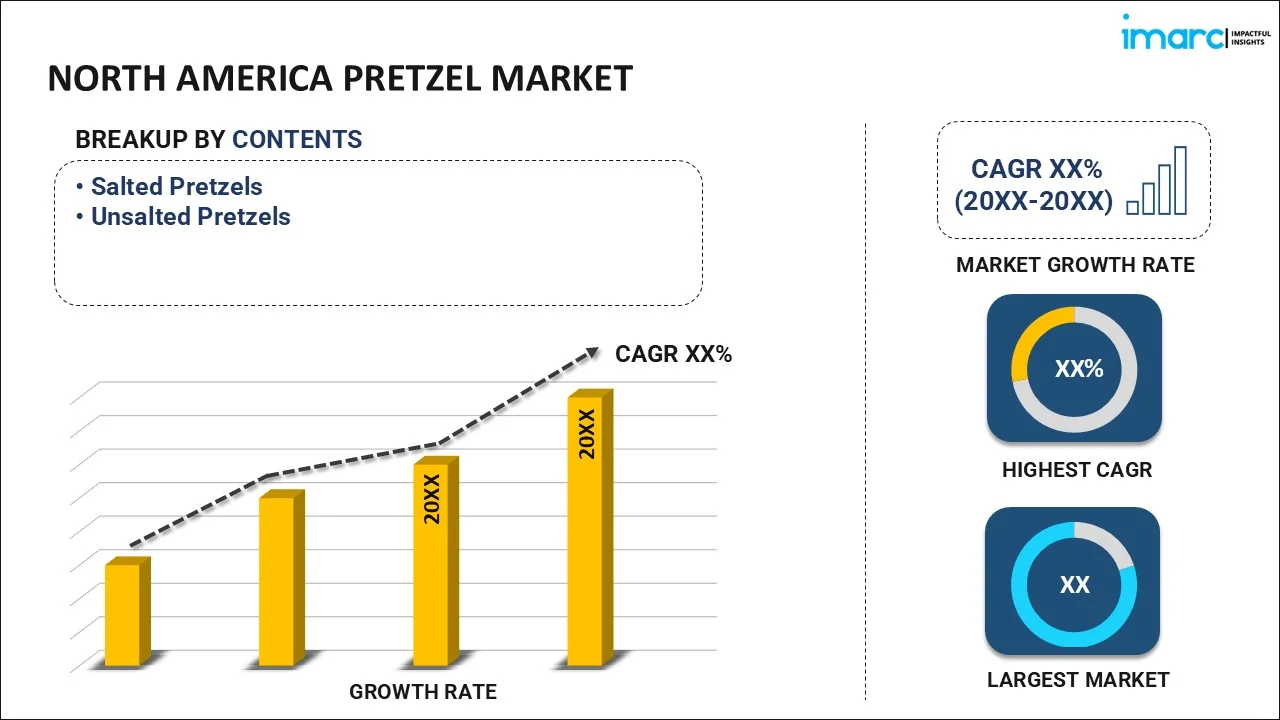
To get detailed regional analysis of this market, Request Sample
- Salted Pretzels
- Unsalted Pretzels
Salted pretzels dominate with a market share of 73% of the total North America pretzel market in 2025.
Salted pretzels lead the market, driven by their traditional flavor profile, broad consumer acceptance, and strong presence across snack categories. The classic salted variety appeals to a wide range of age groups, making it one of the most commonly purchased pretzel types. Its balanced taste and ability to pair well with dips, cheese, or beverages contribute to consistent demand. Salted pretzels are also widely available in packaged formats, supporting high-volume sales through supermarkets, convenience stores, and online platforms.
The dominance of salted pretzels is further supported by their affordability and familiarity compared to flavored or specialty alternatives. Consumers often view salted pretzels as a healthier snack option than fried products, driving preference among health-conscious buyers. Foodservice outlets, including cinemas, sports venues, and quick-service restaurants, also contribute significantly to sales through salted pretzel offerings. Additionally, manufacturers continue expanding product lines with variations in shape and texture while retaining the classic salted content, ensuring sustained market leadership.
Type Insights:
- Hard
- Soft
Hard leads with a market share of 66% of the total North America pretzel market in 2025.
Hard exhibits a clear dominance in the market owing to its longer shelf life, convenient snacking format, and widespread availability across retail channels. It is easy to package, transport, and store, making it a preferred option for both consumers and manufacturers. Hard pretzel is commonly purchased as everyday snacks and is popular for its crunchy texture and versatility in flavoring. Its strong presence in supermarkets, convenience stores, and vending outlets supports consistent demand throughout the region.
The dominance of hard pretzel is also driven by its suitability for on-the-go consumption and its perception as a relatively healthier alternative to chips or fried snacks. Consumers often prefer hard pretzel for portion control, low-fat options, and compatibility with dips or spreads. Food manufacturers also favor this type due to production efficiency and the ability to offer multiple shapes, sizes, and seasoning varieties. Continuous innovation in packaging and flavored hard pretzel products further strengthens their leading position in the market.
Packaging Type Insights:
- Bags
- Boxes
- Containers
- Others
Bags exhibit a clear dominance with a 62% share of the total North America pretzel market in 2025.
Bags represent the largest segment due to their convenience, cost-effectiveness, and suitability for mass retail distribution. Bag packaging is lightweight, easy to transport, and widely used for both single-serve and family-sized pretzel products. Consumers prefer bags because they are easy to store, reseal in many cases, and ideal for on-the-go snacking. Manufacturers also favor bags as they allow attractive branding, flexible sizing options, and efficient shelf placement across supermarkets and convenience outlets.
The dominance of bags is further supported by their ability to preserve freshness and protect pretzels from breakage during handling and transportation. Bag formats are highly adaptable for different product varieties, including salted, flavored, and bite-sized pretzels, making them the most versatile packaging choice. Retailers benefit from bagged pretzels owing to high turnover and easy merchandising. Additionally, the growth of online grocery and snack delivery services increases demand for durable, lightweight packaging, reinforcing bags as the leading format in the market.
Distribution Channel Insights:
- Supermarkets and Hypermarkets
- Convenience Stores
- Specialist Retailers
- Online Retailers
- Others
Supermarkets and hypermarkets dominate with a market share of 56% of the total North America pretzel market in 2025.
Supermarkets and hypermarkets hold the biggest market share attributed to their wide product variety, strong brand availability, and high consumer footfall. These retail formats provide extensive shelf space for different pretzel types, flavors, and packaging sizes, encouraging bulk purchases and impulse buying. Consumers prefer supermarkets for convenient one-stop shopping and access to both premium and value-priced snack options. Frequent promotional discounts and in-store visibility further support higher pretzel sales through this channel across the region.
The dominance of supermarkets and hypermarkets is also reinforced by their well-developed supply chains and ability to stock both national and private-label pretzel brands. These outlets serve as key distribution points for family-sized packs and multipacks, which drive volume growth. Increasing demand for RTE snacks and the growing preference for healthier alternatives like pretzels further boost sales in organized retail. This trend is reflected in recent government data, which showed that core retail sales rose 2.5% in December 2024, a boost driven largely by stronger food and beverage sales (+3.5%), with supermarkets and grocery stores leading the charge at a 3.9% increase.
Country Insights:
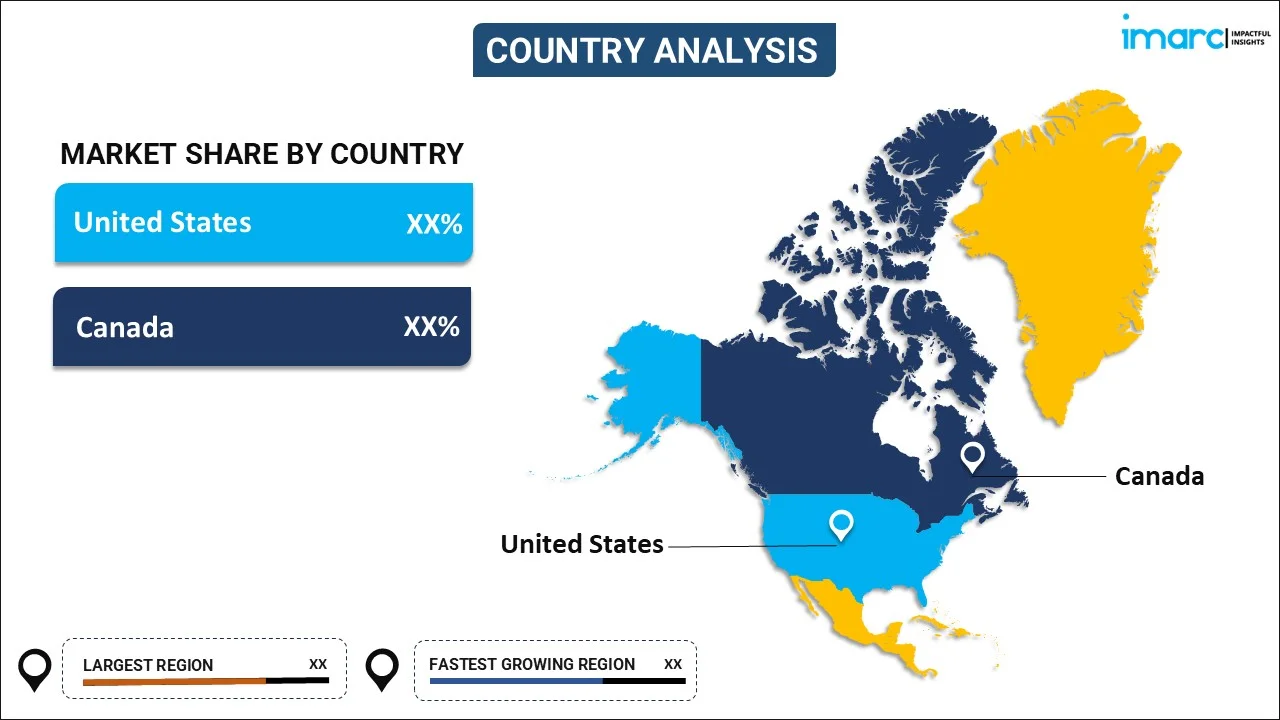
To get detailed regional analysis of this market, Request Sample
- United States
- Canada
The United States represents a crucial segment in the market, supported by strong snack consumption patterns, widespread product availability, and sustained demand for convenient packaged foods. Increasing consumer preference for low-fat and portion-controlled snack options continues to support pretzel consumption across varied demographic groups. Pretzels maintain strong presence in supermarkets, convenience stores, and foodservice channels, aided by ongoing innovations in flavors and healthier baked alternatives. In addition, the market is increasingly influenced by digital retail growth, with US retail e-commerce sales reaching $310.3 billion in Q3 2025, as per the U.S. Census Bureau, reflecting rising online demand.
Canada holds a significant share in the North America pretzel market, supported by the growing demand for RTE snacks and increasing adoption of healthier snack choices. Pretzels are widely consumed as convenient options for households and on-the-go consumers, with strong sales through supermarkets and hypermarkets. Expanding availability of flavored and specialty pretzel varieties is attracting younger consumers and urban populations. The market also benefits from steady cross-border product supply and rising interest in baked snacks as alternatives to traditional fried products.
Market Dynamics:
Growth Drivers:
Why is the North America Pretzel Market Growing?
E-Commerce Expansion and Digital Distribution Channel Growth
Digital commerce transformation fundamentally reshapes pretzel distribution by improving product accessibility, enabling DTC sales, and supporting personalized marketing strategies. Online retail channels offer convenience advantages including home delivery, subscription services, and expanded flavor variety access that physical retail cannot match. According to the ITA, e-commerce represented 6.1% of total retail sales in Canada in December 2024, with online sales reaching around USD 3.14 Billion. E-commerce platforms utilize targeted recommendations, customer reviews, and exclusive online offerings to drive consumer engagement and repeat purchases while reducing the stigma barriers sometimes associated with specialty dietary products.
Cultural Reinforcement Through Promotional and Nostalgia Campaigns
The North America pretzel market growth is driven by promotional efforts that reinforce pretzels as a culturally familiar and traditional snack choice. Brands and industry groups are investing in campaigns that revive consumer interest by connecting pretzels with nostalgia, simplicity, and long-standing consumption habits. In 2025, Where The Buffalo Roam (WTBR) and the North American Pretzel Council launched the “Let’s Get Back to Pretzels Again” PSA campaign to renew America’s love for classic pretzels. Digital-first strategies featuring recognizable characters and traditional themes strengthen emotional consumer engagement and support the market growth.
Expansion of Manufacturing Capacity
The rising investments in production capacity and the introduction of innovative product formats is a crucial factor bolstering the market growth. Manufacturers are expanding local operations to meet the growing snack demand while launching new pretzel-based offerings that combine indulgence with convenience. For instance, in 2024, Meiji announced a $28 million investment to expand Hello Panda production in the United States, including the launch of Hello Panda Pretzel, featuring a crunchy salted pretzel shell with a chocolate cream-filled center. Such developments enhance category variety, attract new consumer segments, and strengthen market growth through premium innovation.
Market Restraints:
What Challenges the North America Pretzel Market is Facing?
Sodium Content Concerns and Regulatory Pressures
Health concerns over the high sodium content in traditional pretzels are limiting consumption among health-conscious individuals. Increasing awareness about diet-related risks is driving the demand toward lower-salt snack options. Regulatory guidance, including FDA voluntary sodium-reduction targets, is encouraging manufacturers to reformulate products. These changes may alter classic flavor profiles and require adjustments in production processes, creating challenges for maintaining consumer acceptance.
Intense Competition from Alternative Snack Categories
The pretzel category is facing strong competition from the growing presence of healthy snack alternatives like veggie chips, rice cakes, protein bars, and plant-based snack options. This rapid expansion of snack categories is dividing consumer demand and limiting available shelf space in retail stores. Manufacturers must invest consistently in new flavors, formats, and healthier formulations to sustain relevance and capture shifting consumer preferences.
Raw Material Cost Volatility and Supply Chain Disruptions
Fluctuating costs of key raw materials, such as wheat flour, salt, and vegetable oils, significantly influence manufacturer profitability and pricing decisions. Sudden price shifts can raise production expenses, forcing companies to adjust product pricing or absorb losses. Furthermore, supply chain vulnerabilities increase the risk of disruptions, impacting production continuity and reducing distribution reliability across retail and consumer channels.
Competitive Landscape:
The North America pretzel market exhibits moderate competitive intensity characterized by the presence of multinational snack food corporations alongside specialized pretzel manufacturers and emerging artisanal brands competing across diverse price segments and distribution channels. Market dynamics reflect strategic positioning, ranging from premium, innovation-driven offerings emphasizing advanced nutritional profiles and artisanal production methods to value-oriented products targeting cost-conscious consumers through private-label programs. The competitive landscape is increasingly shaped by better-for-you product development, e-commerce capabilities, sustainability initiatives, and strategic acquisitions that consolidate category expertise while expanding distribution reach and manufacturing capacity.
Some of the key players in the market include:
- Conagra Brands, Inc
- Dot’s Pretzels (The Hershey Company)
- Frito-Lay North America, Inc (Pepsi Co)
- Herr Foods Inc
- J&J Snack Foods Corporation
- Mars Incorporated
- Mr. Pretzels
- Old Dutch Foods, Inc
- Soft Pretzel Franchise Systems Inc
- Snyder’s-Lance, Inc. (Campbell Soup Company)
- Unique Snacks
- Utz Brands, Inc.
Recent Developments:
- August 2025: Pretzelized launched its new Sea Salt Pretzel Snackers, expanding its product lineup with a bite-sized pretzel-cracker hybrid aimed at grab-and-go and foodservice consumers. The snack offered a kosher-certified, non-GMO option and was designed for modern dietary preferences. With distribution in over 15,000 retail locations and strong consumer ratings, the launch highlights growing innovation and competition within the North American pretzel market.
- April 2025: The Hershey Company launched Reese’s Filled Pretzels in the US, combining crunchy salted pretzels with Reese’s signature peanut butter filling. The product targeted rising demand for sweet-and-salty snack innovations and is offered in multiple pack sizes for different occasions.
North America Pretzel Market Report Scope:
| Report Features | Details |
|---|---|
| Base Year of the Analysis | 2025 |
| Historical Period | 2020-2025 |
| Forecast Period | 2026-2034 |
| Units | Billion USD |
| Scope of the Report | Exploration of Historical and Forecast Trends, Industry Catalysts and Challenges, Segment-Wise Historical and Predictive Market Assessment:
|
| Contents Covered | Salted Pretzels, Unsalted Pretzels |
| Types Covered | Hard, Soft |
| Packaging Types Covered | Bags, Boxes, Containers, Others |
| Distribution Channels Covered | Supermarkets and Hypermarkets, Convenience Store, Specialist Retailers, Online Retailers, Others |
| Countries Covered | United States, Canada |
| Companies Covered | Conagra Brands, Inc, Dot’s Pretzels (The Hershey Company), Frito-Lay North America, Inc (Pepsi Co), Herr Foods Inc., J&J Snack Foods Co., Mars Incorporated, Mr. Pretzels, Old Dutch Foods, Inc., Soft Pretzel Franchise Systems Inc., Snyder’s-Lance, Inc. (Campbell Soup Company), Unique Snacks, Utz Brands, Inc.etc. |
| Customization Scope | 10% Free Customization |
| Post-Sale Analyst Support | 10-12 Weeks |
| Delivery Format | PDF and Excel through Email (We can also provide the editable version of the report in PPT/Word format on special request) |
Key Questions Answered in This Report
The North America pretzel market size was valued at USD 1.90 Billion in 2025.
The North America pretzel market is expected to grow at a compound annual growth rate of 3.10% from 2026-2034 to reach USD 2.50 Billion by 2034.
Salted pretzels dominate the North America pretzel market with 73% revenue share in 2025, driven by consumer preference for classic savory flavor profiles, widespread retail availability, and versatile consumption occasions.
Key factors driving the North America pretzel market include the growing demand for premium and artisanal snack options, as consumers increasingly seek gourmet flavors, clean ingredients, and upscale packaging. Supporting this trend, La Brea Bakery announced in 2025 a Soft Pretzel bread line including Pretzel Buns and Pretzel Baguettes, reflecting rising demand for artisan-quality at-home bakery options.
Major challenges include sodium content concerns and regulatory pressures prompting reformulation requirements, intense competition from alternative snack categories fragmenting consumer attention, raw material cost volatility affecting manufacturer profitability, and supply chain vulnerabilities impacting production continuity.
Need more help?
- Speak to our experienced analysts for insights on the current market scenarios.
- Include additional segments and countries to customize the report as per your requirement.
- Gain an unparalleled competitive advantage in your domain by understanding how to utilize the report and positively impacting your operations and revenue.
- For further assistance, please connect with our analysts.
 Request Customization
 Speak to an Analyst
 Request Brochure
 Inquire Before Buying
Benefits of Customization
- Personalize this research
- Triangulate with your data
- Get data as per your format and definition
- Gain a deeper dive into a specific application, geography, customer, or competitor
- Any level of personalization
Get in Touch With Us
UNITED STATES
Phone: +1-201-971-6302
INDIA
Phone: +91-120-433-0800
UNITED KINGDOM
Phone: +44-753-714-6104
Email: sales@imarcgroup.com
Client Testimonials




.webp)




.webp)












