
Jet Kerosene Prices, Trend, Chart, Market Analysis, News, Demand, Historical and Forecast Data Report 2025 Edition
Jet Kerosene Price Trend, Index and Forecast
Track the latest insights on jet kerosene price trend and forecast with detailed analysis of regional fluctuations and market dynamics across North America, Latin America, Central Europe, Western Europe, Eastern Europe, Middle East, North Africa, West Africa, Central and Southern Africa, Central Asia, Southeast Asia, South Asia, East Asia, and Oceania.
Jet Kerosene Prices Outlook Q3 2025
- USA: USD 717/MT
- China: USD 1073/MT
- India: USD 524/MT
- Germany: USD 1271/MT
- France: USD 1342/MT
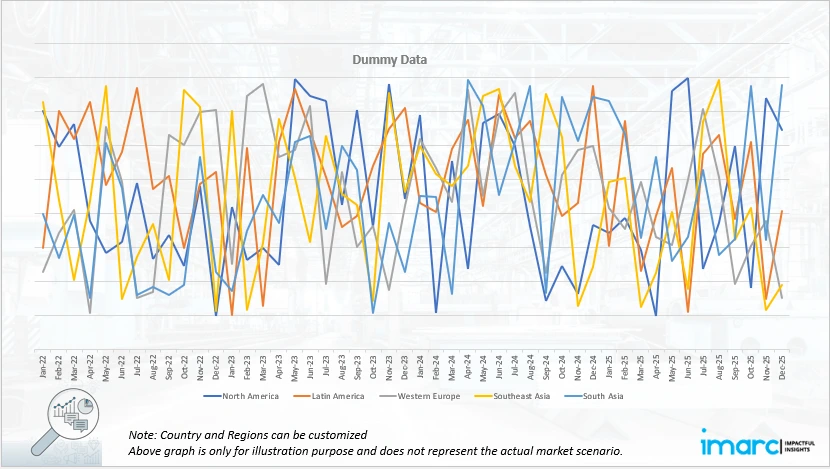
Jet Kerosene Price Chart
Get real-time access to monthly/quarterly/yearly prices Request Sample
During the third quarter of 2025, the jet kerosene prices in the USA reached 717 USD/MT in September. The upward movement reflected firmer demand from the commercial aviation sector as flight frequencies improved across domestic and transatlantic routes. Refinery operating rates remained disciplined, which constrained spot availability and supported price strength. Additionally, stable crude feedstock conditions and improved refinery margins encouraged producers to prioritize jet fuel blending.
During the third quarter of 2025, the jet kerosene prices in China reached 1073 USD/MT in September. Prices moved higher as domestic air travel continued to recover, leading to stronger offtake from state-owned and private airlines. Refinery output remained aligned with planned production levels, limiting surplus volumes in the domestic market. Export activity was moderated by policy oversight, which redirected more supply toward internal consumption.
During the third quarter of 2025, the jet kerosene prices in India reached 524 USD/MT in September. The modest increase was primarily driven by a gradual improvement in passenger traffic across major airports. Refiners maintained steady output levels, but demand growth slightly outpaced supply availability. Currency stability helped limit import cost volatility, supporting smoother procurement for airlines. Government policies aimed at strengthening the aviation sector indirectly supported consumption levels.
During the third quarter of 2025, the jet kerosene prices in Germany reached 1271 USD/MT in September. Prices rose notably due to increased air traffic across European hubs and sustained demand from international carriers. Refinery maintenance schedules limited incremental supply, tightening regional availability. Environmental compliance costs and operational constraints also influenced production economics.
During the third quarter of 2025, the jet kerosene prices in France reached 1342 USD/MT in September. Prices softened as refinery output exceeded domestic demand growth. Airline procurement strategies shifted toward optimized inventory management, reducing spot market buying. Improved logistics and port operations ensured smoother supply flows, easing earlier constraints. Additionally, competition among suppliers increased availability in the domestic market.
Jet Kerosene Prices Outlook Q2 2025
- USA: USD 705/MT
- China: USD 1040/MT
- India: USD 517/MT
- Germany: USD 1232/MT
- France: USD 1375/MT
During the second quarter of 2025, the jet kerosene prices in the USA reached 705 USD/MT in June. Prices declined as airline demand softened temporarily due to schedule adjustments and route rationalization. Refinery production remained stable, resulting in comfortable supply levels. Inventory accumulation reduced the urgency for spot purchases, placing downward pressure on prices.
During the second quarter of 2025, the jet kerosene prices in China reached 1040 USD/MT in June. Prices edged higher as domestic travel activity improved steadily. Refinery output was managed carefully to align with consumption trends, preventing oversupply. Export flows supported regional balance, while internal demand remained resilient. Airline operators increased fuel procurement to support expanding flight schedules.
During the second quarter of 2025, the jet kerosene prices in India reached 517 USD/MT in June. Prices declined due to subdued passenger demand and increased supply availability. Refiners operated at consistent rates, resulting in adequate inventories. Airlines adopted cost-control measures, limiting discretionary fuel purchases. Additionally, improved supply chain efficiency reduced procurement costs. These conditions led to a softer pricing trend throughout the quarter.
During the second quarter of 2025, the jet kerosene prices in Germany reached 1232 USD/MT in June. Prices increased as aviation activity strengthened across regional and international routes. Refinery constraints and maintenance activities limited supply flexibility. Import reliance added sensitivity to market conditions, supporting price firmness. Buyer sentiment improved alongside stable airline operations.
During the second quarter of 2025, the jet kerosene prices in France reached 1375 USD/MT in June. Prices rose due to tighter supply conditions and steady aviation demand. Refinery output faced operational limitations, restricting availability. Airline fuel requirements remained consistent, sustaining buying interest. These factors combined to support higher prices during the quarter.
Regional Coverage
The report provides a detailed analysis of the market across different regions, each with unique pricing dynamics influenced by localized market conditions, supply chain intricacies, and geopolitical factors. This includes price trends, price forecast and supply and demand trends for each region, along with spot prices by major ports. The report also provides coverage of FOB and CIF prices, as well as the key factors influencing jet kerosene prices.
Europe Jet Kerosene Price Trend
Q3 2025:
During the third quarter of 2025, jet kerosene prices in Europe displayed mixed trends as opposing demand and supply factors influenced the market. Passenger traffic across major aviation hubs remained strong, supporting steady fuel consumption from commercial airlines. However, this demand-side strength was partially offset by improved refinery run rates following earlier maintenance periods, which increased regional availability. Import inflows remained consistent, easing short-term supply tightness in key markets. At the same time, cautious procurement behavior by airlines limited aggressive spot buying.
Q2 2025:
Jet kerosene prices in the region exhibited an upward trend driven by strengthening aviation fuel demand and tighter regional supply conditions. Air travel activity continued to expand as commercial flight frequencies increased across major economies, leading to higher fuel offtake from airlines. Refinery operating strategies were closely aligned with product margin optimization, which limited the availability of spot cargoes in several markets. Seasonal maintenance schedules at key refining hubs also constrained regional output, adding pressure on supply balances.
This analysis can be extended to include detailed jet kerosene price information for a comprehensive list of countries.
| Region | Countries Covered |
|---|---|
| Europe | Germany, France, United Kingdom, Italy, Spain, Russia, Turkey, Netherlands, Poland, Sweden, Belgium, Austria, Ireland, Switzerland, Norway, Denmark, Romania, Finland, Czech Republic, Portugal, and Greece, among other European countries. |
North America Jet Kerosene Price Trend
Q3 2025:
The jet kerosene price index in North America showed moderate strengthening, reflecting improved aviation activity and disciplined supply management. Airline operators expanded flight schedules in response to consistent passenger demand, leading to higher fuel offtake across key airports. Refiners maintained controlled production strategies, prioritizing balanced output over aggressive supply expansion, which helped prevent excess availability in the market.
Q2 2025:
The jet kerosene price index in North America weakened due to a combination of temporary demand softness and rising inventory levels. Airline operators adjusted flight schedules in response to shifting travel patterns, leading to reduced short-term fuel requirements. Refinery operations remained steady, generating an ample supply that exceeded immediate consumption needs. This imbalance contributed to inventory accumulation at key storage hubs. Market participants responded by delaying purchases and drawing down existing stocks.
Specific jet kerosene historical data within the United States and Canada can also be provided.
| Region | Countries Covered |
|---|---|
| North America | United States and Canada |
Middle East and Africa Jet Kerosene Price Trend
Q3 2025:
As per the jet kerosene price chart, the prices in the Middle East and Africa fluctuated due to a complex interplay of factors, primarily driven by supply chain disruptions, seasonal demand shifts, and geopolitical influences.
Q2 2025:
The report explores the jet kerosene pricing trends in the Middle East and Africa, considering factors like regional industrial growth, the availability of natural resources, and geopolitical tensions that uniquely influence market prices.
In addition to region-wise data, information on jet kerosene prices for countries can also be provided.
| Region | Countries Covered |
|---|---|
| Middle East & Africa | Saudi Arabia, UAE, Israel, Iran, South Africa, Nigeria, Oman, Kuwait, Qatar, Iraq, Egypt, Algeria, and Morocco, among other Middle Eastern and African countries. |
Asia Pacific Jet Kerosene Price Trend
Q3 2025:
Asia Pacific experienced supportive jet kerosene pricing conditions driven by the continued recovery in air travel activity. Airlines increased capacity utilization across domestic and international routes, resulting in stronger fuel consumption. Refinery output was carefully aligned with prevailing demand levels, minimizing the risk of oversupply while ensuring consistent availability. Seasonal travel patterns further supported fuel usage, particularly in markets with strong tourism and business travel activity.
Q2 2025:
During the second quarter of 2025, jet kerosene prices in the Asia Pacific region exhibited mixed trends as varying market conditions influenced pricing across countries. Air travel activity showed gradual improvement in several markets, supporting higher fuel consumption. However, this demand recovery was uneven, with some countries experiencing slower growth in flight operations. Refiners maintained disciplined supply management, which prevented significant oversupply but ensured adequate availability. Inventory levels remained balanced, and buyers adopted selective procurement strategies.
This jet kerosene price analysis can be expanded to include a comprehensive list of countries within the region.
| Region | Countries Covered |
|---|---|
| Asia Pacific | China, India, Indonesia, Pakistan, Bangladesh, Japan, Philippines, Vietnam, Thailand, South Korea, Malaysia, Nepal, Taiwan, Sri Lanka, Hongkong, Singapore, Australia, and New Zealand, among other Asian countries. |
Latin America Jet Kerosene Price Trend
Q3 2025:
Latin America's jet kerosene market is predominantly influenced by its rich natural reserves, particularly in countries like Chile and Brazil. However, political instability and inconsistent regulatory frameworks can lead to significant volatility in jet kerosene prices.
Q2 2025:
Infrastructure challenges and logistical inefficiencies often impact the supply chain, affecting the region's ability to meet international demand consistently. Moreover, the jet kerosene price index, economic fluctuations, and currency devaluation are critical factors that need to be considered when analyzing jet kerosene pricing trends in this region.
This comprehensive review can be extended to include specific countries within the region.
| Region | Countries Covered |
|---|---|
| Latin America | Brazil, Mexico, Argentina, Columbia, Chile, Ecuador, and Peru, among other Latin American countries. |
Jet Kerosene Pricing Report, Market Analysis, and News
IMARC's latest publication, “Jet Kerosene Prices, Trend, Chart, Demand, Market Analysis, News, Historical and Forecast Data Report 2025 Edition,” presents a detailed examination of the jet kerosene market, providing insights into both global and regional trends that are shaping prices. This report delves into the spot price of jet kerosene at major ports and analyzes the composition of prices, including FOB and CIF terms. It also presents detailed jet kerosene prices trend analysis by region, covering North America, Europe, Asia Pacific, Latin America, and Middle East and Africa. The factors affecting jet kerosene pricing, such as the dynamics of supply and demand, geopolitical influences, and sector-specific developments, are thoroughly explored. This comprehensive report helps stakeholders stay informed with the latest market news, regulatory updates, and technological progress, facilitating informed strategic decision-making and forecasting.
Jet Kerosene Industry Analysis
The global jet kerosene market size reached USD 512.6 Billion in 2025. By 2034, IMARC Group expects the market to reach USD 780.6 Billion, at a projected CAGR of 4.64% during 2026-2034. The market is primarily driven by the global air travel, increasing fleet utilization by commercial airlines, and infrastructure development across emerging aviation hubs.
Latest News and Developments:
- November 2025: LanzaJet, Inc., a next-generation fuels technology company and producer, announced the successful operation and fuel production at its LanzaJet Freedom Pines Fuels facility in Soperton, Georgia, USA. The milestone marked the world’s first commercial-scale production of jet fuel derived from ethanol as a feedstock. It also represented the first non-oil-based renewable jet fuel solution fully compatible with existing aircraft and aviation infrastructure, reinforcing progress toward sustainable aviation fuel adoption.
Product Description
Jet kerosene, commonly known as aviation turbine fuel or ATF, refers to a kind of aviation fuel manufactured to be utilized in the aircraft-powered gas-turbine engines. It is a clear to straw-colored liquid which possesses a distinct oily smell and is well-known for its high energy efficiency and stability.
Jet kerosene is usually produced through the process of fractional distillation of crude oil in a petroleum refinery. Under this procedure, crude oil is heated at high temperatures, which leads to its vaporization. Further, the raw kerosene goes through treatment procedures, which include hydrodesulfurization to eliminate sulfur compounds.
Jet kerosene is highly adopted in the aerospace industry as a fuel for military and commercial jets. It also offers a powerful and stable energy source for rocket launches. Additionally, this fuel is also used as a substitute for heating oil. Furthermore, numerous other applications where jet kerosene is put to use include electricity generation, manufacturing and agriculture, and transportation.
Report Coverage
| Key Attributes | Details |
|---|---|
| Product Name | Jet Kerosene |
| Report Features | Exploration of Historical Trends and Market Outlook, Industry Demand, Industry Supply, Gap Analysis, Challenges, Jet Kerosene Price Analysis, and Segment-Wise Assessment. |
| Currency/Units | US$ (Data can also be provided in local currency) or Metric Tons |
| Region/Countries Covered | The current coverage includes analysis at the global and regional levels only. Based on your requirements, we can also customize the report and provide specific information for the following countries: Asia Pacific: China, India, Indonesia, Pakistan, Bangladesh, Japan, Philippines, Vietnam, Thailand, South Korea, Malaysia, Nepal, Taiwan, Sri Lanka, Hongkong, Singapore, Australia, and New Zealand* Europe: Germany, France, United Kingdom, Italy, Spain, Russia, Turkey, Netherlands, Poland, Sweden, Belgium, Austria, Ireland, Switzerland, Norway, Denmark, Romania, Finland, Czech Republic, Portugal and Greece* North America: United States and Canada Latin America: Brazil, Mexico, Argentina, Columbia, Chile, Ecuador, and Peru* Middle East & Africa: Saudi Arabia, UAE, Israel, Iran, South Africa, Nigeria, Oman, Kuwait, Qatar, Iraq, Egypt, Algeria, and Morocco* *The list of countries presented is not exhaustive. Information on additional countries can be provided if required by the client. |
| Information Covered for Key Suppliers |
|
| Customization Scope | The report can be customized as per the requirements of the customer |
| Report Price and Purchase Option |
Plan A: Monthly Updates - Annual Subscription
Plan B: Quarterly Updates - Annual Subscription
Plan C: Biannually Updates - Annual Subscription
|
| Post-Sale Analyst Support | 360-degree analyst support after report delivery |
| Delivery Format | PDF and Excel through email (We can also provide the editable version of the report in PPT/Word format on special request) |
Key Benefits for Stakeholders:
- IMARC’s report presents a detailed analysis of jet kerosene pricing, covering global and regional trends, spot prices at key ports, and a breakdown of FOB and CIF prices.
- The study examines factors affecting jet kerosene price trend, including input costs, supply-demand shifts, and geopolitical impacts, offering insights for informed decision-making.
- The competitive landscape review equips stakeholders with crucial insights into the latest market news, regulatory changes, and technological advancements, ensuring a well-rounded, strategic overview for forecasting and planning.
- IMARC offers various subscription options, including monthly, quarterly, and biannual updates, allowing clients to stay informed with the latest market trends, ongoing developments, and comprehensive market insights. The jet kerosene price charts ensure our clients remain at the forefront of the industry.
Need more help?
- Speak to our experienced analysts for insights on the current market scenarios.
- Include additional segments and countries to customize the report as per your requirement.
- Gain an unparalleled competitive advantage in your domain by understanding how to utilize the report and positively impacting your operations and revenue.
- For further assistance, please connect with our analysts.
 Request Customization
 Inquire Before Buying
 Speak to an Analyst
 Request Brochure
Benefits of Customization
- Personalize this research
- Triangulate with your data
- Get data as per your format and definition
- Gain a deeper dive into a specific application, geography, customer, or competitor
- Any level of personalization
Get in Touch With Us
UNITED STATES
Phone: +1-201-971-6302
INDIA
Phone: +91-120-433-0800
UNITED KINGDOM
Phone: +44-753-714-6104
Email: sales@imarcgroup.com
Client Testimonials




.webp)




.webp)













Why Choose Us
IMARC offers trustworthy, data-centric insights into commodity pricing and evolving market trends, enabling businesses to make well-informed decisions in areas such as procurement, strategic planning, and investments. With in-depth knowledge spanning more than 1000 commodities and a vast global presence in over 150 countries, we provide tailored, actionable intelligence designed to meet the specific needs of diverse industries and markets.
1000
+Commodities
150
+Countries Covered
3000
+Clients
20
+Industry

Robust Methodologies & Extensive Resources
IMARC delivers precise commodity pricing insights using proven methodologies and a wealth of data to support strategic decision-making.

Subscription-Based Databases
Our extensive databases provide detailed commodity pricing, import-export trade statistics, and shipment-level tracking for comprehensive market analysis.

Primary Research-Driven Insights
Through direct supplier surveys and expert interviews, we gather real-time market data to enhance pricing accuracy and trend forecasting.

Extensive Secondary Research
We analyze industry reports, trade publications, and market studies to offer tailored intelligence and actionable commodity market insights.
Trusted by 3000+ industry leaders worldwide to drive data-backed decisions. From global manufacturers to government agencies, our clients rely on us for accurate pricing, deep market intelligence, and forward-looking insights.