
Indonesia Health and Wellness Market Size, Share, Trends and Forecast by Product Type, Functionality, and Region, 2026-2034
Indonesia Health and Wellness Market Size, Share, Trends & Forecast (2026-2034)
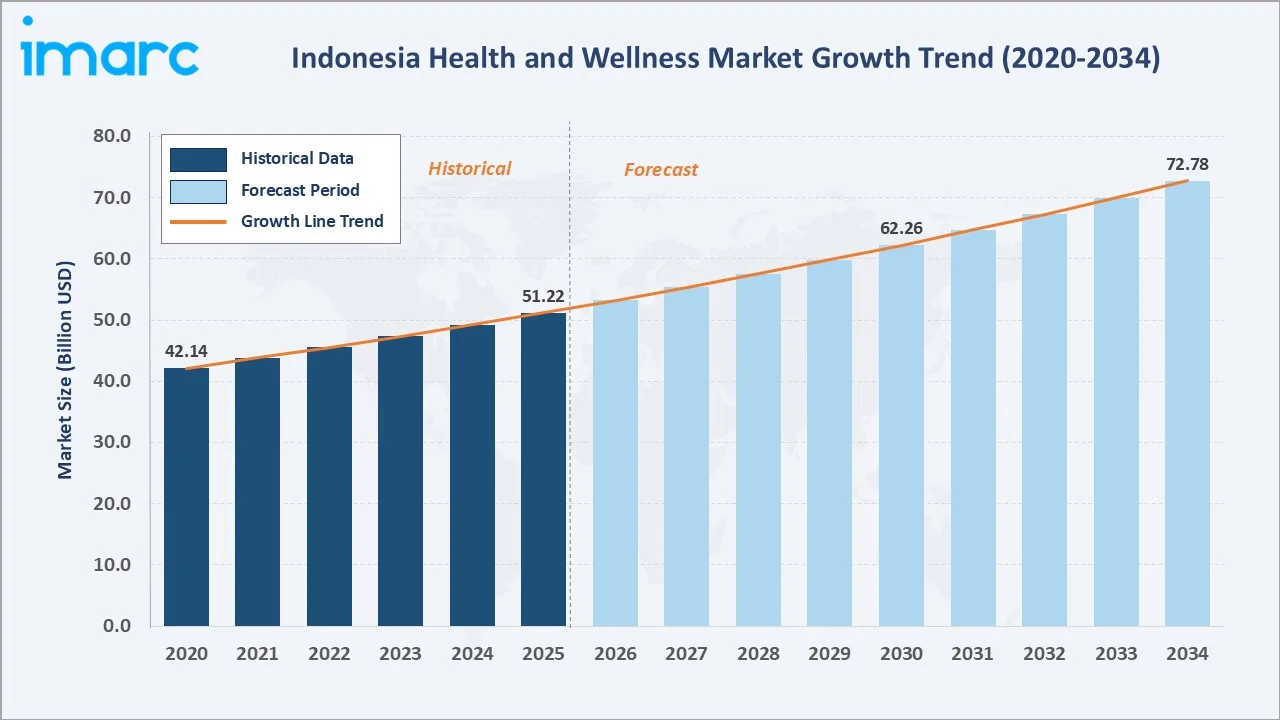
The Indonesia health and wellness market size increased from USD 51.22 Billion in 2025 to USD 53.26 Billion in 2026 and is projected to reach USD 72.78 Billion by 2034, growing at a CAGR of 3.98% during 2026-2034. Rising health awareness, e-commerce expansion, and government health initiatives drive growth. Functional Foods and Beverages lead at 42.6%. Java commands 58.4% regional share.
Market Snapshot
|
Metric |
Value |
|
Base Year Market Size (2025) |
USD 51.22 Billion |
| Market Size (2026) | USD 53.26 Billion |
|
Forecast Market Size (2034) |
USD 72.78 Billion |
|
CAGR (2026-2034) |
3.98% |
|
Base Year |
2025 |
|
Historical Period |
2020-2025 |
|
Forecast Period |
2026-2034 |
|
Dominant Product Type |
Functional Foods and Beverages (42.6%, 2025) |
|
Dominant Functionality |
Nutrition and Weight Management (23.7%, 2025) |
|
Leading Region |
Java (58.4%, 2025) |
The market grew from USD 42.14 Billion in 2020 to USD 51.22 Billion in 2025 and an estimated USD 53.26 Billion in 2026, anchored at USD 62.26 Billion in 2030 and projected to reach USD 72.78 Billion by 2034. Post-pandemic health consciousness, expanding modern trade, and digital health adoption underpin the structural demand trajectory.
To get more information on this market, Request Sample
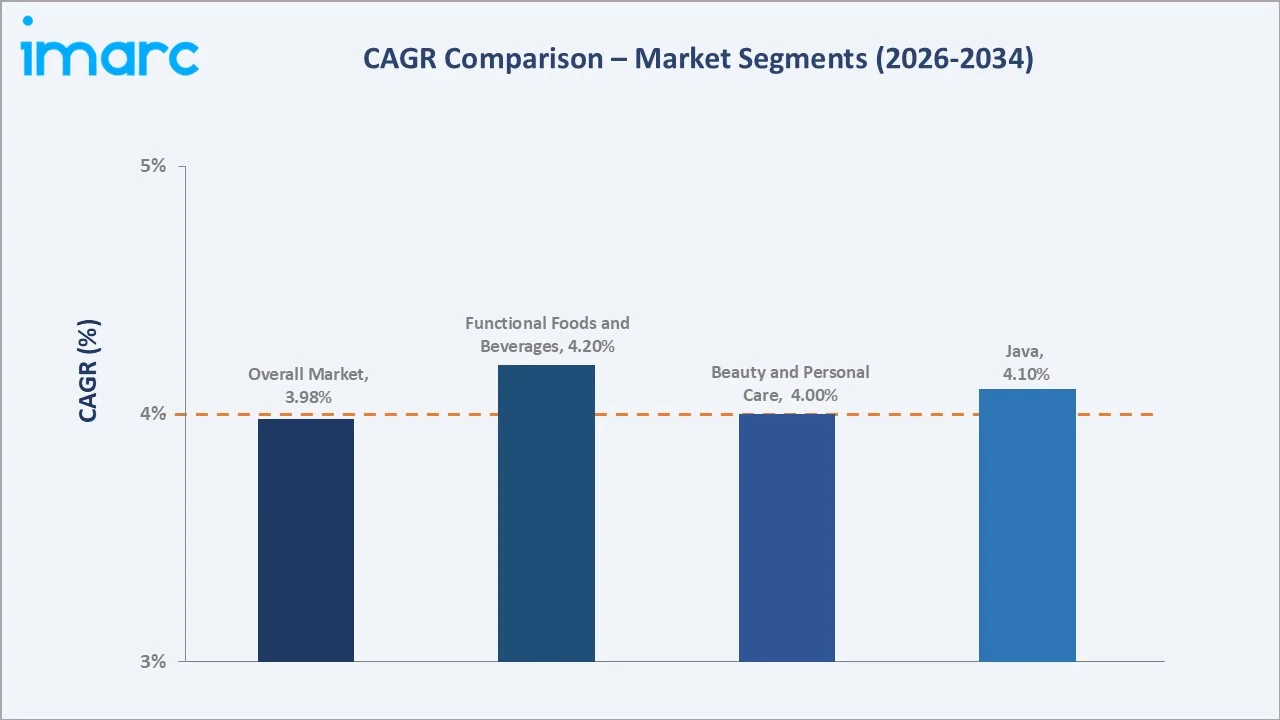
Functional Foods and Beverages lead at 42.6% through rising demand for fortified products and health-positioned beverages. Nutrition and Weight Management leads functionality at 23.7%. Java dominates regionally at 58.4% through population concentration and modern trade density.
Executive Summary
The Indonesia health and wellness market, which increased from USD 51.22 Billion in 2025 to an estimated USD 53.26 Billion in 2026, representing one of Southeast Asia's most dynamic consumer health ecosystems driven by demographic strength, rising income levels, and a post-pandemic shift toward preventive care and healthy living.
Functional Foods and Beverages at 42.6% dominate through fortified food and nutraceutical beverage penetration. Nutrition and Weight Management at 23.7% leads functionality through growing obesity awareness and active lifestyle adoption. Java at 58.4% leads regionally through population concentration and retail infrastructure.
Key Market Insights
|
Insight |
Data |
|
Dominant Product Type |
Functional Foods and Beverages – 42.6% share (2025) |
|
Dominant Functionality |
Nutrition and Weight Management – 23.7% market share (2025) |
|
Leading Region |
Java – 58.4% market share (2025) |
|
Market Opportunity |
Preventive medicine personalization; jamu-modern integration; digital health platforms; Sumatra and Kalimantan geographic expansion |
Key Analytical Observations Supporting the Above Data:
- Functional Foods and Beverages at 42.6%: This segment dominates through the rapid expansion of fortified foods, protein-enriched products, and functional beverages targeting immunity and energy. Indonesia's large youth population and growing middle class drive consistent demand. Manufacturers are launching halal-certified functional SKUs specifically targeting Indonesian consumer preferences and dietary habits.
- Nutrition and Weight Management at 23.7%: This functionality leads as urban Indonesians increasingly adopt calorie-conscious diets and supplement regimens driven by rising obesity prevalence. Digital fitness platforms and social media health influencers accelerate product awareness. International brands including Herbalife and local players like Nutrifood are expanding weight management portfolio breadth.
- Java at 58.4%: Java leads through its concentration of over 60% of Indonesia's population and the highest density of modern trade, pharmacies, and health specialty retail. Superior cold-chain infrastructure and digital delivery platform penetration in Jakarta, Surabaya, and Bandung enable consistent product availability across health categories.
Indonesia Health and Wellness Market Overview
The Indonesia health and wellness market encompasses functional foods and beverages, beauty and personal care products, preventive and personalized medicinal products, and other wellness categories serving a population exceeding 280 million across diverse regional markets.
The ecosystem integrates raw material suppliers, contract manufacturers, global multinationals, domestic brands, cold-chain logistics providers, pharmacies, modern trade retailers, and digital health platforms. Macroeconomic tailwinds include rising disposable incomes, urbanization, government health investment, and Indonesia's large millennial consumer base.
Market Dynamics
To evaluate market opportunities, Request Sample
Market Drivers
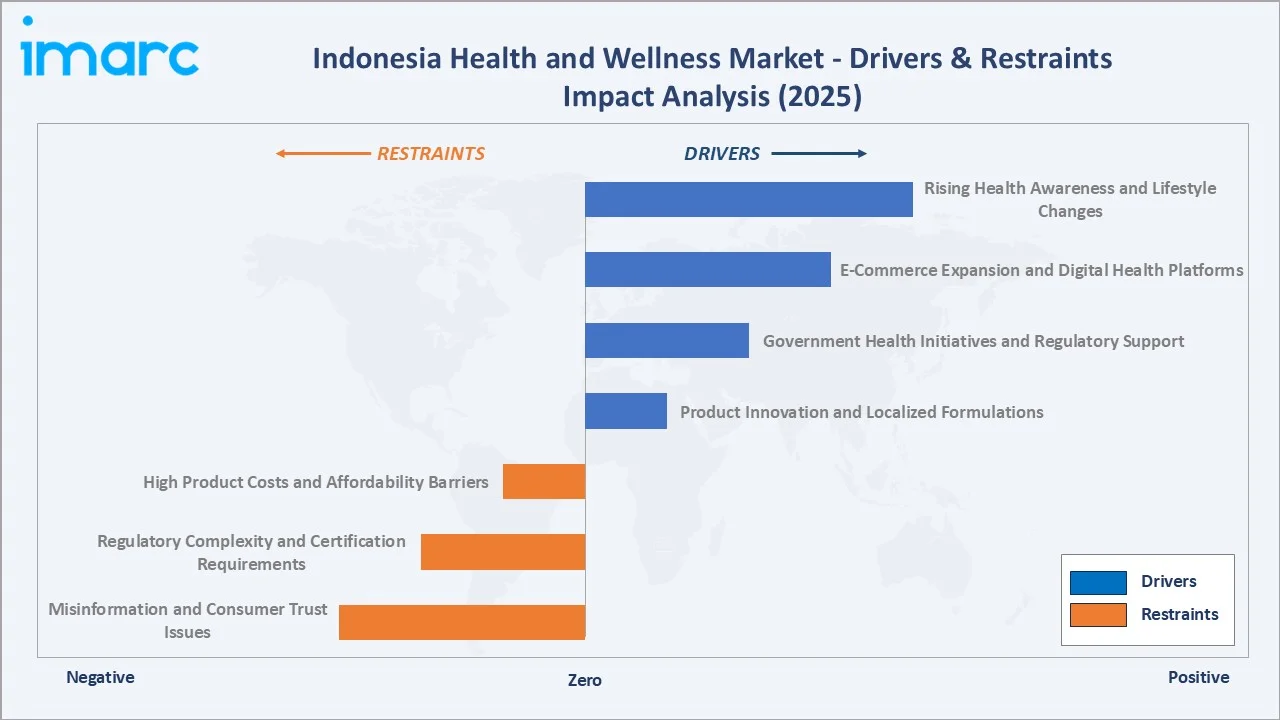
- Rising Health Awareness and Lifestyle Changes: Growing consumer consciousness about preventive health, triggered by the COVID-19 pandemic, has significantly elevated demand for health and wellness products. Urban Indonesians are increasingly adopting exercise routines, health monitoring apps, and dietary supplements as daily habits. This lifestyle shift is creating sustained volume demand across functional foods, nutraceuticals, and personal care wellness categories.
- E-Commerce Expansion and Digital Health Platforms: Rapid e-commerce penetration has made health and wellness products accessible across Indonesia's archipelago, bypassing the cold-chain limitations of traditional retail distribution. Platforms such as Tokopedia, Shopee, and Halodoc facilitate product discovery and purchase across urban and semi-urban markets. AI-powered health apps are further enhancing consumer engagement with personalized wellness recommendations.
- Government Health Initiatives and Regulatory Support: Indonesia's government continues investing in public health infrastructure, food labeling standards, and universal healthcare coverage through the BPJS Kesehatan scheme. Programs promoting nutrition education and sports participation are expanding the health and wellness addressable consumer base. Halal certification standardization is also streamlining market access for compliant health product manufacturers.
- Product Innovation and Localized Formulations: Manufacturers are launching products combining modern health science with Indonesian traditional health wisdom, including jamu-inspired functional beverages and herbal supplement innovations. Local flavor adaptations, affordable price-point entries, and smaller pack sizes are expanding accessibility to middle and lower-income consumer segments across Java and Sumatra.
Market Restraints
- High Product Costs and Affordability Barriers: Premium health and wellness products remain unaffordable for Indonesia's large lower-income population segment. Price sensitivity limits volume growth in preventive and personalized medicinal product categories. Imported raw materials and specialized formulations elevate production costs, constraining manufacturers' ability to deliver value-positioned products without compromising margin.
- Regulatory Complexity and Certification Requirements: Halal certification requirements from MUI, BPOM registration, and complex import licensing create significant compliance costs and market entry barriers for international health brands. Regulatory timelines can delay product launches by 12-24 months, limiting the pace of innovation-led growth in the preventive and personalized medicine segment.
- Misinformation and Consumer Trust Issues: The proliferation of unverified health claims on social media is undermining consumer trust in legitimate health and wellness products. Counterfeit supplements and uncertified herbal products circulating in traditional markets are eroding category credibility. This trust deficit is particularly challenging for emerging functional food brands and personalized medicine entrants.
Market Opportunities
- Jamu-Modern Integration and Herbal Wellness Innovation: Indonesia's rich jamu tradition represents a significant opportunity for brands that successfully integrate traditional herbal science with modern standardized formulations. Premiumized jamu products targeting urban health-conscious consumers command higher price points and benefit from strong cultural authenticity and trust.
- Geographic Expansion into Sumatra and Kalimantan: Improving retail infrastructure and rising middle-class populations in Sumatra's urban centers and Kalimantan's IKN development zone present significant underpenetrated market access opportunities. Organized health retail and digital commerce penetration into these regions can unlock substantial incremental revenue for established health brands.
Market Challenges
- Supply Chain Dependency on Imported Raw Materials: Indonesia's health and wellness manufacturers import a significant proportion of specialty ingredients, active pharmaceutical ingredients, and nutraceutical raw materials. Currency volatility and global supply chain disruptions create input cost unpredictability, challenging margin management for domestic producers.
- Fragmented Traditional Trade and Distribution Complexity: Indonesia's archipelagic geography and dominance of traditional warungs and small pharmacies in outer island markets create high distribution cost structures. Reaching consumers beyond Java with consistent product availability and freshness requires substantial cold-chain and logistics investment that most smaller domestic brands cannot sustain.
Emerging Market Trends
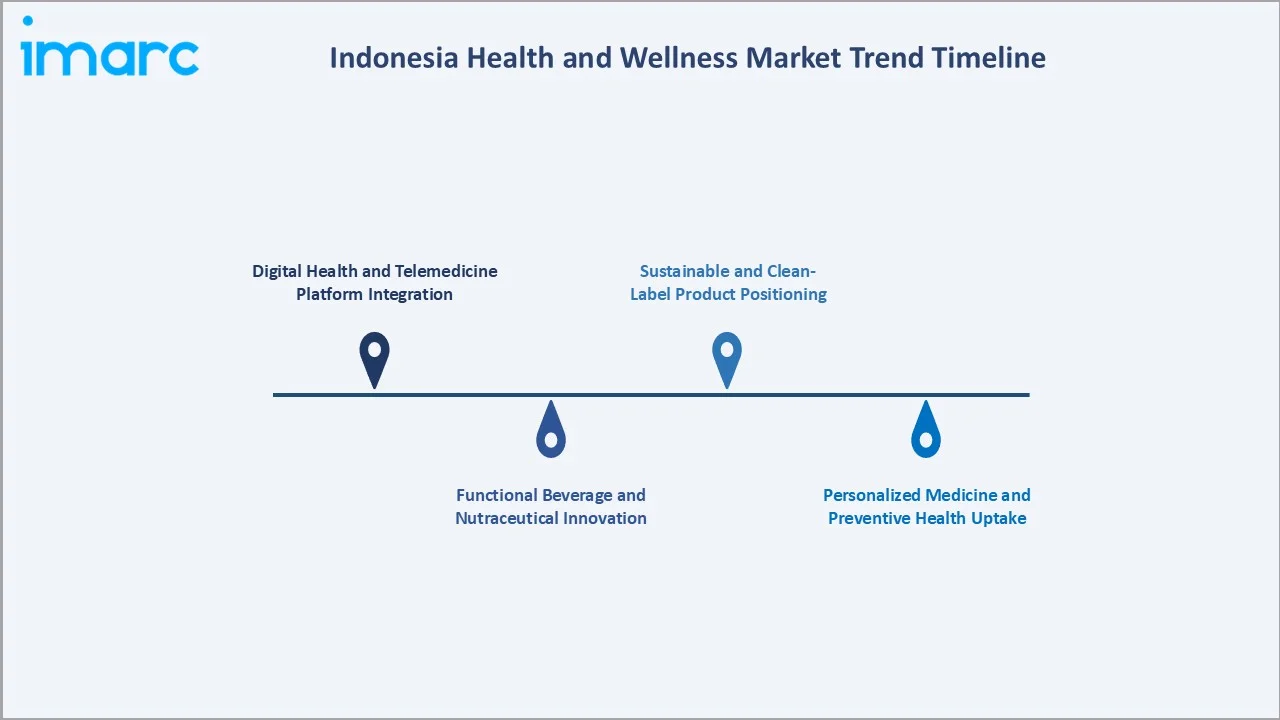
1. Digital Health and Telemedicine Platform Integration
AI-powered telemedicine platforms such as Halodoc and KlikDokter are serving millions of Indonesians with digital diagnostics and personalized health recommendations. Integration with health product e-commerce is creating direct-to-consumer health wellness pathways that bypass traditional retail channels and accelerate supplement and wellness product adoption.
2. Functional Beverage and Nutraceutical Innovation
The functional beverage segment is experiencing rapid innovation with protein drinks, collagen water, probiotic beverages, and immunity-boosting shots gaining mainstream consumer adoption. Manufacturers are investing in novel delivery formats and clinically substantiated ingredient claims to differentiate in Indonesia's increasingly competitive health beverage space.
3. Personalized Medicine and Preventive Health Uptake
Growing consumer interest in DNA-based nutrition, microbiome testing, and personalized supplement stacks is emerging in Indonesia's premium urban market. Technology platforms enabling health data analysis and tailored wellness product recommendations are establishing personalized health as the next growth frontier in the Indonesian wellness market.
4. Sustainable and Clean-Label Product Positioning
Health-conscious Indonesian consumers, particularly among younger demographics, are increasingly demanding clean-label, organic, and sustainably sourced health products. Brands that communicate ingredient transparency, environmental responsibility, and halal certification compliance are achieving premium positioning and stronger consumer loyalty in urban markets.
Industry Value Chain Analysis
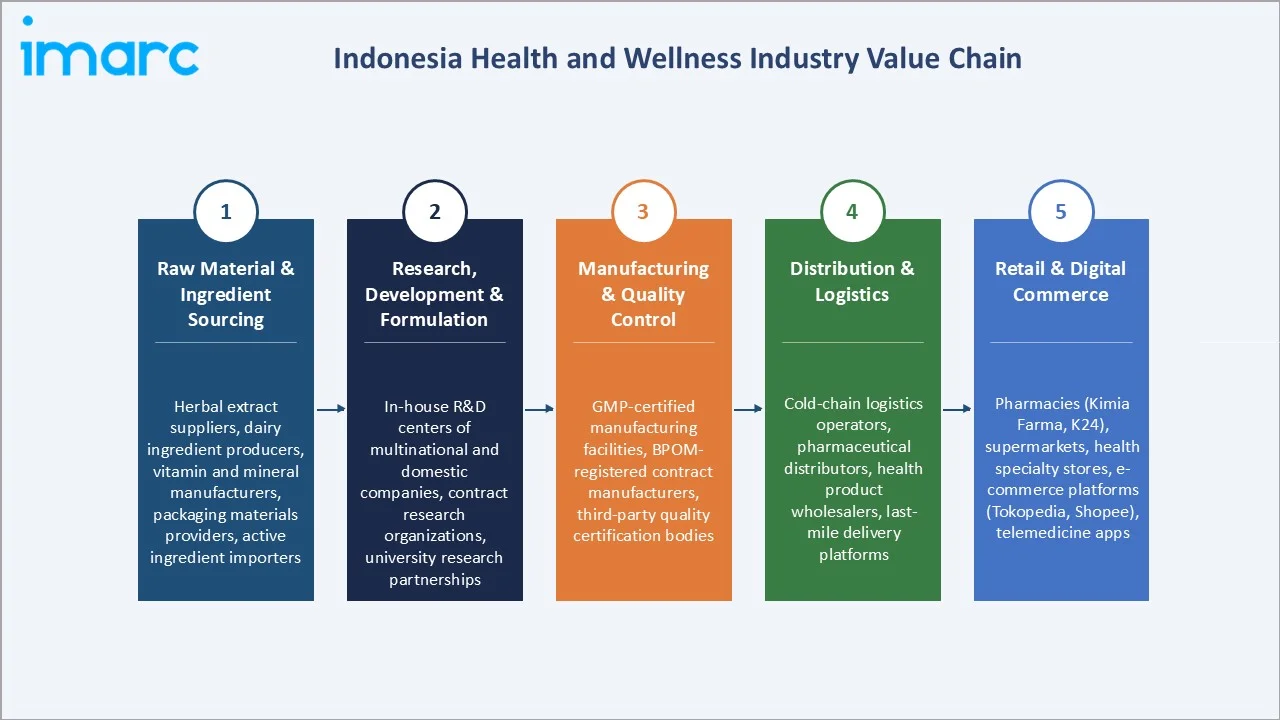
The Indonesia health and wellness value chain integrates raw material and ingredient sourcing, research and formulation, manufacturing and quality control, logistics and distribution, retail and digital commerce, and end consumer engagement. The architecture is progressively shifting toward digital-enabled direct-to-consumer models.
|
Stage |
Key Participants |
|
Raw Material & Ingredient Sourcing |
Herbal extract suppliers, dairy ingredient producers, vitamin and mineral manufacturers, packaging materials providers, active ingredient importers |
|
Research, Development & Formulation |
In-house R&D centers of multinational and domestic companies, contract research organizations, university research partnerships |
|
Manufacturing & Quality Control |
GMP-certified manufacturing facilities, BPOM-registered contract manufacturers, third-party quality certification bodies |
|
Distribution & Logistics |
Cold-chain logistics operators, pharmaceutical distributors, health product wholesalers, last-mile delivery platforms |
|
Retail & Digital Commerce |
Pharmacies (Kimia Farma, K24), supermarkets, health specialty stores, e-commerce platforms (Tokopedia, Shopee), telemedicine apps |
The manufacturing and R&D tier is most commercially critical, with companies investing in GMP certification and clinical substantiation. Digital retail and telemedicine integration represents the most rapidly evolving stage, creating new consumer access points across Indonesia's outer islands.
Technology Landscape in the Indonesia Health and Wellness Industry
AI-Powered Digital Health and Diagnostics Technology
AI-enabled telemedicine platforms are transforming health product engagement by delivering personalized recommendations based on individual health data. Real-time diagnostic tools integrated with supplement and functional food e-commerce create closed-loop health management ecosystems that drive repeat purchase behavior.
Advanced Nutraceutical Formulation and Delivery Technology
Microencapsulation, liposomal delivery systems, and nanoparticle formulations are improving bioavailability of active health ingredients in functional foods and supplements. These technologies enable product differentiation through scientifically demonstrable efficacy claims, supporting premium positioning in the competitive Indonesian wellness market.
Halal and Sustainable Manufacturing Technology
Advanced fermentation biotechnology and plant-based active ingredient extraction technologies enable halal-compliant nutraceutical production without animal-derived ingredients. These technologies support expanding halal-certified product portfolios while meeting growing consumer demand for clean-label and sustainably produced wellness products.
Market Segmentation Analysis
The report covers the following segments:
|
Segment Category |
Leading Segment |
Market Share |
Year |
|
Product Type |
Functional Foods and Beverages |
42.6% |
2025 |
|
Functionality |
Nutrition and Weight Management |
23.7% |
2025 |
|
Region |
Java |
58.4% |
2025 |

By Product Type
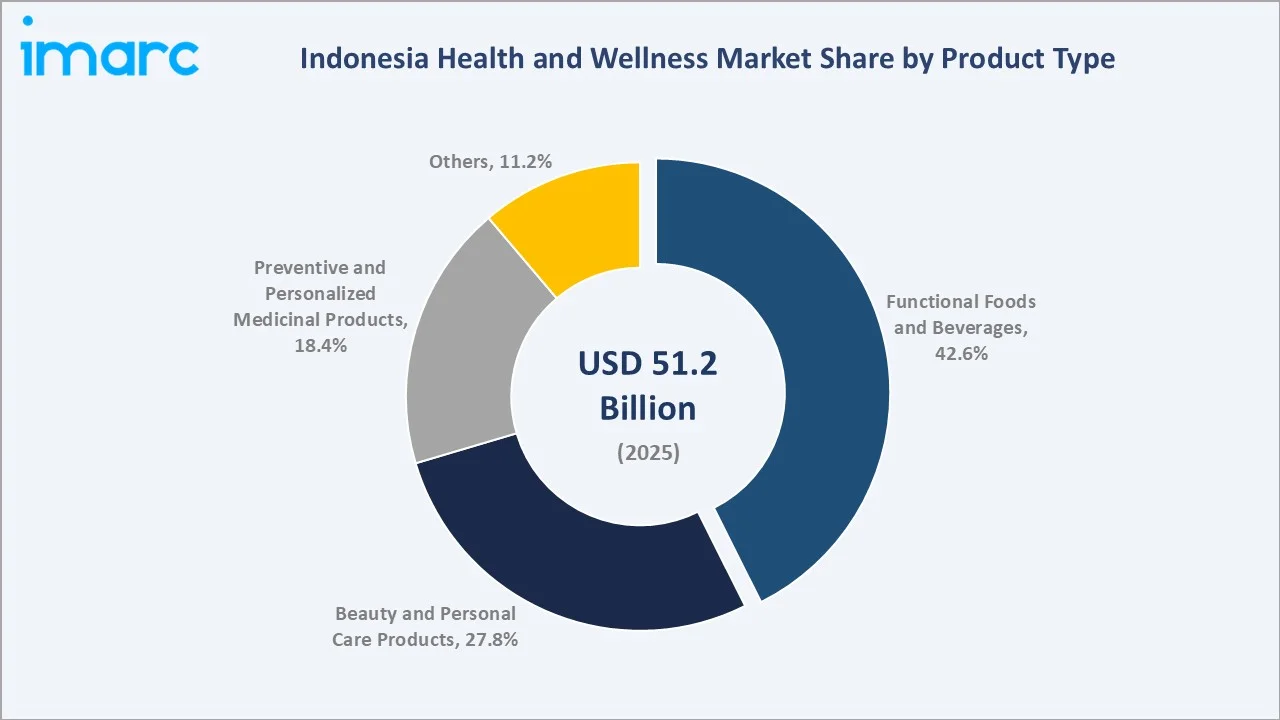
Functional Foods and Beverages leads at 42.6% in 2025, capturing the largest share through widespread consumer adoption of fortified foods, protein products, and immunity-boosting beverages across modern and traditional trade channels nationwide.
To access detailed market analysis, Request Sample
Beauty and Personal Care Products at 27.8% reflects strong consumer spending on skin health, hair care, and body wellness categories. Preventive and Personalized Medicinal Products at 18.4% is the fastest-growing segment. Others at 11.2% includes wellness services and fitness categories.
By Functionality
Nutrition and Weight Management leads at 23.7% in 2025, driven by rising obesity prevalence, active lifestyle adoption, and strong growth in meal replacement products and dietary supplements across Indonesia's urban consumer base.
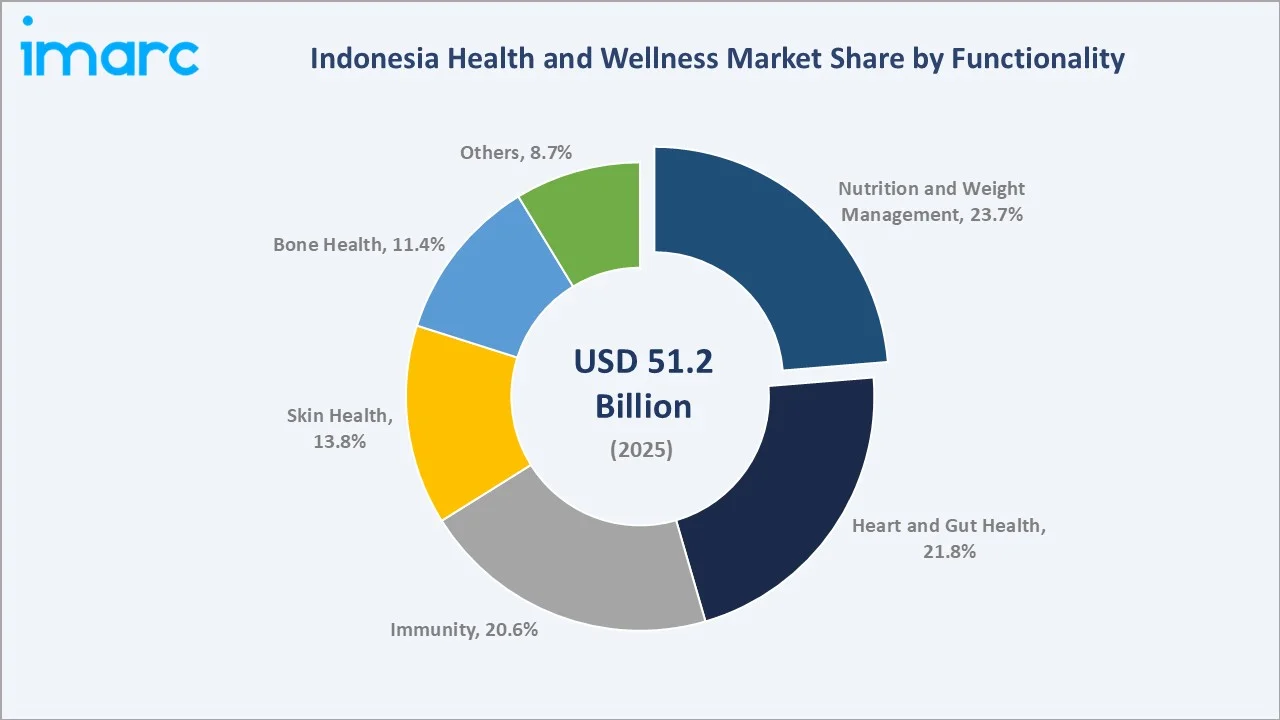
Heart and Gut Health at 21.8% reflects growing awareness of cardiovascular and digestive wellness. Immunity at 20.6% remains elevated post-pandemic. Skin Health at 13.8%, Bone Health at 11.4%, and Others at 8.7% complete the functionality landscape.
Regional Market Insights
|
Region |
Share (2025) |
Key Health and Wellness Market Drivers & Characteristics |
|
Java |
58.4% |
Largest population concentration; highest modern trade density; strong digital health platform adoption in Jakarta, Surabaya, and Bandung; premium wellness product consumption |
|
Sumatra |
18.7% |
Second-largest regional market; growing urbanization in Medan and Palembang; expanding pharmacy and health retail penetration; rising middle-class wellness spending |
|
Kalimantan |
9.2% |
Emerging market supported by IKN capital development; improving retail infrastructure; growing urban health awareness; traditional herbal product preference |
|
Sulawesi |
7.8% |
Driven by Makassar urban growth; pharmacy channel expansion; food service and food supplement distribution developing; modern trade penetration accelerating |
|
Others |
5.9% |
Early-stage markets in Papua, Maluku, and Nusa Tenggara; traditional remedies dominant; cold-chain and logistics constraints limit organized brand penetration |
Java at 58.4% leads through its dense urban population and highly developed health retail ecosystem.
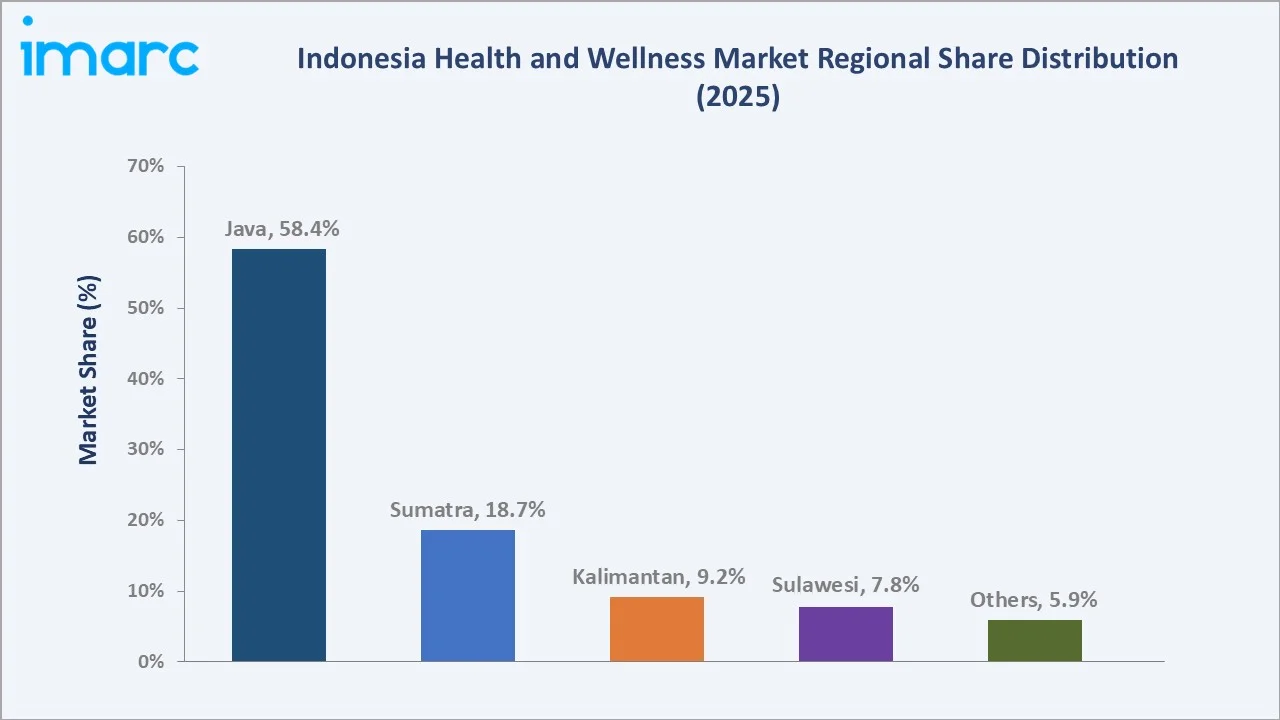
Sumatra at 18.7% is the key growth frontier as retail modernization accelerates. Kalimantan and Sulawesi are rapidly developing markets supported by infrastructure investment and rising consumer health awareness.
Competitive Landscape
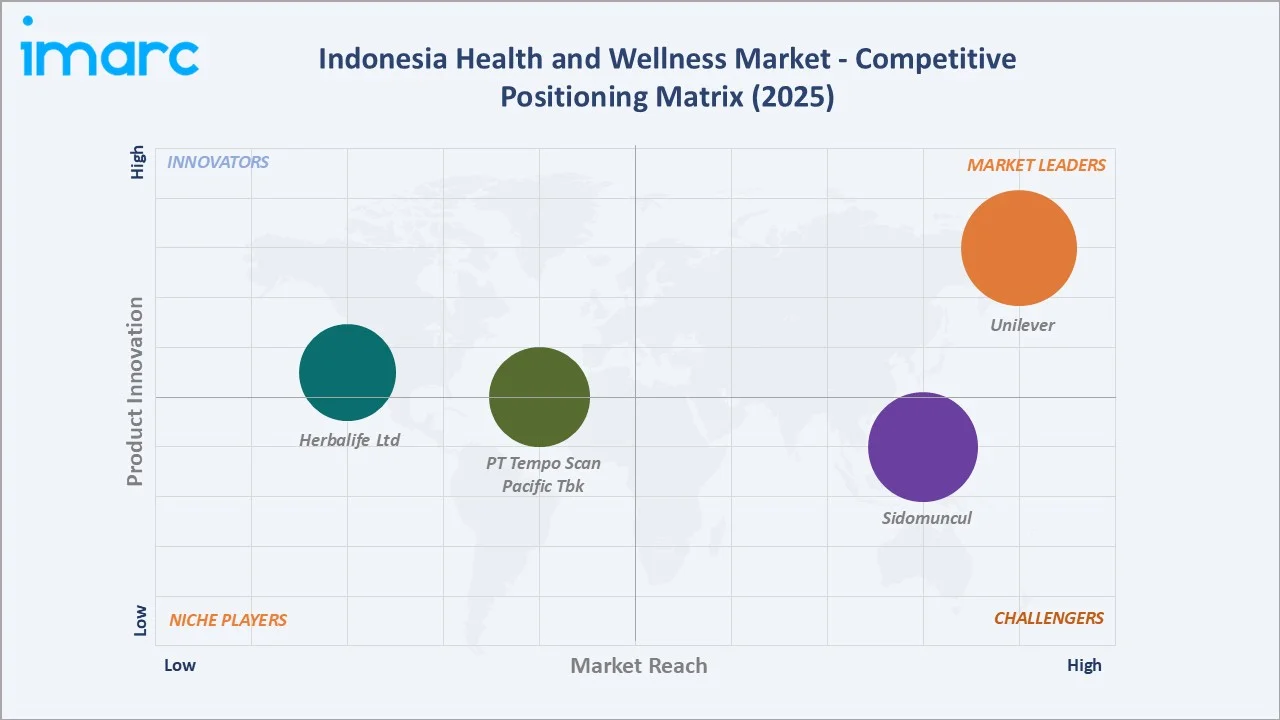
The Indonesia health and wellness market competitive landscape is moderately concentrated with global multinationals, large domestic conglomerates, and specialized wellness companies competing across product type and functionality segments.
|
Company Name |
Key Products |
Market Position |
Core Strength |
|
Unilever |
Lifebuoy, Dove, Clear, Vaseline, TRESemmé |
Market Leader |
Leading beauty and personal care wellness brand portfolio; widest retail distribution; strong digital marketing capabilities across Indonesian consumer segments |
|
Sidomuncul |
Tolak Angin, Kuku Bima Ener-G, Jamu Komplit |
Strong Challenger |
Iconic Indonesian herbal brand with 80+ year heritage; strong jamu and energy drink segments; mass-market penetration across all Indonesian regions |
|
PT Tempo Scan Pacific Tbk |
Bodrex, Hemaviton, NEO Rheumacyl, Vidoran |
Established Player |
Established domestic pharmaceutical and supplement brand; strong pharmacy channel distribution; wide OTC health product portfolio across wellness categories |
|
Herbalife Ltd. |
Formula 1, Herbalife Protein, Herbalife Tea |
Established Player |
Direct selling model with extensive distributor network across Indonesia; strong weight management and sports nutrition positioning; global brand equity |
Key players include Unilever, Sidomuncul, PT Tempo Scan Pacific Tbk, Herbalife Ltd., and others.
Key Company Profiles
Unilever
Unilever is one of Indonesia's largest consumer goods companies with leadership positions across beauty and personal care, home care, and health-positioned food categories.
- Key Products: Lifebuoy (health hygiene), Dove (skin wellness), Clear (scalp care), Vaseline (skin care), TRESemmé (hair wellness), Pepsodent (oral health).
- Strategic Focus: Unilever is focused on premiumizing its beauty and personal care health portfolio, strengthening digital commerce and social commerce capabilities, investing in sustainable ingredient sourcing aligned with Indonesian consumer clean-label expectations, and expanding health-positioned product innovations addressing skin, hair, and hygiene wellness needs.
Sidomuncul
Sidomuncul is a publicly listed Indonesian herbal medicine and consumer health company headquartered in Semarang, Central Java. Sidomuncul is one of Indonesia's most iconic jamu and herbal wellness brands with over 250 registered products.
- Key Products: Tolak Angin (herbal cold remedy), Kuku Bima Ener-G (energy drink), Jamu Komplit, Vitamin D3 supplements, Natural Kidnera herbal formula.
- Strategic Focus: Sido Muncul is focused on modernizing its herbal product formulations using advanced biotechnology, expanding into premium supplement categories including bone health and immunity, strengthening e-commerce and modern trade channel presence, and scaling international export operations across Southeast Asian markets.
Market Concentration Analysis
The Indonesia health and wellness market is moderately fragmented at the product category level. The key players collectively account for an estimated 20-25% of total market revenue. Domestic players command a significant share in the herbal and traditional segment. International players hold meaningful positions in premium nutrition segments.
Investment & Growth Opportunities
Highest Growth Segments
Preventive and Personalized Medicinal Products (~5-6% CAGR), digital health and telemedicine integration (~10-15% CAGR), plant-based and clean-label wellness products (~5-7% CAGR), Sumatra regional expansion (~4-5% CAGR), and beauty wellness personal care premiumization (~4% CAGR) represent the highest-growth investment vectors through 2034.
Emerging Investment Opportunities
Indonesia's IKN capital development in Kalimantan and improving retail infrastructure in Sumatra are creating geographic market expansion opportunities for organized health and wellness brands. First-mover distribution advantages in these regions can unlock significant incremental consumer access for brands investing ahead of competitors.
Investment Themes
- Digital health ecosystem integration: Building connected health product e-commerce, telemedicine referral, and personalized wellness data platforms creates recurring revenue streams with demonstrated consumer engagement and loyalty metrics that exceed traditional retail purchase frequency in Indonesian metropolitan markets.
- Jamu-modern science convergence: Premiumizing traditional Indonesian herbal products through modern standardized formulations, clinical substantiation, and clean-label positioning captures the aspiration-quality intersection of Indonesia's growing health-conscious consumer segment that values both cultural authenticity and scientific credibility.
Future Market Outlook (2026-2034)
The Indonesia health and wellness market is projected to grow from USD 51.22 Billion in 2025 to USD 53.26 Billion in 2026 and is forecast to reach USD 72.78 Billion by 2034 at a 3.98% CAGR. The mid-period anchor of approximately USD 62.26 Billion in 2030 represents the market at its digital health integration inflection point.
Three structural forces define growth through 2034: Indonesia's demographic dividend sustaining wellness product demand; digital health platform expansion enabling personalized product engagement at scale; and rising middle-class aspirations driving premiumization from mass-market toward functional, preventive, and personalized wellness formats.
Research Methodology
Primary Research
Primary research comprised structured interviews with 50+ industry stakeholders (2025) including health brand managers, pharmacists, nutraceutical R&D specialists, e-commerce health category managers, nutritionists, and retail health buyers across Java, Sumatra, and Kalimantan.
Secondary Research
Secondary research encompassed company annual reports (PT Kalbe Farma, PT Unilever Indonesia, PT Sido Muncul); BPOM regulatory databases; Ministry of Health Indonesia statistics; Euromonitor consumer health data; Nielsen Indonesia retail audit data; and IMARC proprietary health and wellness database. Over 60 secondary sources reviewed.
Forecasting Models
Market forecasts used a demand-side bottom-up model: (i) per-capita health and wellness expenditure by urban/rural classification and income tier; (ii) population and income projections by region; (iii) product category mix by distribution channel; (iv) adjustments for digital health penetration trajectory and premiumization rate assumptions across 2026-2034.
Indonesia Health and Wellness Market Report Coverage:
| Report Features | Details |
|---|---|
| Base Year of the Analysis | 2025 |
| Historical Period | 2020-2025 |
| Forecast Period | 2026-2034 |
| Units | Billion USD |
| Scope of the Report |
Exploration of Historical and Forecast Trends, Industry Catalysts and Challenges, Segment-Wise Historical and Predictive Market Assessment:
|
| Product Types Covered | Functional Foods and Beverages, Beauty and Personal Care Products, Preventive and Personalized Medicinal Products, Others |
| Functionalities Covered | Nutrition and Weight Management, Heart and Gut Health, Immunity, Bone Health, Skin Health, Others |
| Regions Covered | Java, Sumatra, Kalimantan, Sulawesi, Others |
| Companies Covered | Unilever, Sidomuncul, PT Tempo Scan Pacific Tbk, Herbalife Ltd., etc. |
| Customization Scope | 10% Free Customization |
| Post-Sale Analyst Support | 10-12 Weeks |
| Delivery Format | PDF and Excel through Email (We can also provide the editable version of the report in PPT/Word format on special request) |
Key Benefits for Stakeholders:
- IMARC’s industry report offers a comprehensive quantitative analysis of various market segments, historical and current market trends, market forecasts, and dynamics of the Indonesia health and wellness market from 2020-2034.
- The research report provides the latest information on the market drivers, challenges, and opportunities in the Indonesia health and wellness market.
- Porter's five forces analysis assist stakeholders in assessing the impact of new entrants, competitive rivalry, supplier power, buyer power, and the threat of substitution. It helps stakeholders to analyze the level of competition within the Indonesia health and wellness industry and its attractiveness.
- Competitive landscape allows stakeholders to understand their competitive environment and provides an insight into the current positions of key players in the market.
Frequently Asked Questions About the Indonesia Health and Wellness Market Report
The Indonesia health and wellness market size is estimated at USD 53.26 Billion in 2026, driven by Functional Foods and Beverages leading at 42.6%, Nutrition and Weight Management at 23.7%, Java commanding 58.4% regional share, rising health consciousness, and rapid e-commerce channel expansion driving product accessibility.
The market grows at 3.98% CAGR during 2026-2034, reaching USD 72.78 Billion by 2034. Growth reflects urbanization-driven health awareness, digital health platform adoption, government wellness initiatives, and rising preventive medicine spending across Indonesian consumer segments.
Functional Foods and Beverages leads at 42.6%, driven by widespread consumer adoption of fortified foods, protein beverages, and immunity products. The segment benefits from halal-certified product expansion, e-commerce channel growth, and consistent innovation by both domestic and international brands.
Nutrition and Weight Management leads at 23.7% through growing obesity awareness, dietary supplement adoption, and functional meal replacement product demand. Digital fitness platforms and social media health content are accelerating consumer engagement with weight management health product categories.
Java leads at 58.4% through its concentration of over 60% of Indonesia's population, highest density of health retail outlets, and most developed digital health platform penetration. Jakarta, Surabaya, and Bandung are the primary consumption centers for premium health and wellness products.
Leading companies include Unilever, Sidomuncul, PT Tempo Scan Pacific Tbk, Herbalife Ltd., and others.
The market is projected to reach approximately USD 62.26 Billion by 2030, with digital health platform integration maturing as a significant sales channel, personalized medicine gaining urban consumer traction, and Sumatra and Kalimantan expanding their organized wellness market share.
Three priority opportunities: digital health ecosystem integration creating personalized product engagement, jamu-modern science convergence capturing premium urban consumer demand, and geographic expansion into Sumatra and Kalimantan as infrastructure investment unlocks organized market access beyond Java.
Need more help?
- Speak to our experienced analysts for insights on the current market scenarios.
- Include additional segments and countries to customize the report as per your requirement.
- Gain an unparalleled competitive advantage in your domain by understanding how to utilize the report and positively impacting your operations and revenue.
- For further assistance, please connect with our analysts.
 Request Customization
 Speak to an Analyst
 Request Brochure
 Inquire Before Buying
Benefits of Customization
- Personalize this research
- Triangulate with your data
- Get data as per your format and definition
- Gain a deeper dive into a specific application, geography, customer, or competitor
- Any level of personalization
Get in Touch With Us
UNITED STATES
Phone: +1-201-971-6302
INDIA
Phone: +91-120-433-0800
UNITED KINGDOM
Phone: +44-753-714-6104
Email: [email protected]
Client Testimonials




.webp)




.webp)













Related Reports

Choose your plan
*Please note that the prices mentioned below are starting prices for each bundle type. Kindly contact our team for further details.*
Single User License
- 1 User License, Access on 2 Devices
- PDF Report + Excel Dataset (Password Protected)
- Lifetime Access
- No Printing Rights
- 10% Free Report Customization
- 10–12 Weeks of Analyst Support
Five User License
- Access for 5 Users, 2 Devices per User
- PDF Report + Excel Dataset (Password Protected)
- Lifetime Access
- Dedicated Account Manager
- 12–14 Weeks of Analyst Support
- No Printing Rights
- 15% Free Report Customization
- 25% Discount on Your Next Purchase
Corporate User License
- Unlimited User Access (Within Your Organization)
- PDF Report + Excel Dataset
- Lifetime Access
- Dedicated Account Manager
- 14–20 Weeks of Analyst Support
- No Printing Rights
- 20% Free Report Customization
- 30% Discount on Your Next Purchase
Essential Insights
What's included:
3 reports
- Lifetime Access
- PDF Reports
- Excel Datasets
- 2 Weeks of Free Analyst Support
- 2 User Licenses
- Access on 2 Devices
- Printing Rights
- Complimentary PowerPoint (PPT) Version
- Complimentary License Upgrade
Professional Access
What's included:
5 reports
- Lifetime Access
- PDF Reports
- Excel Datasets
- 8 Weeks of Free Analyst Support
- 2 User Licenses
- Access on 2 Devices
- Printing Rights
- Complimentary PowerPoint (PPT) Version
- Complimentary License Upgrade
Business Advantage
What's included:
8 reports
- Lifetime Access
- PDF Reports
- Excel Datasets
- 14 Weeks of Free Analyst Support
- 2 User Licenses
- Access on 2 Devices
- Printing Rights
- Complimentary PowerPoint (PPT) Version
- Complimentary License Upgrade
Enterprise Intelligence
What's included:
10 reports
- Lifetime Access
- PDF Reports
- Excel Datasets
- 20 Weeks of Free Analyst Support
- 2 User Licenses
- Access on 2 Devices
- Printing Rights
- Complimentary PowerPoint (PPT) Version
- Complimentary License Upgrade