
Copper Sulphate Market Size, Share, Trends and Forecast by End-Use and Region, 2026-2034
Global Copper Sulphate Market Size, Share, Trends & Forecast (2026-2034)
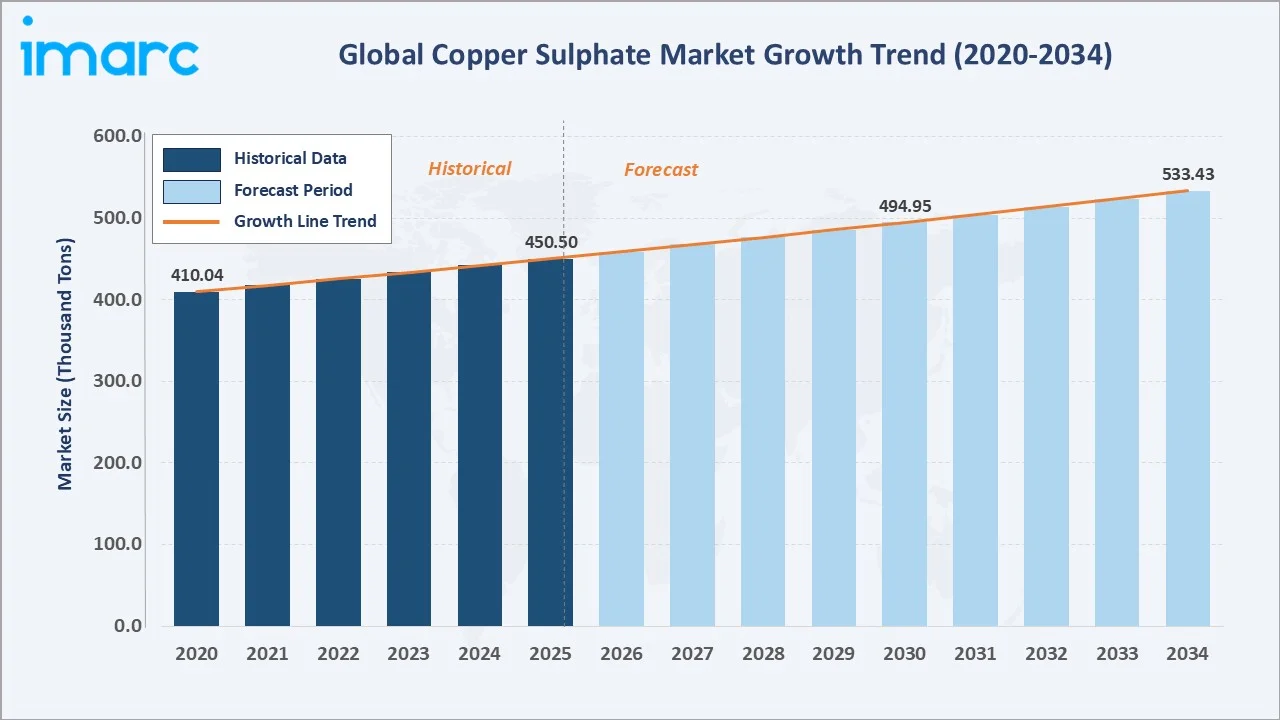
The global copper sulphate market size reached 450.50 Thousand Tons in 2025 and is projected to reach 533.43 Thousand Tons by 2034, exhibiting a CAGR of 1.90% during 2026-2034. Rising agricultural fungicide and fertilizer applications, expanding mining flotation processes, and steady industrial growth across electroplating and chemical manufacturing sectors are the primary forces driving the market.
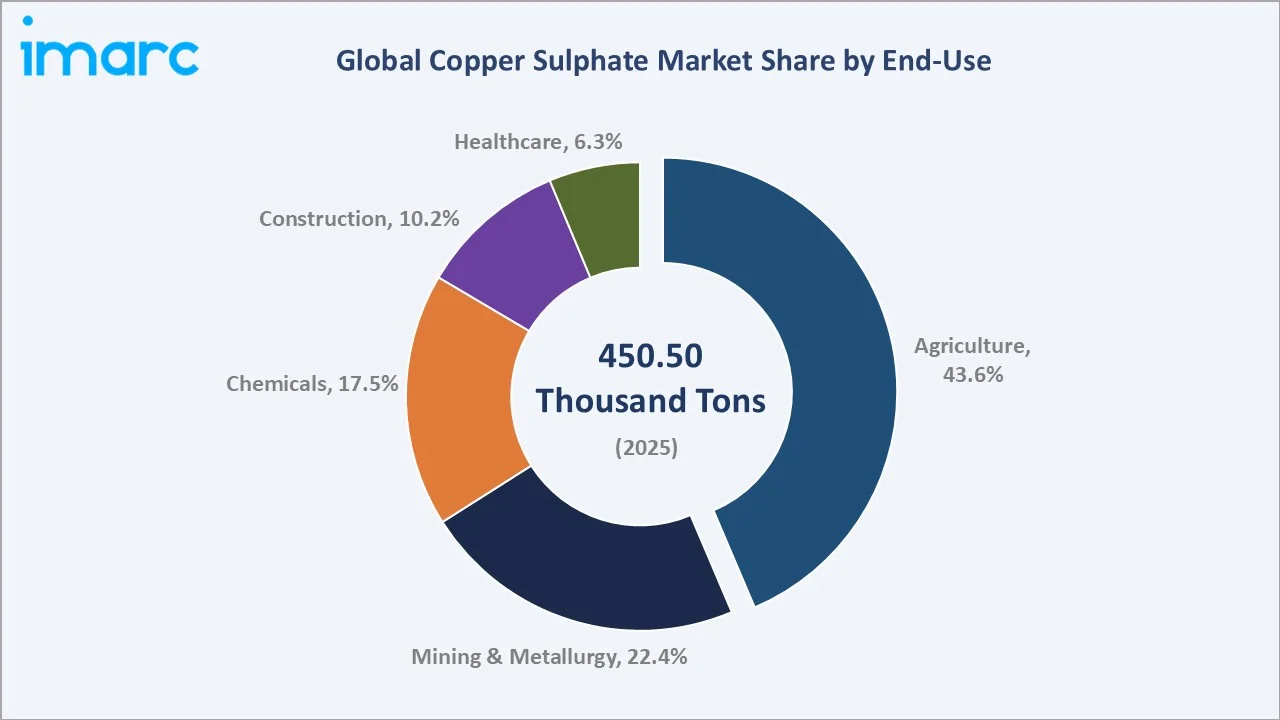
Agriculture dominates end-use at 43.6% in 2025, while Asia Pacific commands 42.1% regional share.
Market Snapshot
|
Metric |
Value |
|
Market Size (2025) |
450.50 Thousand Tons |
|
Forecast Market Size (2034) |
533.43 Thousand Tons |
|
CAGR (2026-2034) |
1.90% |
|
Base Year |
2025 |
|
Historical Period |
2020-2025 |
|
Forecast Period |
2026-2034 |
|
Largest Region |
Asia Pacific (42.1% share, 2025) |
|
Second Region |
Europe (22.5% share, 2025) |
|
Leading End-Use |
Agriculture (43.6%, 2025) |
|
Second Largest End-Use |
Mining and Metallurgy (22.4%, 2025) |
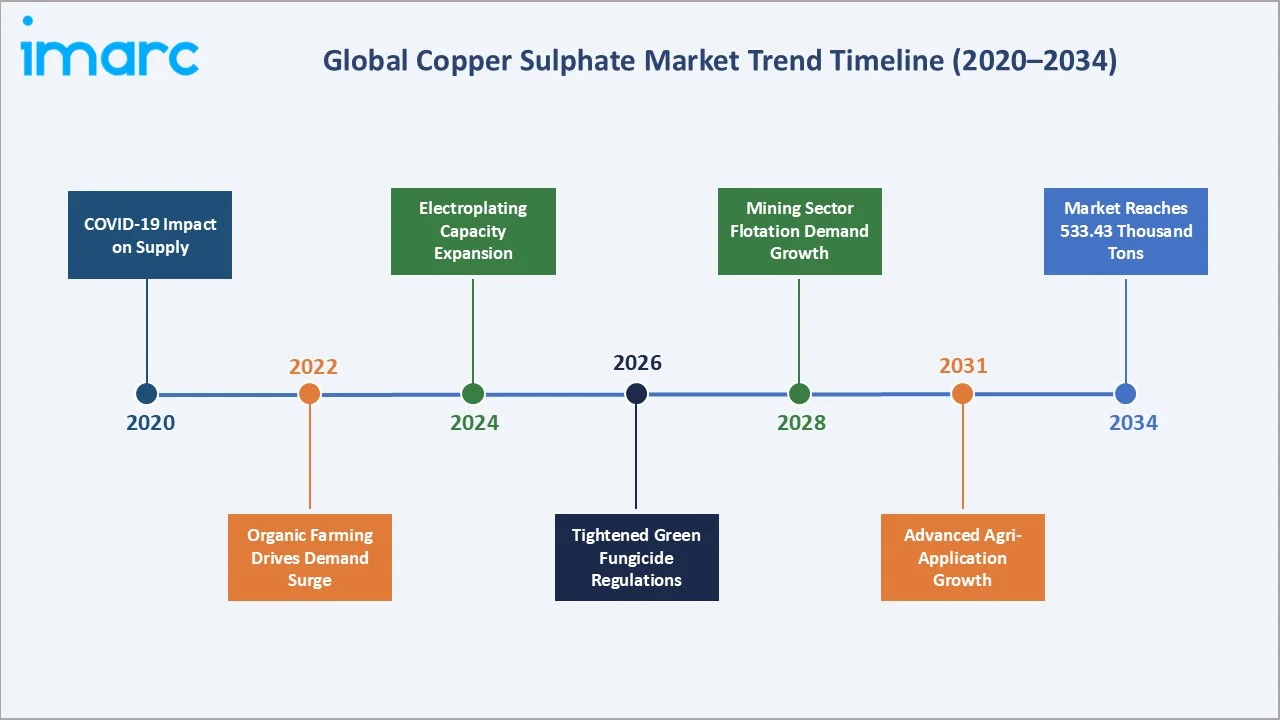
The global copper sulphate market growth trajectory from 2020 through 2034, with historical expansion to 450.50 Thousand Tons in 2025, reflects consistent agriculture-driven demand, while the forecast to 533.43 Thousand Tons captures steady mining sector, electroplating, and specialty chemical adoption globally.
To get more information on this market, Request Sample
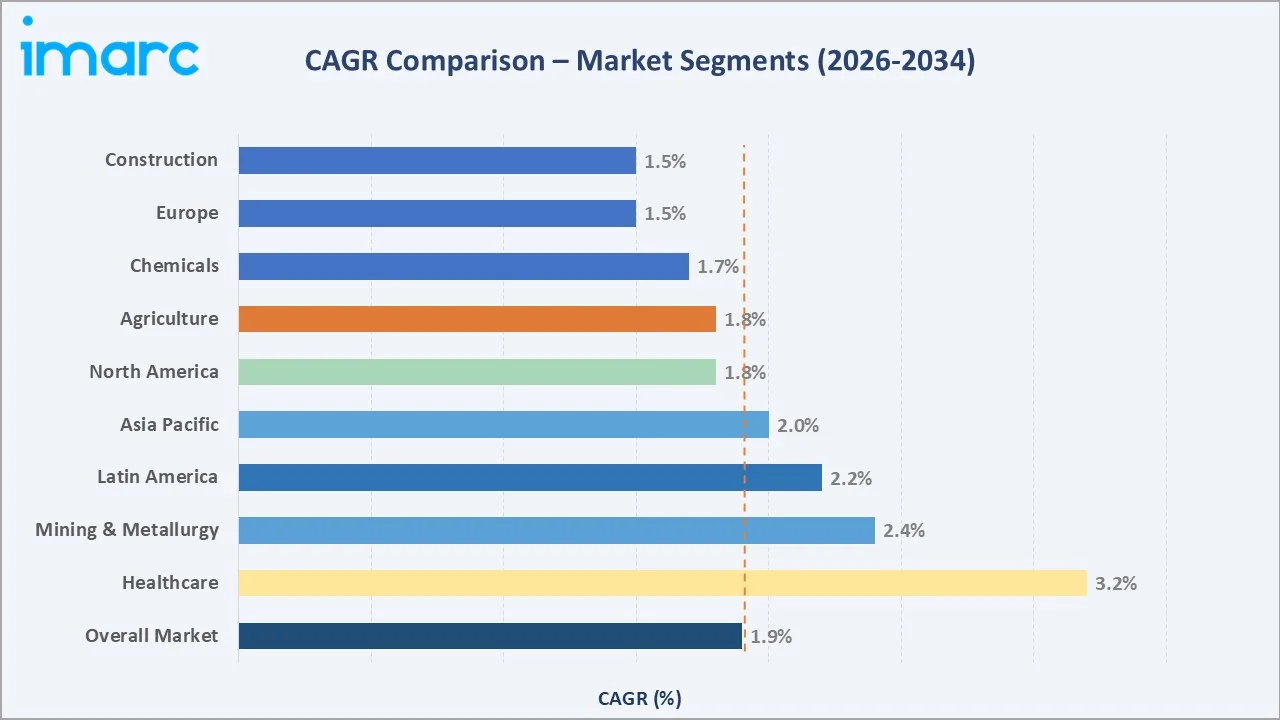
The CAGR trajectories across end-use and regional sub-segments, with healthcare at ~3.2% CAGR and mining & metallurgy at ~2.4% CAGR, represent the fastest-growing categories within the global copper sulphate industry analysis through 2034.
Executive Summary
The global copper sulphate market is on a sustained growth trajectory from 450.50 Thousand Tons in 2025 to 533.43 Thousand Tons by 2034. Copper sulphate (CuSO₄), an inorganic salt with broad industrial utility, is a non-discretionary input across agriculture, mining, chemical, construction, and healthcare sectors globally.
Agriculture dominates end-use at 43.6% in 2025 owing to widespread use as a fungicide in Bordeaux mixture, micronutrient fertilizer, and animal feed additive. Mining and metallurgy at 22.4% rely on copper sulphate for froth flotation processes in copper, gold, and zinc ore beneficiation.
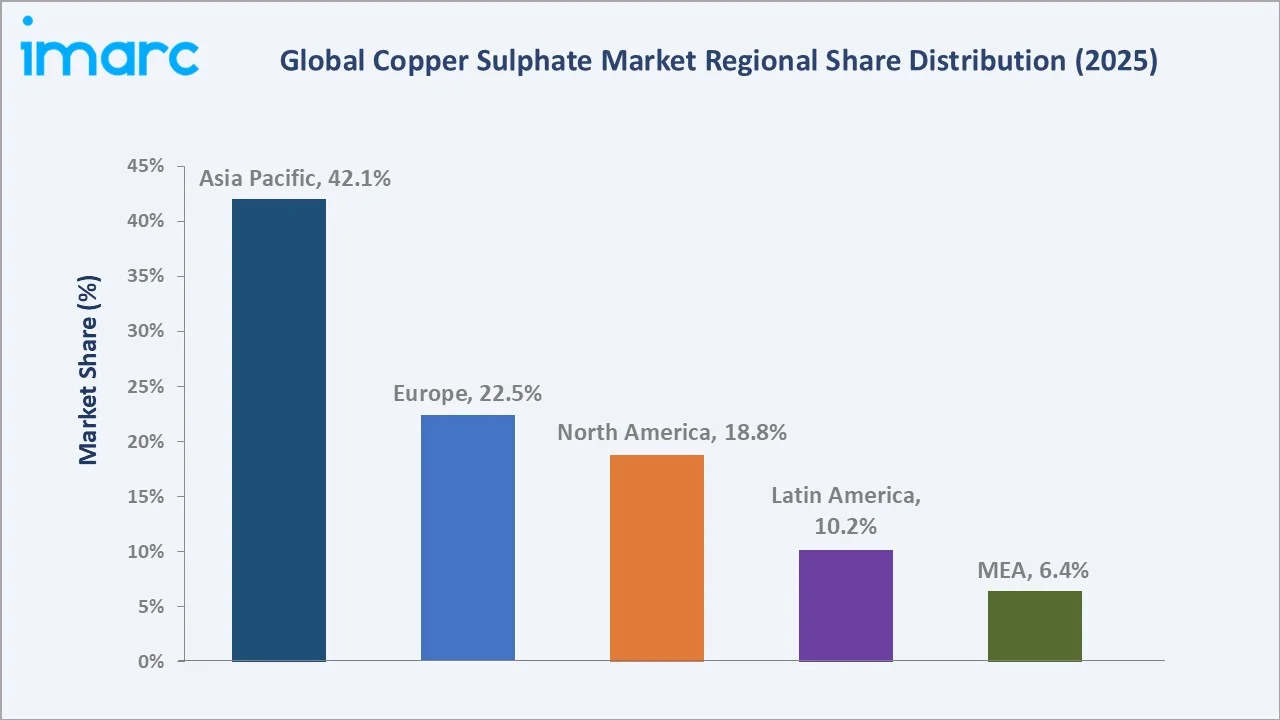
Asia Pacific commands 42.1% regional dominance in 2025, driven by China and India's large-scale agricultural base, rapidly expanding mining operations, and growing electroplating industries. Europe (22.5%) and North America (18.8%) follow, driven by specialty chemical, pharmaceutical, and organic farming applications.
Key Market Insights
|
Insight |
Data |
|
Largest End-Use |
Agriculture – 43.6% share (2025) |
|
Fastest-Growing Segment |
Healthcare – ~3.2% CAGR (2026-2034) |
|
Leading Region |
Asia Pacific – 42.1% revenue share (2025) |
|
Second Region |
Europe – 22.5% revenue share (2025) |
|
Top Companies |
Acuro Organics Limited, Allan Chemical Corporation, Jiangxi Copper Company Limited, JX Advanced Metals Corporation, Noah Chemicals, Norkem Limited, Old Bridge Minerals, ProChem, Inc., Sumitomo Metal Mining Co., Ltd. |
Key Analytical Observations Expanding On The Above Data:
- Agriculture's 43.6% dominance in 2025 reflects copper sulphate's irreplaceable role as the active ingredient in Bordeaux mixture, the world's most widely used copper-based fungicide, applied on vines, potatoes, tomatoes, and fruit crops across temperate and tropical agricultural regions globally.
- Mining and metallurgy at 22.4% in 2025 rely on copper sulphate as a flotation activator in sulphide ore processing. Expanding copper mining projects in Chile, Peru, the DRC, and Australia generate steady procurement demand from both greenfield and brownfield concentrator operations.
- Asia Pacific's 42.1% dominance reflects China's position as the world's largest copper producer and India's rapidly growing agrochemical sector. Both nations drive large-scale procurement of copper sulphate for agricultural, industrial, and electroplating end-uses simultaneously.
- Healthcare at 6.3% in 2025, benefits from expanding antifungal and antiseptic pharmaceutical applications, particularly in veterinary medicines and diagnostic reagent formulations in regulated North American and European markets.
Global Copper Sulphate Market Overview
Copper sulphate (cupric sulphate, CuSO₄) is an inorganic compound produced by reacting copper metal or copper oxide with hot concentrated sulphuric acid. It is commercially available in multiple hydration states, with the pentahydrate (CuSO₄·5H₂O), distinctive bright blue crystals, being the most widely traded form across agricultural, industrial, and laboratory applications.
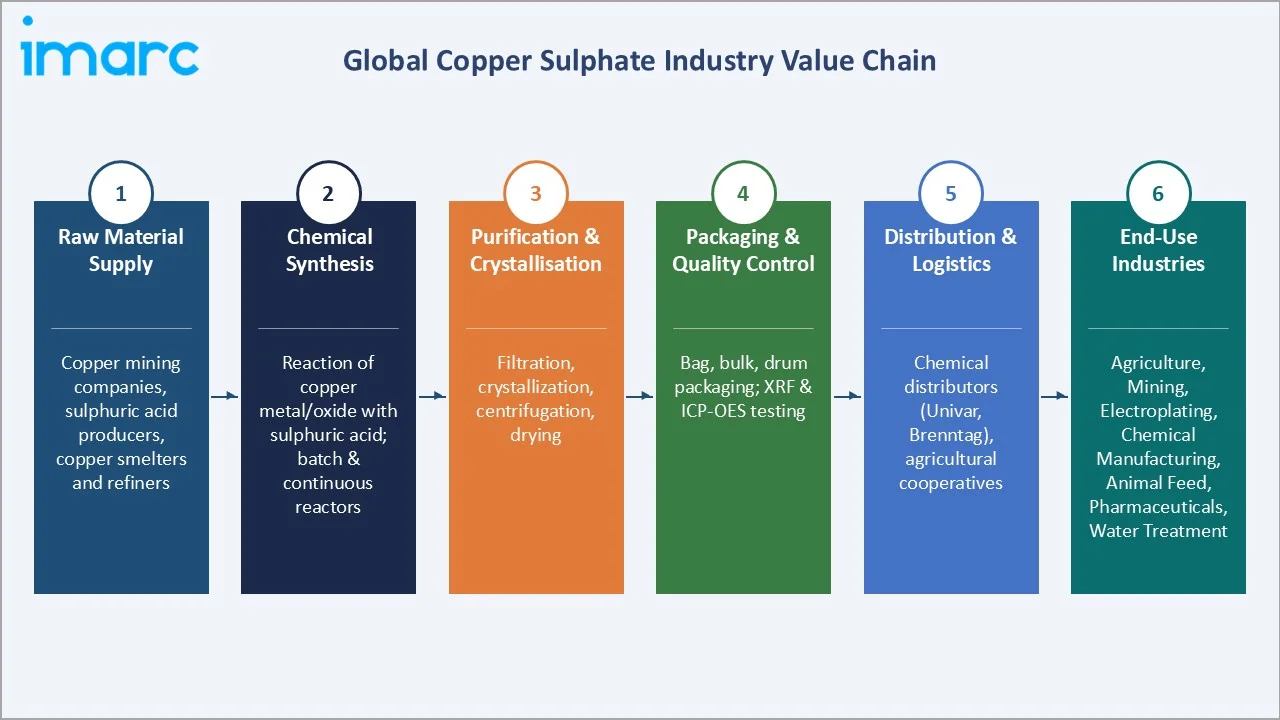
The global ecosystem integrates copper mining and smelting companies, sulphuric acid producers, chemical synthesis facilities, purification and packaging operations, distribution networks, and diverse end-use industries spanning agriculture, mining, electroplating, textile, pharmaceutical, and water treatment manufacturing.
Market Dynamics
To evaluate market opportunities, Request Sample
Market Drivers
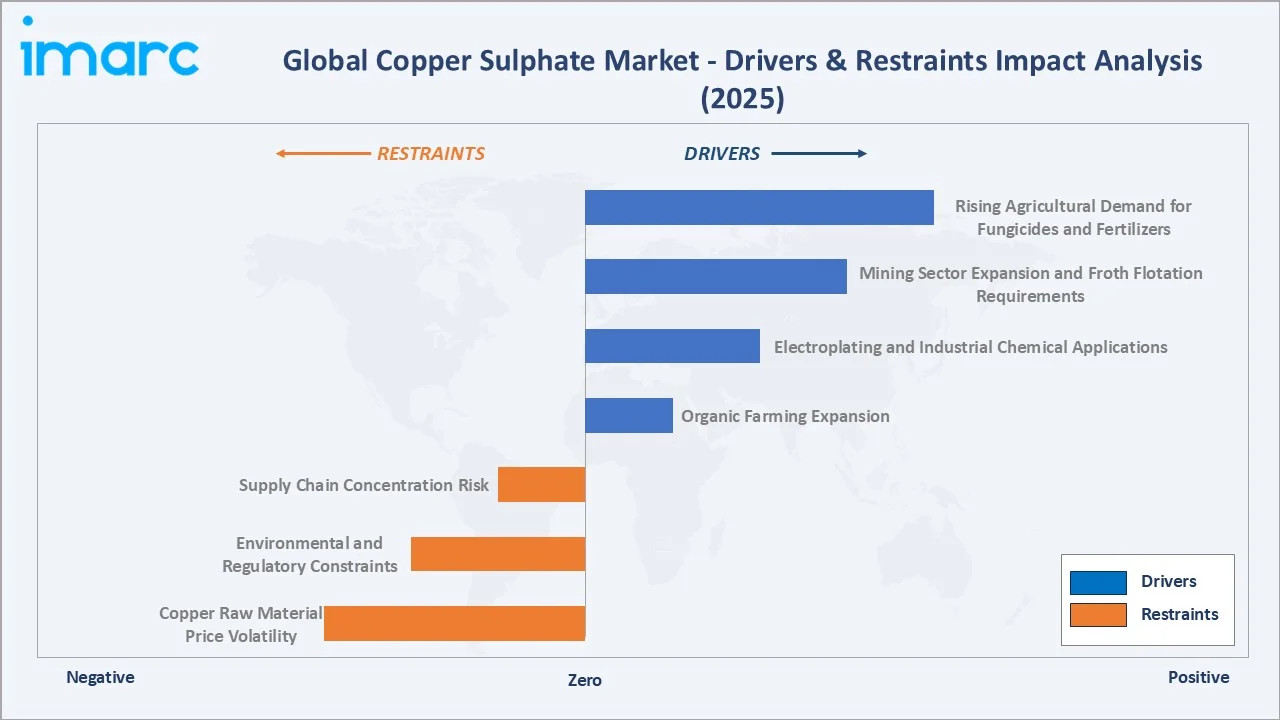
- Rising Agricultural Demand for Fungicides and Fertilizers: Rising agricultural demand for fungicides and fertilizers is driving increased use of copper sulphate. As global food production pressures grow, farmers are turning to cost-effective solutions for crop protection and nutrient supplementation. Copper sulphate plays a key role as both a fungicide and a micronutrient, making it an essential input in modern agriculture and supporting continued market expansion. Additionally, its broad-spectrum effectiveness and ease of application enhance its appeal among farmers across diverse crop types.
- Mining Sector Expansion and Froth Flotation Requirements: Global copper mine production reached approximately 22 million tonnes in 2024, driven by energy transition and EV battery demand. Each major copper concentrator utilises copper sulphate as a pyrite flotation activator, generating substantial and structurally growing industrial procurement demand worldwide.
- Electroplating and Industrial Chemical Applications: Electroplating and industrial chemical applications are key drivers of copper sulphate demand. It is widely used as a primary electrolyte for copper deposition in processes such as electronics manufacturing, surface finishing, and component production. Its ability to deliver consistent, high-purity coatings makes it an essential material across multiple industrial sectors. In addition, its versatility extends to various chemical processing applications, further strengthening its industrial relevance.
Market Restraints
- Copper Raw Material Price Volatility: Copper prices fluctuated between USD 7,000 and USD 10,000 per tonne over 2020–2025, directly impacting copper sulphate production costs. Price spikes compress manufacturer margins and delay purchasing decisions across price-sensitive agricultural customers in emerging markets.
- Environmental and Regulatory Constraints: Stringent EU regulations limiting copper application rates to 2.5 kg/ha per year under Regulation (EC) 1107/2009 restrict agricultural volume growth in Europe. Increasing scrutiny of heavy metal runoff from copper-treated fields adds compliance burden for producers and distributors globally.
Market Opportunities
- Organic Farming Expansion: The global organic farmland area exceeded 76 million hectares in 2024, with the EU's Farm to Fork Strategy targeting 25% organic area by 2030 . Copper sulphate, one of few approved mineral fungicides in certified organic farming, is directly positioned to benefit from this structural policy-driven shift toward sustainable agriculture.
- Emerging Electroplating Demand in Asia: Rapid electronics and semiconductor manufacturing expansion in Vietnam, India, South Korea, and Malaysia is generating new electroplating capacity requiring copper sulphate electrolytes, supporting broad-based industrial demand growth beyond traditional agricultural and mining channels.
Market Challenges
- Substitution Pressure from Synthetic Fungicides: Advanced systemic fungicides, including triazoles and strobilurins, offer broader spectrum protection at lower application rates than copper-based compounds, competing for market share in high-value crop protection markets in North America and Europe where precision agriculture is advancing.
- Supply Chain Concentration Risk: Significant copper sulphate production is concentrated in China, which accounts for approximately 45% of global output in 2023 . Supply disruptions from regulatory changes, trade restrictions, or raw material constraints can create price and availability volatility across downstream agricultural and industrial end-markets.
Emerging Market Trends
1. Precision Agriculture and Reduced-Rate Copper Application Technology
Advanced variable-rate application technology and drone-based crop spraying are enabling farmers to reduce copper sulphate application rates by 20–40% while maintaining fungicidal efficacy. This precision approach addresses regulatory limits on copper accumulation while preserving copper sulphate's market position in key fruit, vegetable, and vine crop protection globally.
2. High-Purity Copper Sulphate for Electronics and Semiconductor Manufacturing
The global semiconductor fabrication renaissance is driving demand for ultra-high-purity copper sulphate (>99.99% CuSO₄) for advanced electroplating and copper damascene interconnect processes. This premium segment commands 3–5x price premiums over agricultural grade, attracting significant investment in specialised purification technologies from producers in Japan, South Korea, and Taiwan.
3. Sustainable Sourcing and Green Chemistry Certification
Major agricultural chemical distributors and mining companies are requiring sustainably sourced copper sulphate with lifecycle assessment documentation and ISO 14001 environmental certifications. Producers investing in closed-loop sulphuric acid recovery and water recycling in manufacturing facilities are gaining procurement preference in European and North American regulated markets.
4. Copper Sulphate in Animal Feed and Aquaculture Expansion
Rising aquaculture production, utilises copper sulphate as an algaecide and antimicrobial agent in pond management. Animal feed applications in poultry and swine production across Asia and Latin America are expanding, as copper sulphate at trace levels promotes growth performance and improves feed conversion efficiency.
Industry Value Chain Analysis
The copper sulphate value chain spans six integrated stages from raw material extraction through end-use application. Chemical synthesis and purification capture the highest value-add margins, while distribution logistics and quality certification create meaningful differentiation between commodity and specialty-grade producers in global markets.
|
Stage |
Key Players / Activities |
|
Raw Material Supply |
Copper mining companies, sulphuric acid producers, copper smelters and refiners globally |
|
Chemical Synthesis |
Controlled reaction of copper metal/oxide with hot sulphuric acid; batch and continuous process reactors at industrial scale |
|
Purification & Crystallisation |
Multi-stage filtration, crystallisation, centrifugation, and drying to achieve target purity grades (technical, feed, electronics) |
|
Packaging & Quality Control |
Bag, bulk, and drum packaging; XRF and ICP-OES purity testing; SDS and safety compliance documentation |
|
Distribution & Logistics |
Chemical distributors (Univar, Brenntag), agricultural cooperatives, mining chemical suppliers, direct industrial project sales |
|
End-Use Industries |
Agriculture, Mining, Electroplating, Chemical Manufacturing, Animal Feed, Pharmaceuticals, Water Treatment |
Integrated producers with captive copper sourcing and in-house sulphuric acid supply chains, such as those co-located with copper smelters, achieve material cost structures 15–25% below independent chemical processors relying on spot market raw material procurement, representing a durable competitive advantage in commodity market segments.
Technology Landscape in the Copper Sulphate Industry
Chemical Synthesis: Batch and Continuous Production Processes
The dominant production method involves reacting copper metal or copper oxide with hot concentrated sulphuric acid (93–98% H₂SO₄) in controlled reactor vessels. Continuous reactor systems offering higher throughput, improved energy efficiency, and consistent product quality are progressively replacing batch processes in large-scale facilities producing above 10,000 tonnes per annum in Asia and Europe.
Purification Technology: Multi-Stage Crystallisation and Filtration
High-purity copper sulphate for electronics applications requires repeated crystallisation–dissolution cycles to remove iron, nickel, and other metallic impurities below 1 ppm detection thresholds. Membrane filtration technologies and ion exchange resins are enabling producers to achieve semiconductor-grade purity specifications at commercially viable production costs for demanding downstream applications.
Digital Quality Management and Traceability Systems
Blockchain-based supply chain traceability platforms are being adopted by major copper sulphate producers to document raw material sourcing, production parameters, and quality certifications. This digital documentation capability is becoming a competitive requirement for supply into regulated agricultural and pharmaceutical markets in Europe and North America where chain-of-custody verification is mandatory.
Market Segmentation Analysis
The report covers the following segments:
| Segment Category | Leading Segment | Market Share | Year |
|---|---|---|---|
| End-Use | Agriculture | 43.6% | 2025 |
| Region | Asia Pacific | 42.1% | 2025 |

By End-Use
Agriculture commands a 43.6% majority share in 2025 owing to its fundamental role as a copper-based fungicide in Bordeaux and Burgundy mixtures for vine, potato, tomato, and fruit crop protection globally. Its dual function as a soil micronutrient supplement addressing copper deficiency in intensive agricultural systems reinforces demand consistency across planting seasons and geographies worldwide.
To get more information on this market, Request Sample
Mining and metallurgy at 22.4% in 2025 rely on copper sulphate as an activation agent in sulphide mineral froth flotation. Chemicals at 17.5% utilises copper sulphate as a catalyst, reagent, and precursor in organic synthesis, dye manufacturing, and analytical chemistry formulations.
Construction at 10.2% employs copper sulphate as a corrosion inhibitor in concrete and as a wood preservation additive for outdoor structures. Healthcare at 6.3%, serves antifungal, antiseptic, and diagnostic reagent pharmaceutical applications globally.
Regional Market Insights
| Region | Share (2025) | Key Growth Drivers |
|---|---|---|
| Asia Pacific | 42.1% | China's copper production dominance; India agricultural demand; electroplating industry expansion in Southeast Asia and growing electronics manufacturing across Vietnam and Malaysia |
| Europe | 22.5% | Organic farming regulatory compliance; Bordeaux mixture vine protection mandates; specialty chemical manufacturing and pharmaceutical applications in Germany, France, and Italy |
| North America | 18.8% | Electroplating and electronics demand; mining sector growth; agricultural applications in NAFTA region and expanding organic farming certification adoption across the US and Canada |
| Latin America | 10.2% | Chile/Peru copper mining expansion and froth flotation demand; Brazil agricultural chemical sector; Argentina grain crop and viticulture fungicide applications |
| Middle East & Africa | 6.4% | African mining development and industrial copper sulphate demand; agricultural modernisation programmes; growing chemical manufacturing base in South Africa and Egypt |
Asia Pacific's 42.1% market dominance in 2025 reflects the structurally exceptional combination of copper production scale, agricultural intensity, and industrial expansion concentrated in China, India, and Southeast Asia.
Europe, with 22.5% in 2025, is characterised by regulatory sophistication and premium-grade demand. The EU's Farm to Fork Strategy organic farming target and stringent copper application rate restrictions are reshaping demand toward high-purity, precisely calibrated copper sulphate formulations, supporting value growth even as volume growth moderates across the region.
Competitive Landscape
The global copper sulphate market is highly fragmented, with regional leaders holding strong positions in their home markets and no single company exceeding 8–10% of total global volume. Asia-Pacific is served primarily by Chinese domestic manufacturers, while North American and European markets are served by established specialty chemical companies with differentiated product grades and distribution networks.
| Company Name | Key Products | Market Position | Global Strategic Focus |
|---|---|---|---|
| Acuro Organics Limited | Copper Sulphate | Emerging | India & South Asia; agricultural, water treatment and industrial grade copper sulphate; exporting to Middle East, Africa and Asia |
| Allan Chemical Corporation | Copper Sulphate Crystals or Powder; | Emerging | US industrial and laboratory supply; specialty chemical distribution with focus on North American research and industrial processing sectors |
| Jiangxi Copper Company Limited | Copper Sulphate | Leader | Vertically integrated Chinese leader; captive copper smelting supply base; largest domestic copper sulphate producer targeting agricultural and industrial end-markets |
| JX Advanced Metals Corporation | Upinorg (High-Purity Copper Sulfate) | Leader | Japan & Asia; electronics-grade copper sulphate for semiconductor electroplating; advanced purification technology differentiating premium segments |
| Noah Chemicals | Copper Sulphate | Emerging | North America laboratory and specialty chemical supply; focus on high-purity research-grade copper sulphate for academic and analytical chemistry markets |
| Norkem Limited | Copper Sulphate | Niche Player | Global chemical distributor active across six continents; offices in UK, Spain, China, Australia, South Africa; copper sulphate supply for agricultural, animal feed, and industrial end-markets |
| Old Bridge Minerals | Agricultural, Technical & Feed Grade CuSO₄ | Leader | North America; dominant agricultural distribution; established mining chemical supply with broad product range covering US market specification requirements |
| ProChem, Inc. | Copper (II) Sulfate Pentahydrate | Challenger | US industrial; expanded Rockford, IL manufacturing capacity; mining applications and reshoring-driven domestic critical chemical manufacturing |
| Sumitomo Metal Mining Co., Ltd. | Copper Sulphate | Leader | Global; vertically integrated copper smelting and refining operations; copper sulphate produced as smelting by-product; primary strategic focus on battery materials, nickel, and copper cathode for energy transition markets |
Key players include Acuro Organics Limited, Allan Chemical Corporation, Jiangxi Copper Company Limited, JX Advanced Metals Corporation, Noah Chemicals, Norkem Limited, Old Bridge Minerals, ProChem, Inc., Sumitomo Metal Mining Co., Ltd., and others.
Key Company Profiles
Sumitomo Metal Mining Co., Ltd.
Sumitomo Metal Mining Co., Ltd. is a leading Japanese diversified metals and mining company with vertically integrated copper operations spanning mining, smelting, refining, and specialty chemical production. Its copper sulphate operations leverage captive refined copper supply from domestic smelting facilities, delivering competitive cost structures and consistent quality for electronics-grade end-markets.
- Product Portfolio: High-purity and technical-grade copper sulphate for electronics, semiconductor, and industrial applications globally
- Recent Developments: In April 2025, Sumitomo Metal Mining announced that key conditions have been fulfilled for project financing related to a large-scale mining development project in Chile. The milestone marks progress toward full-scale implementation, supported by collaboration among multiple stakeholders and financial institutions. The development is expected to strengthen long-term resource supply capabilities while contributing to sustainable operations and regional economic growth.
- Strategic Focus: Sumitomo's strategy leverages vertically integrated copper supply to compete in premium electronics-grade copper sulphate segments while maintaining technical-grade supply for industrial markets across Asia, commanding price premiums through purity differentiation and reliable supply certification capabilities.
Jiangxi Copper Company Limited
Jiangxi Copper Company Limited is China's largest copper producer. The company operates fully integrated copper smelting and refining operations, with copper sulphate produced as a value-added by-product of the sulphuric acid and copper refining process, achieving cost structures unmatched by standalone chemical manufacturers.
- Product Portfolio: Technical-grade and industrial-grade copper sulphate for agricultural, mining, industrial, and other applications,
- Recent Developments: In December 2025, The company expanded copper sulphate production capacity in alignment with growing Chinese domestic agricultural demand and international export opportunities across Southeast Asia, Africa, and Latin America.
- Strategic Focus: Jiangxi Copper's copper sulphate strategy leverages its unparalleled scale in primary copper production to supply cost-competitive technical and agricultural grade copper sulphate to domestic Chinese and international markets, using vertical integration from ore to finish chemical product as a durable competitive advantage.
Old Bridge Minerals
Old Bridge Minerals is a leading North American copper sulphate producer, specialising in agricultural, technical, and specialty grades for US and export markets. The company has an established distribution network reaching agricultural cooperatives, mining chemical suppliers, and industrial distributors across the United States and Canada.
- Product Portfolio: Copper sulphate for diverse end-markets
- Recent Developments: In October 2020, Old Bridge Chemicals introduced Emerald-C, a copper carbonate-based mineral feed ingredient designed to support animal health and performance. The product is formulated as a free-flowing, easy-to-handle powder that can be efficiently incorporated into feed premixes and is particularly suitable for challenging environmental conditions.
- Strategic Focus: Old Bridge focuses on agricultural market penetration and reliable supply availability as primary competitive differentiators in North America, supplemented by a broad product range covering many US market specification requirements across agriculture, mining, and industrial chemical procurement channels.
Market Concentration Analysis
The global copper sulphate market is highly fragmented at the global level, with no single company holding more than 8–10% of total global volume. Asia-Pacific, representing 42.1% of market volume, is served primarily by Chinese domestic producers whose cost structures are enabled by co-location with copper smelting operations providing captive raw material supply.
Vertical integration between copper smelting and copper sulphate production provides meaningful cost advantages to integrated producers. Companies with captive sulphuric acid supply from smelter off-gas capture and direct copper feedstock from refining operations maintain 15–25% cost advantage over independent chemical producers, driving gradual consolidation around integrated mining and smelting conglomerates across Asia and Latin America.
Investment & Growth Opportunities
Fastest-Growing Segments
Healthcare at ~3.2% CAGR through 2034 is the highest-growth end-use segment, driven by expanding antifungal pharmaceutical applications, veterinary medicine formulations, and diagnostic reagent demand in regulated markets. Mining and metallurgy at ~2.4% CAGR through 2034 reflect sustained copper production investment globally aligned with energy transition demand.
Emerging Markets
Latin America at ~2.2% CAGR is the second-fastest-growing region for copper sulphate through 2034. Chile and Peru's sustained copper mining expansion, Brazil's large-scale agricultural chemical market, and Mexico's growing industrial base are creating multi-channel demand growth across mining, agricultural, and electroplating end-use segments simultaneously.
Venture & Investment Trends
Investment activity in high-purity copper sulphate purification technology is increasing, driven by semiconductor and electronics industry growth. Greenfield investments in copper sulphate production co-located with copper smelters in emerging mining regions across the DRC, Zambia, and Indonesia are attracting capital from both mining companies and specialty chemical investors seeking cost-competitive supply for growing Asian industrial markets.
Future Market Outlook (2026-2034)
The global copper sulphate market is forecast to expand from 450.50 Thousand Tons in 2025 to 533.43 Thousand Tons by 2034 at a CAGR of 1.90%, adding approximately 83 Thousand Tons in incremental annual volume over the nine-year forecast period. This consistent, sustained growth reflects the market's agriculture-linked and industrial demand characteristics across diverse geographies.
Three structural forces will most significantly shape the industry landscape through 2034. First, organic farming growth under EU Farm to Fork and equivalent national policies will sustain agricultural demand as copper sulphate remains one of few approved mineral fungicides in certified organic production globally. Second, electronics-grade copper sulphate demand from semiconductor manufacturing expansion will create premium-priced sub-segments growing 2–3x the overall market CAGR. Third, African and Latin American mining expansion will generate significant new industrial demand from regions with currently limited domestic copper sulphate production capacity.
Research Methodology
Primary Research
Primary research encompassed structured interviews with copper sulphate industry stakeholders including senior commercial managers at major producers, procurement managers at agricultural chemical distributors, mining chemical suppliers, and electroplating industry association representatives. Primary data validated market sizing, end-use segment shares, regional demand estimates, and technology adoption timelines across key geographies.
Secondary Research
Key secondary sources include International Copper Study Group (ICSG) Statistical Yearbook, FAO Pesticide Registration Database, International Mining magazine, USGS Mineral Commodity Summaries, European Chemicals Agency (ECHA) copper compound risk assessments, IEA Critical Minerals Market Review, and trade publications including ICIS Chemical Business and Mining Weekly.
Forecasting Models
Market size estimations and growth projections were derived using a combination of top-down and bottom-up forecasting models, incorporating agricultural area expansion rates, copper mining production forecasts, industrial output indices, and historical copper sulphate demand elasticities. Scenario analysis (base, optimistic, and conservative) was performed to account for commodity price volatility and regulatory uncertainty across forecast markets.
Copper Sulphate Market Report Scope:
| Report Features | Details |
|---|---|
| Base Year of the Analysis | 2025 |
| Historical Period | 2020-2025 |
| Forecast Period | 2026-2034 |
| Units | Million USD, ‘000 Tons |
| Scope of the Report |
Exploration of Historical Trends and Market Outlook, Industry Catalysts and Challenges, Segment-Wise Historical and Future Market Assessment:
|
| End Uses Covered | Agriculture, Mining and Metallurgy, Chemicals, Healthcare, Construction |
| Regions Covered | Asia Pacific, Europe, North America, Latin America, Middle East and Africa |
| Companies Covered | Acuro Organics Limited, Allan Chemical Corporation, Jiangxi Copper Company Limited, JX Advanced Metals Corporation, Noah Chemicals, Norkem Limited, Old Bridge Minerals, ProChem, Inc., Sumitomo Metal Mining Co., Ltd. , etc. |
| Customization Scope | 10% Free Customization |
| Post-Sale Analyst Support | 10-12 Weeks |
| Delivery Format | PDF and Excel through Email (We can also provide the editable version of the report in PPT/Word format on special request) |
Key Benefits for Stakeholders:
- IMARC’s report offers a comprehensive quantitative analysis of various market segments, historical and current market trends, market forecasts, and dynamics of the copper sulphate market from 2020-2034.
- The research study provides the latest information on the market drivers, challenges, and opportunities in the global copper sulphate market.
- The study maps the leading, as well as the fastest-growing, regional markets.
- Porter's Five Forces analysis assists stakeholders in assessing the impact of new entrants, competitive rivalry, supplier power, buyer power, and the threat of substitution. It helps stakeholders to analyze the level of competition within the copper sulphate industry and its attractiveness.
- Competitive landscape allows stakeholders to understand their competitive environment and provides an insight into the current positions of key players in the market.
Frequently Asked Questions About the Copper Sulphate Market Report
The global copper sulphate market reached 450.50 Thousand Tons in 2025, reflecting consistent demand from agricultural fungicide applications, mining flotation processes, and expanding industrial electroplating sectors globally.
The market is projected to reach 533.43 Thousand Tons by 2034, growing at a CAGR of 1.90% during 2026-2034, driven by organic farming growth, mining sector expansion, and rising electronics-grade demand from semiconductor manufacturing investments globally.
Agriculture leads with a 43.6% share in 2025, valued for copper sulphate's irreplaceable role as a Bordeaux mixture fungicide in vine, potato, and fruit crop protection, and as a soil micronutrient supplement in copper-deficient agricultural systems globally.
Asia Pacific commands a dominant 42.1% market share in 2025, driven by China's world-leading copper production, India's large-scale agricultural chemical demand, and rapidly growing electroplating and electronics manufacturing industries across the region.
Healthcare is the fastest-growing end-use at ~3.2% CAGR through 2034, driven by expanding antifungal pharmaceutical applications, veterinary medicine formulations, and diagnostic reagent demand in regulated North American and European markets.
Leading companies include Acuro Organics Limited, Allan Chemical Corporation, Jiangxi Copper Company Limited, JX Advanced Metals Corporation, Noah Chemicals, Norkem Limited, Old Bridge Minerals, ProChem, Inc., Sumitomo Metal Mining Co., Ltd., and others.
Key applications include agricultural fungicides (Bordeaux mixture), mining froth flotation activator, electroplating electrolyte, wood preservation, animal feed additive, water treatment algaecide, and pharmaceutical and diagnostic reagent across global industrial and agricultural markets.
Primary drivers include rising agricultural fungicide and fertilizer demand, expanding global mining operations requiring flotation chemicals, steady growth in electroplating and electronics manufacturing, and increasing acceptance in certified organic farming as a permitted mineral fungicide input worldwide.
Need more help?
- Speak to our experienced analysts for insights on the current market scenarios.
- Include additional segments and countries to customize the report as per your requirement.
- Gain an unparalleled competitive advantage in your domain by understanding how to utilize the report and positively impacting your operations and revenue.
- For further assistance, please connect with our analysts.
 Request Customization
 Speak to an Analyst
 Request Brochure
 Inquire Before Buying
Benefits of Customization
- Personalize this research
- Triangulate with your data
- Get data as per your format and definition
- Gain a deeper dive into a specific application, geography, customer, or competitor
- Any level of personalization
Get in Touch With Us
UNITED STATES
Phone: +1-201-971-6302
INDIA
Phone: +91-120-433-0800
UNITED KINGDOM
Phone: +44-753-714-6104
Email: [email protected]
Client Testimonials




.webp)




.webp)













Related Reports

Choose your plan
*Please note that the prices mentioned below are starting prices for each bundle type. Kindly contact our team for further details.*
Single User License
- 1 User License, Access on 2 Devices
- PDF Report + Excel Dataset (Password Protected)
- Lifetime Access
- No Printing Rights
- 10% Free Report Customization
- 10–12 Weeks of Analyst Support
Five User License
- Access for 5 Users, 2 Devices per User
- PDF Report + Excel Dataset (Password Protected)
- Lifetime Access
- Dedicated Account Manager
- 12–14 Weeks of Analyst Support
- No Printing Rights
- 15% Free Report Customization
- 25% Discount on Your Next Purchase
Corporate User License
- Unlimited User Access (Within Your Organization)
- PDF Report + Excel Dataset
- Lifetime Access
- Dedicated Account Manager
- 14–20 Weeks of Analyst Support
- No Printing Rights
- 20% Free Report Customization
- 30% Discount on Your Next Purchase
Essential Insights
What's included:
3 reports
- Lifetime Access
- PDF Reports
- Excel Datasets
- 2 Weeks of Free Analyst Support
- 2 User Licenses
- Access on 2 Devices
- Printing Rights
- Complimentary PowerPoint (PPT) Version
- Complimentary License Upgrade
Professional Access
What's included:
5 reports
- Lifetime Access
- PDF Reports
- Excel Datasets
- 8 Weeks of Free Analyst Support
- 2 User Licenses
- Access on 2 Devices
- Printing Rights
- Complimentary PowerPoint (PPT) Version
- Complimentary License Upgrade
Business Advantage
What's included:
8 reports
- Lifetime Access
- PDF Reports
- Excel Datasets
- 14 Weeks of Free Analyst Support
- 2 User Licenses
- Access on 2 Devices
- Printing Rights
- Complimentary PowerPoint (PPT) Version
- Complimentary License Upgrade
Enterprise Intelligence
What's included:
10 reports
- Lifetime Access
- PDF Reports
- Excel Datasets
- 20 Weeks of Free Analyst Support
- 2 User Licenses
- Access on 2 Devices
- Printing Rights
- Complimentary PowerPoint (PPT) Version
- Complimentary License Upgrade