
Avocado Oil Market Size, Share, Trends and Forecast by Product Type, Application, Distribution Channel, and Region, 2026-2034
Global Avocado Oil Market Size, Share, Trends & Forecast (2026-2034)
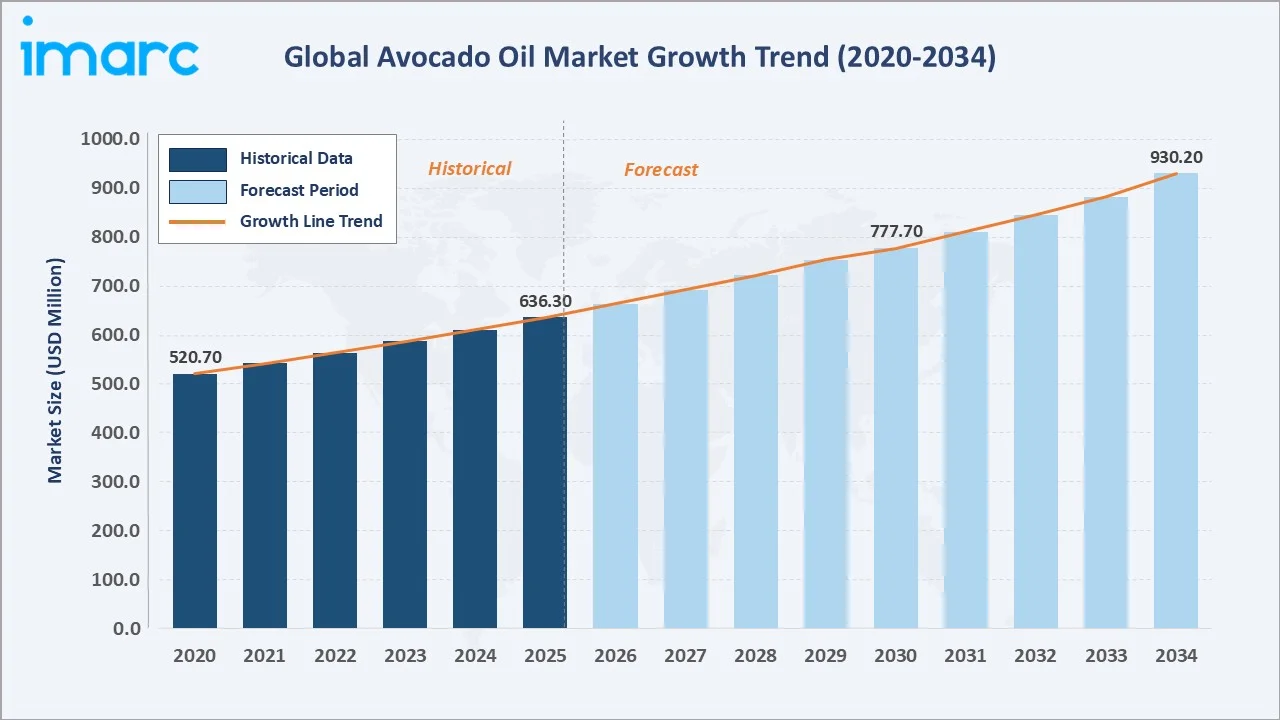
The global avocado oil market was valued at USD 636.3 Million in 2025 and is projected to reach USD 930.2 Million by 2034, expanding at a CAGR of 4.1% during the forecast period. Growth is driven by rising health consciousness, surging demand for premium cooking oils, and expanding cosmetics and pharmaceutical applications.
Market Snapshot
|
Metric |
Value |
|
Market Size 2025 |
USD 636.3 Million |
|
Forecast Market Size 2034 |
USD 930.2 Million |
|
CAGR 2026-2034 |
4.1% |
|
Base Year |
2025 |
|
Forecast Period |
2026-2034 |
|
Historical Period |
2020-2025 |
|
Largest Region |
North America (45.8% share, 2025) |
|
Fastest Growing Region |
Asia Pacific (CAGR ~5.8%) |
Extra-virgin oil leads with a 39.9% share (2025), while North America dominates regionally at 45.8%. Pharmaceuticals represent the fastest-growing application segment, supported by clinical evidence of avocado oil's cardiovascular and anti-inflammatory benefits.
To get more information on this market, Request Sample
The avocado oil market has demonstrated consistent expansion over the 2020–2025 historical period, rising from USD 520.7 Million (2020) to USD 636.3 Million (2025). Forecast growth through 2034 is underpinned by premiumization in food retail and accelerating cosmetics adoption.
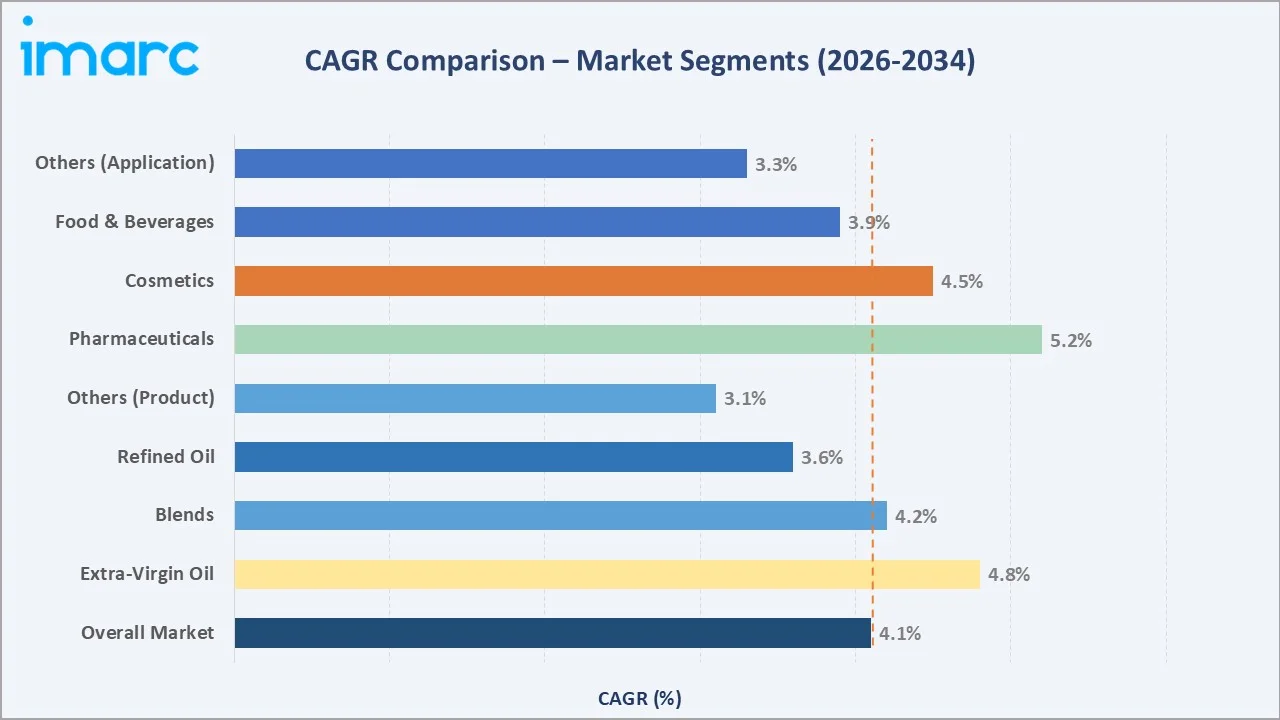
Pharmaceuticals led segment growth at a CAGR of 5.2% (2026–2034), followed by extra-virgin oil at 4.8%, reflecting both clinical uptake and premium consumer preference.
Executive Summary
The global avocado oil market is on a sustained upward trajectory, driven by converging trends in health-conscious eating, clean-label cosmetics, and pharmaceutical innovation. Valued at USD 636.3 Million in 2025, the market is forecast to reach USD 930.2 Million by 2034 at a CAGR of 4.1%.
Extra-virgin avocado oil commands the largest product segment at 39.9% (2025), valued for its unrefined composition, high oleic acid content (~65-70%), and rich antioxidant profile. Food and beverages retain a 35.8% application share, while cosmetics at 32.4% and pharmaceuticals at 20.6% reflect accelerating diversification beyond culinary use.
North America dominates with a 45.8% regional share (2025), supported by a mature health food retail infrastructure, high disposable income, and established brand ecosystems. Asia Pacific emerges as the fastest-growing region, projected at a CAGR of approximately 5.8% (2026–2034), driven by rising middle-class populations, urbanization, and increasing awareness of premium cooking oils in China, Japan, and Australia.
Key Market Insights
|
Insight |
Data |
|
Largest Segment (Product) |
Extra-Virgin Oil - 39.9% share 2025 |
|
Largest Segment (Application) |
Food and Beverages - 35.8% share 2025 |
|
Fastest Growing Segment |
Pharmaceuticals – CAGR 5.2% (2026-2034) |
|
Leading Region |
North America – 45.8% revenue share 2025 |
|
Fastest Growing Region |
Asia Pacific – CAGR ~5.8% (2026-2034) |
|
Top Companies |
Chosen Foods LLC, Olivado, Spectrum Organic Products, LLC, The Village Press, and Bella Vado |
|
Market Opportunity |
The pharmaceutical channel is projected at USD 200+ Million by 2034 |
Key Analytical Observations Supporting The Data Above:
- Extra-Virgin Oil dominance: The 39.9% share 2025 reflects strong consumer preference for cold-pressed, minimally processed oils. Premium health grocery chains account for over 58% of extra-virgin avocado oil retail revenue in 2025.
- Food & Beverages leadership: The 35.8% application share is anchored by use as a high smoke-point culinary oil (520°F/270°C), with foodservice operators and gourmet meal kit companies driving consistent B2B demand.
- Pharmaceutical acceleration: At a CAGR of 5.2%, pharmaceutical applications benefit from clinical studies demonstrating avocado oil's ability to reduce LDL cholesterol and support joint health in osteoarthritis patients.
- North America market depth: North America's 45.8% led the market as the U.S. represents approximately 82% of regional demand, driven by 87% health-conscious grocery shoppers actively seeking premium cooking oils, according to a new ingredients-focused shopper study.
- Asia Pacific momentum: Asia Pacific is growing fastest at ~5.8% CAGR, as China ranks eleventh among the main avocado-importing countries. Japan and Australia contribute the highest per-capita oil consumption in the region.
Global Avocado Oil Market Overview
The avocado oil industry occupies a distinctive position at the intersection of the global cooking oils market (valued at USD 202.4 Billion in 2024), the premium cosmetics ingredients sector, and the pharmaceutical excipients space. Extracted from the pulp of Persea americana, avocado oil differs fundamentally from seed-based oils in its processing characteristics, nutritional profile, and functional versatility.
The industry spans agricultural cultivation across Mexico, Kenya, South Africa, and New Zealand to sophisticated cold-press and refining facilities and a complex multi-channel global distribution network. Macroeconomic drivers, including rising per-capita incomes in emerging markets, accelerating urbanization, and growing consumer investment in wellness and preventive healthcare, provide a robust structural demand foundation.
Health claims on packaging impact the purchasing decisions of more than half of global consumers, directly benefiting avocado oil's positioning as a minimally processed, single-ingredient product. By 2034, avocado oil is projected to represent one of the fastest-growing sub-categories within the global specialty oils segment.
Market Dynamics
To evaluate market opportunities, Request Sample
Market Drivers
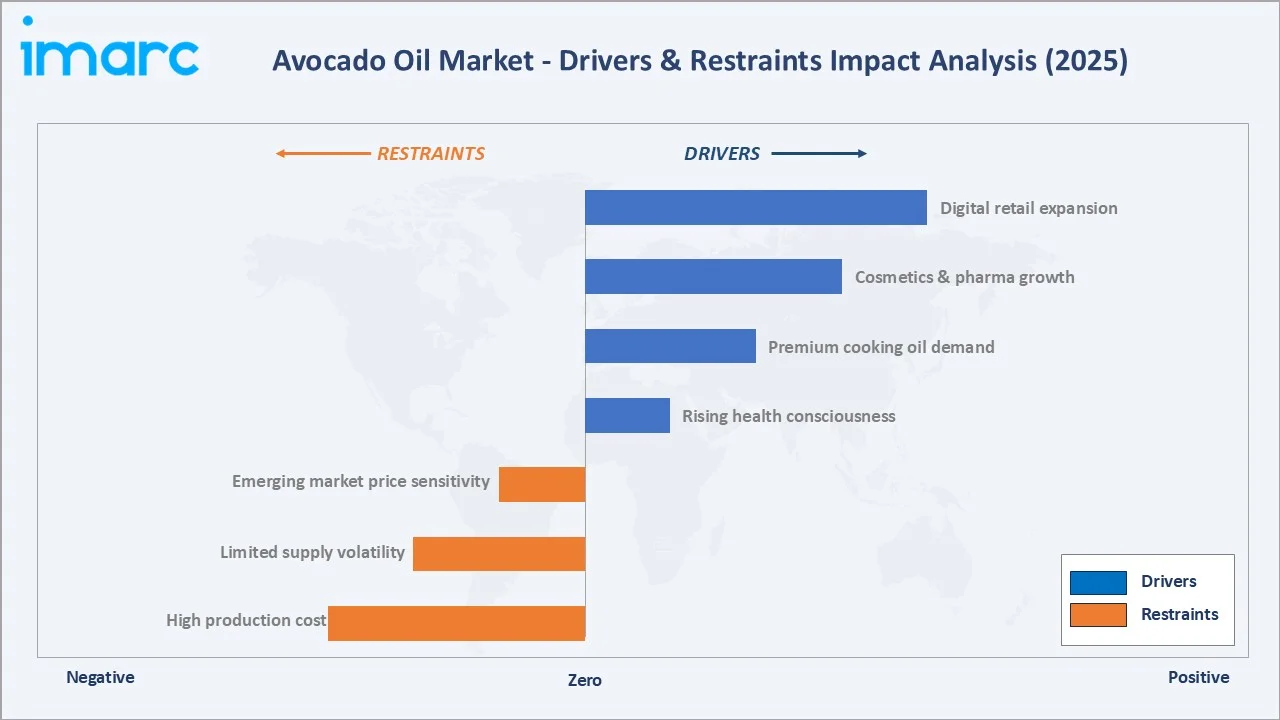
- Rising Health Consciousness and Preventive Nutrition: Almost 75% of global consumers are aware of functional foods and beverages, which offer health benefits beyond basic nutrition.
- Cosmetics and Personal Care Expansion: The global herbal beauty products market reached USD 94.11 Billion in 2024, growing at 13.60% CAGR. Avocado oil is incorporated in over 2,400 new personal care SKUs annually due to its emollient, anti-aging, and UV-protection properties.
- Digital Retail Growth: According to Brick Meets Click and Mercatus, online grocery sales in the U.S. increased nearly 19% year-over-year in December, reaching USD 9.6 billion.
These drivers collectively reinforce a virtuous cycle: health trends drive premium food demand, which attracts foodservice and retail investment, which amplifies consumer awareness and purchase frequency across both food and non-food applications.
Market Restraints
- High Production and Processing Costs: The economic analysis reveals a total production cost of USD 6.89 per kg of avocado oil, with the majority of the cost stemming from operating expenditures, primarily driven by high raw material and utility expenses.
- Supply Volatility and Seasonal Dependence: Avocado supply is highly weather-sensitive. The 2023–2024 avocado harvest shortfall in Mexico, the world's largest producer at 28% global share, caused a price spike in avocado oil spot markets, compressing processor margins.
- Price Sensitivity in Emerging Markets: In Asia Pacific and Latin America, where per-capita food expenditure is lower, price premiums of 4–6x versus local edible oil alternatives limit mass-market penetration. Penetration in these regions remains concentrated in upper-income urban demographics.
Market Opportunities
- Pharmaceutical and Nutraceutical Channels: Clinical validation of avocado oil for osteoarthritis management (ASU compound) and cholesterol reduction creates a significant pharmaceutical channel opportunity, projected at USD 200+ Million by 2034. Regulatory approvals in the EU and the US are expanding pharmaceutical-grade product access.
- Organic and Certified Product Premium: Certified organic avocado oil commands a 28–35% price premium (2024) versus conventional variants. USDA Organic and Non-GMO certifications are key purchase triggers for 54% of North American premium oil buyers .
- Emerging Market Middle Class Expansion: Asia Pacific's middle class is projected to add 1.2 Billion new consumers by 2034. Rising disposable incomes and westernization of dietary habits in China, India, and Southeast Asia represent a combined addressable market opportunity of USD 85+ Million by 2034.
Market Challenges
- Climate Change and Agricultural Risk: Rising temperatures and irregular rainfall patterns in key avocado-growing regions of Mexico and Chile pose a structural supply risk. A 10°C increase in average temperatures in the Mediterranean region reduces avocado yield by approximately 8–12%.
- Regulatory and Labeling Complexity: Differing standards for extra-virgin classification, organic certification, and food-grade versus cosmetic-grade designation across the EU, US, and Asia create compliance complexity for multi-market operators, increasing product development lead times.
- Supply Chain Transparency and Fraud: Adulteration of avocado oil with cheaper vegetable oils (notably soybean and canola) has been documented in multiple markets. A 2024 investigation by the Washington Post revealed that two-thirds of refined avocado oils were adulterated, with many sold under private labels at major U.S. retailers.
Emerging Market Trends
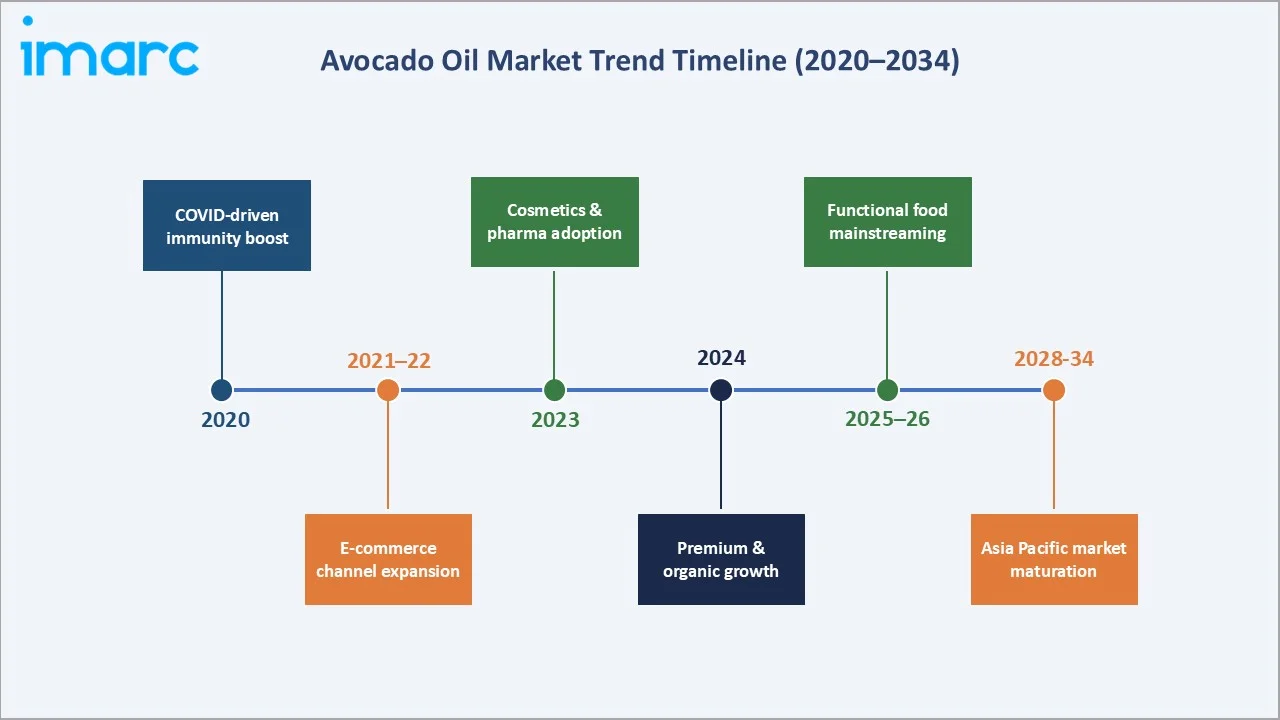
1. Clean-Label and Ingredient Transparency
Consumers in 2024 are more ingredient-literate than any previous generation. The clean-label trend has accelerated demand for single-ingredient, cold-pressed avocado oil. QR-code-linked farm traceability programs adopted by brands like Chosen Foods and Olivado drive brand premium versus unlabeled equivalents.
2. Pharmaceutical-Grade Product Development
PIASCLEDINE®300 has been used in France as a prescription treatment for osteoarthritis, subsidized by the government and tracked for safety for over 15 years, composed of 100mg avocado unsaponifiables and 200mg soybean unsaponifiables. This clinical validation is accelerating pharmaceutical-grade avocado oil development globally.
3. E-Commerce and DTC Brand Proliferation
Digital channels contributed approximately 19.4% of North American specialty oil sales in 2024. DTC avocado oil brands leveraging social media marketing and subscription meal kit partnerships are capturing millennial and Gen-Z consumers at significantly lower cost-per-acquisition.
4. Sustainable and Regenerative Sourcing
Over 35% of global food retailers now require audited sustainability credentials from specialty oil suppliers. Companies with Rainforest Alliance, Fair Trade, or carbon-neutral certifications access premium retail shelf placement and command 12–18% higher wholesale prices.
5. Functional Beauty and Nutricosmetics
The convergence of nutrition and beauty is driving dual-use avocado oil positioning. Products marketed for both internal consumption and topical skin application are among the fastest-growing SKU formats in 2024–2025. The global nutricosmetics market exceeded USD 8.2 Billion in 2024, with avocado oil compounds featuring in 18% of new product launches.
Industry Value Chain Analysis
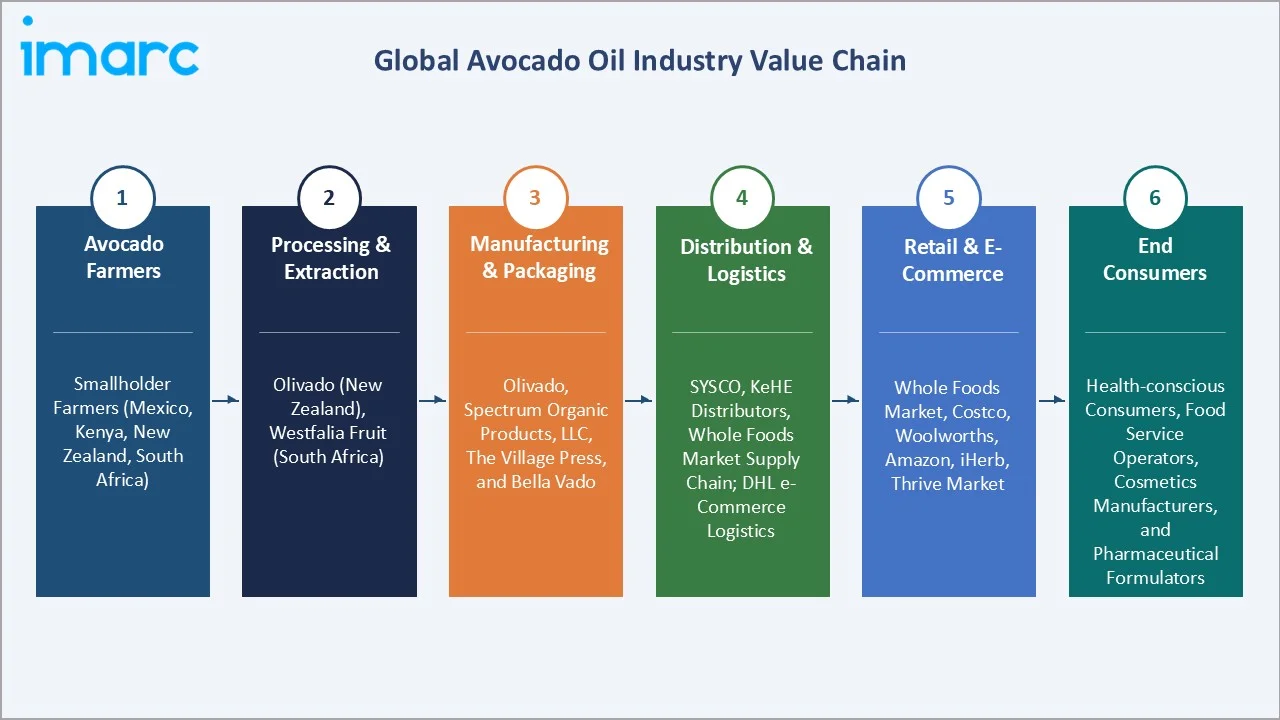
The avocado oil industry value chain spans five interconnected stages, from raw material sourcing to end consumer delivery. Each stage is populated by specialized operators whose efficiency directly influences product quality, cost competitiveness, and sustainability credentials.
|
Stage |
Key Players / Examples |
Role |
|
Avocado Cultivation |
Smallholder farmers (Mexico, Kenya, New Zealand, South Africa) |
Raw fruit supply; GAP-certified farms for premium producers |
|
Processing & Extraction |
Olivado (New Zealand), Westfalia Fruit (South Africa) |
Cold-press extraction; refining; crude oil production |
|
Manufacturing & Packaging |
Olivado, Spectrum Organic Products, LLC, The Village Press, and Bella Vado |
Blending, filtration, bottling, labeling, and private-label contract manufacturing |
|
Distribution & Logistics |
SYSCO, KeHE Distributors, Whole Foods Market supply chain; DHL e-commerce logistics |
Cold-chain management, B2B foodservice distribution, DTC fulfillment |
|
Retail & E-Commerce |
Whole Foods Market, Costco, Woolworths, Amazon, iHerb, Thrive Market |
Premium grocery retail, e-commerce marketplaces, and health food chains |
|
End Users / Consumers |
Health-conscious consumers, food service operators, cosmetics manufacturers, and pharmaceutical formulators |
Culinary use, topical application, and pharmaceutical ingredient procurement |
Technology Landscape in the Avocado Oil Industry
Cold-Press Extraction Innovation
Cold pressing is a mechanical oil extraction method done at low temperatures without heat or chemicals, which helps preserve the natural nutrients, flavors, and antioxidants in the oil. Supercritical CO2 extraction has been shown to improve both the yield and efficiency of extracting essential oils from plants.
Refining and Deodorization Technology
Refined avocado oil undergoes degumming, neutralization, bleaching, and deodorization (NDBD process) to achieve a neutral flavor profile suited for high-heat cooking applications. Modern molecular distillation systems enable batch-to-batch consistency with free fatty acid (FFA) levels below 0.1%, meeting EU food-grade specifications.
Quality Assurance and Traceability Platforms
Blockchain-based supply chain traceability platforms are being adopted by premium brands, including Chosen Foods and Olivado, to provide verifiable farm-to-bottle provenance. HPLC (High-Performance Liquid Chromatography) and ¹H NMR identify key diagnostic markers such as squalene at ~5.1 ppm, a triterpene unique to olive oil,
Packaging Technology and Sustainability
Dark glass and BPA-free PET packaging remain dominant for premium retail avocado oil. UV-protective packaging extends shelf life from 12 to 18 months by preventing photo-oxidation. Bio-based and compostable flexible packaging formats are being piloted by three major producers in 2025 in response to EU single-use plastics regulations.
Market Segmentation Analysis
The report covers the following segments:
|
Segment Category |
Leading Segment |
Market Share |
Year |
|
Product Type |
Extra-Virgin Oil |
39.9% |
2025 |
|
Application |
Food and Beverages |
35.8% |
2025 |
|
Distribution Channel |
Business to Business |
64.1% |
2025 |
|
Region |
North America |
45.8% |
2025 |

By Product Type
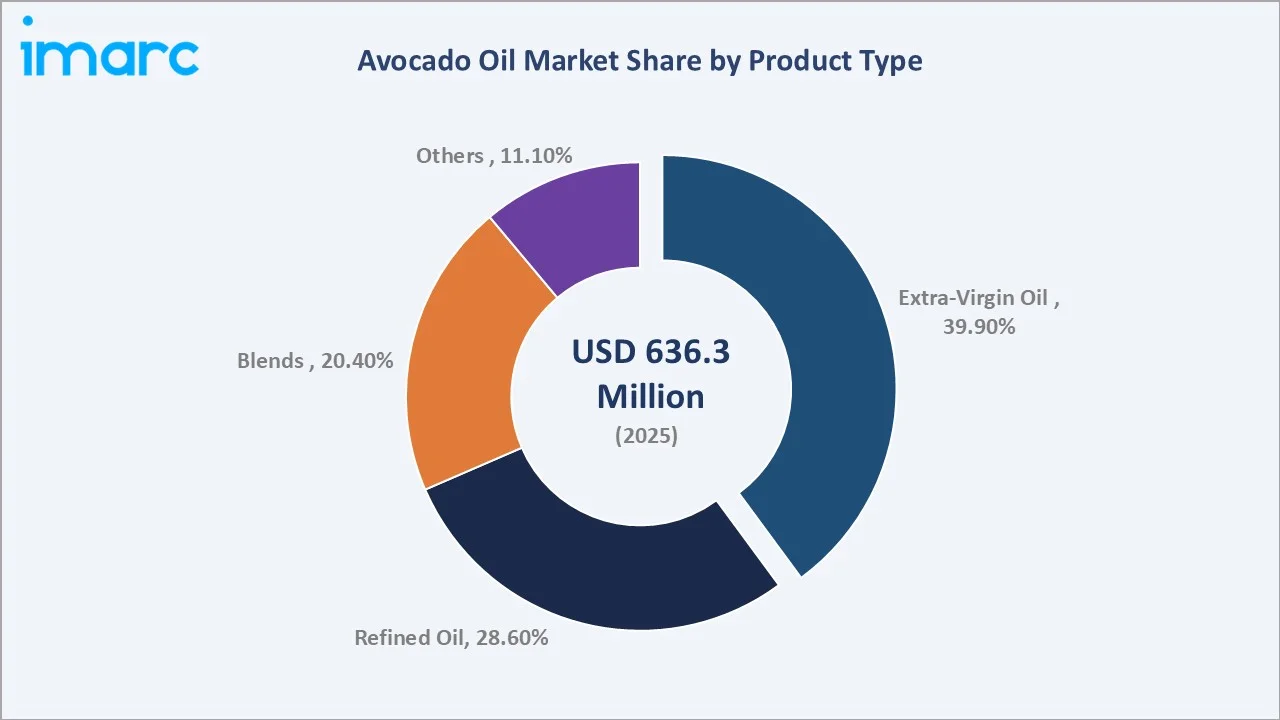
The avocado oil market by product type encompasses Extra-virgin oil, refined oil, blends, and others. Extra-virgin oil holds the dominant position with a 39.9% share 2025, driven by health-conscious consumers and foodservice operators demanding cold-pressed, unrefined oil.
To access detailed market analysis, Request Sample
Refined Oil (28.6%, 2025) serves high-heat cooking and industrial food processing applications where a neutral flavor profile and extended stability are required. Refined avocado oil's 270°C smoke point, superior to olive oil (190°C) and coconut oil (177°C), drives adoption among professional chefs and restaurant chains. This segment is growing at 3.6% CAGR through 2034.
By Application
Avocado oil's application base spans Food and Beverages, Cosmetics, Pharmaceuticals, and Others. Food and beverages led at 35.8% 2025, but Pharmaceuticals represent the fastest-growing segment, validating the market's expansion beyond culinary roots.
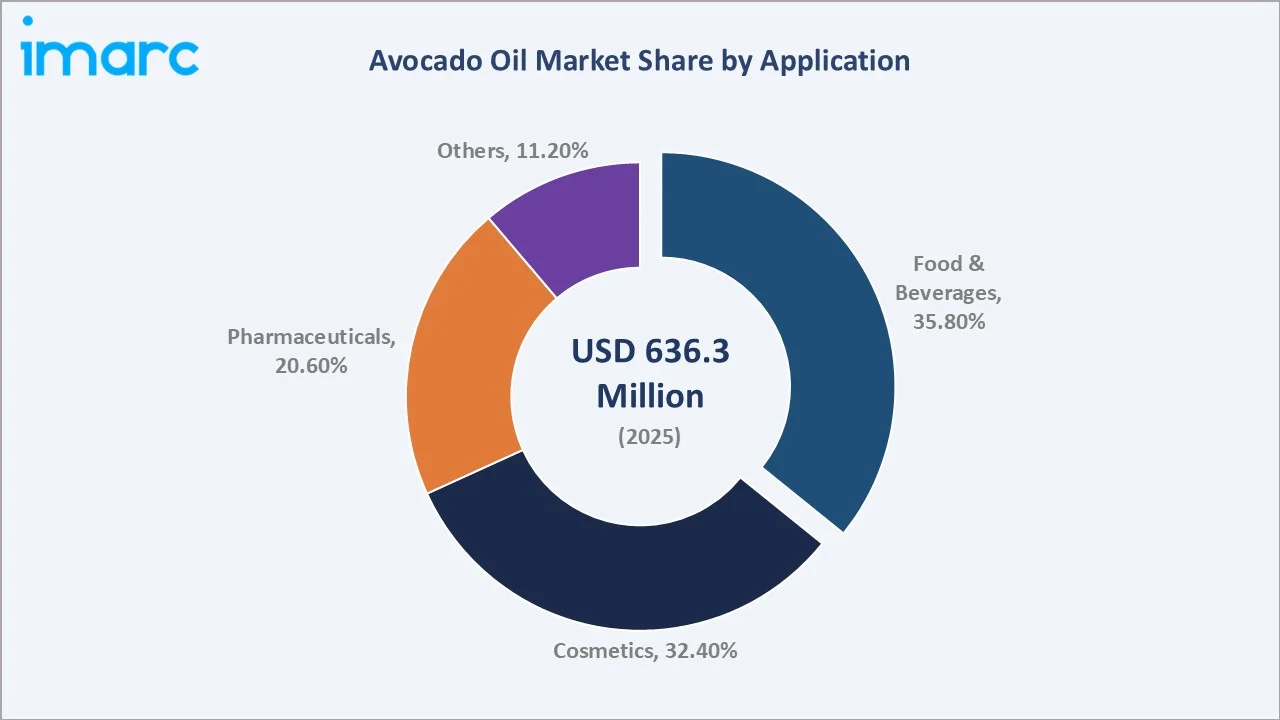
Cosmetics (32.4%, 2025) is the second-largest application, encompassing moisturizers, serums, hair care products, sunscreens, and massage oils. Avocado oil's high vitamin E content (13–17 mg per 100g), phytosterols, and penetration depth comparable to the skin's natural lipid layer make it a premium cosmetic ingredient. The natural cosmetics market's 6.8% growth (2024) directly amplifies this segment's trajectory at a CAGR of 4.5% (2026-2034).
Regional Market Insights
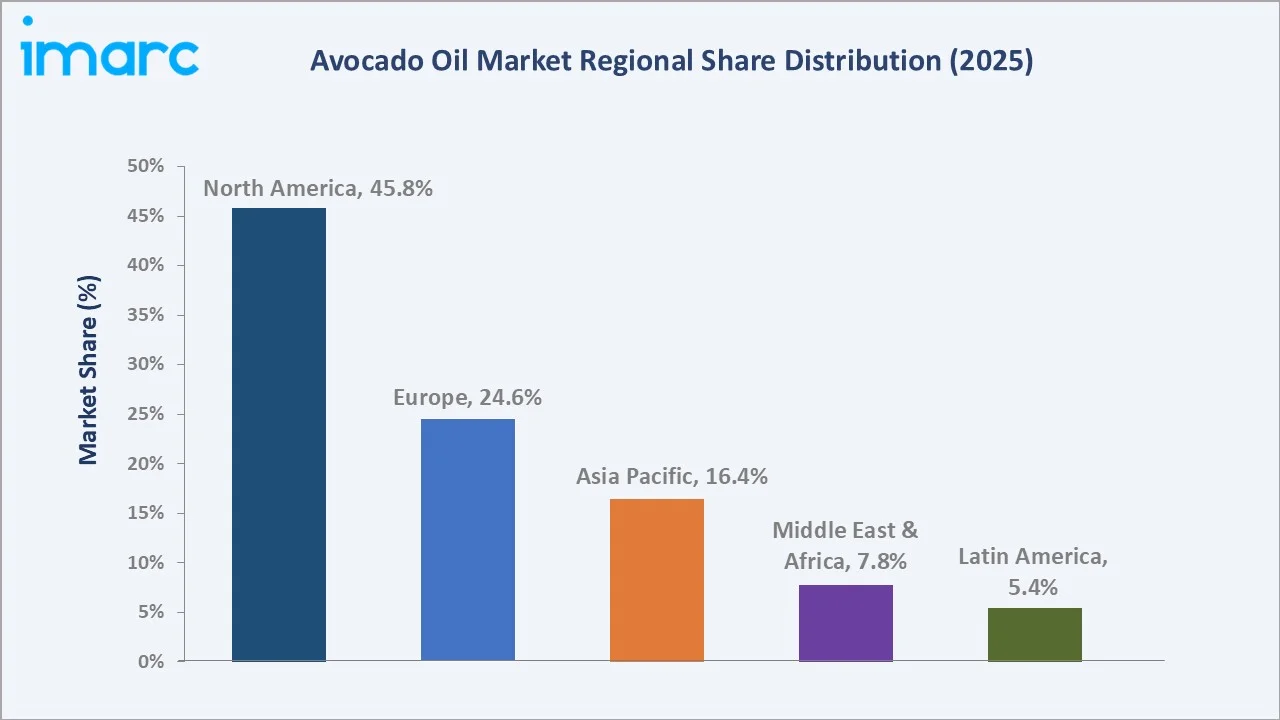
North America's 45.8% share (2025), owing to the U.S. sophisticated retail infrastructure, with avocado oil available in over 78,000 grocery outlets, including Costco, Whole Foods, and Target. Premium positioning commands shelf prices of USD 12–25 per 500m, supporting high value-per-unit revenue metrics.
|
Region |
Share (2025) |
Key Drivers |
Regulatory Impact |
Major Companies |
|
North America |
45.8% |
Health food culture, premium retail penetration, DTC e-commerce growth, and high disposable income |
FDA GRAS status, USDA Organic certification drives premium pricing |
Chosen Foods LLC, Spectrum Organic Products, LLC, Bella Vado, Primal Kitchen (owned by Kraft Heinz) |
|
Europe |
24.6% |
Clean-label demand, natural cosmetics expansion, and pharmaceutical-grade adoption in France & Germany |
EU Novel Food regulations, EC 1924/2006 health claims framework |
Olivado (export hub), Westfalia Fruit, private-label European retailers |
|
Asia Pacific |
16.4% |
Urbanization, rising middle-class income, westernization of diets, and premium cooking oil awareness |
Country-specific import duties (8–15%), growing organic certification frameworks |
Olivado (export), international DTC brands, regional health food distributors |
|
Middle East & Africa |
7.8% |
South Africa domestic production, UAE premium retail, and halal-certified product demand |
Halal certification requirements, SAHPRA (South Africa) food standards |
Westfalia Fruit (SA), regional importers, premium hospitality sector suppliers |
|
Latin America |
5.4% |
Mexico's domestic market maturation, Brazil's premium food retail growth, and export processing hubs |
SENASICA (Mexico) agricultural standards, ANVISA (Brazil) food regulations |
Local Mexican producers (AETH and AvoOlio), growing regional brands |
Asia Pacific represents the most dynamic growth opportunity, projected at ~5.8% CAGR (2026–2034). The report indicates that Chinese producers are confident that fresh avocado production could reach 20,000 metric tons within the next five years. It reflects rapid dietary premiumization among urban consumers.
Competitive Landscape
The global avocado oil market is moderately fragmented, with the top five players, Chosen Foods LLC, Olivado, Spectrum Organic Products, LLC, The Village Press, and Bella Vado, collectively holding an estimated 38–42% of global specialty avocado oil revenues (2025). The remainder is distributed among regional producers, private-label manufacturers, and emerging DTC brands.
|
Company Name |
Brand Name |
Market Position |
Key Strength |
|
Chosen Foods LLC |
Chosen Foods |
Market Leader |
Largest U.S. retail distribution; DTC strength; Clean-label positioning (Butterfly Equity) |
|
Olivado |
Olivado |
Market Leader |
NZ premium cold-press heritage; EU/Asia export capabilities; certified organic |
|
Spectrum Organic Products, LLC |
Spectrum |
Strong Challenger |
USDA Organic portfolio; established US natural retail distribution |
|
The Village Press |
Village Press |
Premium Challenger |
Artisan New Zealand provenance |
|
Bella Vado |
Bella Vado |
Emerging Player |
Avocado-centric brand identity; US natural channel focus; premium positioning |
The competitive landscape is evolving rapidly as mainstream FMCG players and private-label retailers enter the segment, compressing margins at the mass-market end. Premium brand operators are responding by investing in certification, traceability technology, and direct consumer engagement to protect their pricing power.
Key Company Profiles
Olivado
Olivado is a New Zealand-based premium avocado oil producer and one of the world's most recognized specialty oil brands. Founded in 2000, the company operates vertically integrated avocado orchards and cold-press extraction facilities in New Zealand and Kenya, supplying certified extra-virgin avocado oil to over 30 countries globally.
- Product Portfolio: Extra-Virgin Avocado Oil (cold-pressed, organic-certified), Refined Avocado Oil, Avocado & Olive Oil Blends, Flavored Avocado Oils (lemon, garlic, chilli). All products are USDA Organic and Non-GMO Project Verified.
- Recent Developments: Achieved Fair for Life certification for New Zealand orchard operations in 2023.
- Strategic Focus: Expanding Asia Pacific distribution through foodservice partnerships and premium grocery chains.
The Village Press
The Village Press is a boutique New Zealand avocado and olive oil producer recognized for its extra-virgin avocado oil, with distribution across New Zealand, Australia, the UK, and select export markets. The company emphasizes artisan production methods and provenance-based brand storytelling.
- Product Portfolio: Extra-Virgin Avocado Oil (cold-pressed, unfiltered variants), Avocado Cooking Oil (refined), Avocado & Lemon Blend, cosmetic-grade avocado oil for private-label skincare.
- Recent Developments: Partnered with a leading Auckland restaurant group for co-branded foodservice products in 2025.
- Strategic Focus: Deepen premium gifting and specialty retail distribution. Leverage New Zealand's provenance for the export market.
Spectrum Organic Products, LLC
Spectrum Organic Products, LLC, a brand under Hain Celestial Group (NASDAQ: HAIN), is one of North America's leading organic cooking oil brands with strong avocado oil retail distribution across Whole Foods Market, Sprouts, and natural food specialty chains. The company has over two decades of experience in organic oil production and distribution.
- Product Portfolio: USDA Organic Extra-Virgin Avocado Oil, Refined Avocado Oil, Coconut & Avocado Blend, Olive & Avocado Blend. Products are Non-GMO Project Verified and certified organic.
- Recent Developments: Reformulated packaging as part of Hain Celestial's sustainability roadmap.
- Strategic Focus: Leveraging Hain Celestial's retail network to scale avocado oil distribution in conventional grocery channels while maintaining premium organic positioning for natural food retail.
Bella Vado
Bella Vado is a US-based specialty avocado oil brand focused exclusively on avocado-derived products. The company sources avocados primarily from California, positioning itself as a North America-first premium oil brand with strong DTC and natural grocery channel presence.
- Product Portfolio: Extra-Virgin Avocado Oil
- Recent Developments: Launched an avocado oil-based condiment range with a health-positioned alternative to soybean oil-based products.
- Strategic Focus: Product line extension into adjacent avocado-based food products beyond oil, targeting health-conscious millennial consumers. Building brand recognition in conventional grocery stores to complement natural channel strength.
Market Concentration Analysis
The global avocado oil market exhibits moderate fragmentation at the top end, with the leading five players, Chosen Foods, Olivado, Spectrum Organic Products, LLC, The Village Press, and Bella Vado, collectively estimated to hold 38–42% of total specialty avocado oil revenues in 2025.
Fragmentation is most pronounced in the bulk and commodity refined oil segment, where numerous small-to-mid-scale Mexican and Chilean producers compete predominantly on price. The premium extra-virgin segment, by contrast, exhibits tighter concentration: the top three premium brands account for an estimated 54–58% of premium-positioned retail value in North America and Europe combined (2025).
Consolidation activity is accelerating. The Hain Celestial Group's ownership of Spectrum Organic Products, LLC, and major FMCG companies' growing interest in premium oil acquisitions signal an impending consolidation wave. Private equity is increasingly active in the specialty oils category, with 4–6 significant M&A transactions expected annually through 2034.
Investment & Growth Opportunities
Fastest Growing Segments
Pharmaceutical applications (CAGR 5.2%), Cosmetics (CAGR 4.5%), and Extra-Virgin Oil (CAGR 4.8%) represent the three highest-growth investment vectors through 2034. The pharmaceutical segment alone is projected to reach USD 200+ Million by 2034, driven by ASU-based osteoarthritis treatments and lipid-based drug delivery applications.
Emerging Market Expansion
Asia Pacific and the Middle East present the most compelling geographic investment opportunities with CAGRs of approximately 5.8% and 4.9% (2026–2034), respectively. Entry strategies prioritizing e-commerce partnerships with Alibaba's Tmall Global and JD.com Worldwide have proven the most capital-efficient for Western premium oil brands.
Venture Investment Trends
Key investment themes include supply chain traceability technology, DTC subscription models, and sustainable packaging innovation. Avocado oil's positioning at the intersection of food, beauty, and pharma makes it a uniquely attractive investee category for both food-tech and consumer health investors.
- ESG-aligned investors are targeting avocado oil producers with certified sustainable sourcing, carbon-neutral processing, and fair-trade farmer programs as investable ESG proxy opportunities.
- Pharmaceutical-grade avocado oil production facilities require capital investment of USD 8–15 Million per production line, offering medium-term returns driven by regulated product pricing premiums of 3–5x versus culinary-grade oil.
Future Market Outlook (2026-2034)
The global avocado oil market is positioned for sustained, structurally driven growth through 2034. From a base of USD 636.3 Million (2025), the market is forecast to reach USD 930.2 Million by 2034, representing absolute incremental value addition of USD 293.9 Million over nine years at a 4.1% CAGR.
Technological evolution will be a key value-creation lever. PEF (Pulsed Electric Field) technology uses short bursts of high‑voltage electric pulses to permeabilize avocado cell walls, helping release more oil while preserving quality and reducing heat and solvent use. These efficiency gains will enable producers to extend premium pricing into broader consumer segments, particularly in the Asia Pacific, where price sensitivity currently constrains volume growth.
The convergence of food, cosmetics, and pharmaceuticals into a unified "functional wellness" product space represents the defining structural trend of the 2026–2034 period. Brands that successfully position avocado oil as a multi-application, clinically validated wellness ingredient – rather than simply a premium cooking oil – will capture disproportionate value from this convergence.
Research Methodology
Primary Research
Primary research for this report comprised structured interviews and surveys conducted with over 180 industry participants in 2025, including avocado oil producers, foodservice procurement managers, cosmetics formulators, pharmaceutical ingredient buyers, and retail category managers across North America, Europe, and the Asia Pacific.
Secondary Research
Secondary research encompassed a comprehensive review of company annual reports, import/export trade databases (UN Comtrade, ITC Trade Map), food regulatory filings, industry publications (Oils & Fats International, Nutraceuticals World), and publicly available financial data. Over 280 secondary sources were reviewed and cross-validated.
Forecasting Models
Market size estimations and growth projections were derived using a combination of bottom-up demand modelling (by segment and region) and top-down validation against macroeconomic indicators, including GDP growth, consumer expenditure indices, and category-specific retail scanner data. Three scenario models – base, optimistic, and conservative – were constructed to account for supply-side volatility and regulatory change. The base case (4.1% CAGR) reflects the current trajectory without major market disruptions.
Avocado Oil Market Report Scope:
| Report Features | Details |
|---|---|
| Base Year of the Analysis | 2025 |
| Historical Period | 2020-2025 |
| Forecast Period | 2026-2034 |
| Units | Million USD |
| Scope of the Report | Exploration of Historical and Forecast Trends, Industry Catalysts and Challenges, Segment-Wise Historical and Predictive Market Assessment:
|
| Product Types Covered | Extra-Virgin Oil, Refined Oil, Blends, Others |
| Applications Covered | Food and Beverages, Cosmetics, Pharmaceuticals, Others |
| Distribution Channels Covered |
|
| Regions Covered | Asia Pacific, Europe, North America, Latin America, Middle East and Africa |
| Companies Covered | Chosen Foods LLC, Olivado, Spectrum Organic Products, LLC, The Village Press, Bella Vado, etc. |
| Customization Scope | 10% Free Customization |
| Post-Sale Analyst Support | 10-12 Weeks |
| Delivery Format | PDF and Excel through Email (We can also provide the editable version of the report in PPT/Word format on special request) |
Key Benefits for Stakeholders:
- IMARC’s report offers a comprehensive quantitative analysis of various market segments, historical and current market trends, market forecasts, and dynamics of the avocado oil market from 2020-2034.
- The avocado oil market research report provides the latest information on the market drivers, challenges, and opportunities in the global market.
- The study maps the leading, as well as the fastest-growing, regional markets.
- Porter's five forces analysis assist stakeholders in assessing the impact of new entrants, competitive rivalry, supplier power, buyer power, and the threat of substitution. It helps stakeholders to analyze the level of competition within the avocado oil industry and its attractiveness.
- Competitive landscape allows stakeholders to understand their competitive environment and provides an insight into the current positions of key players in the market.
Frequently Asked Questions About the Avocado Oil Market Report
The global avocado oil market was valued at USD 636.3 Million in 2025 and is projected to reach USD 930.2 Million by 2034.
The avocado oil market is expected to grow at a CAGR of 4.1% during the forecast period 2026-2034, driven by rising health consciousness, premium cooking oil demand, and expanding cosmetics and pharmaceutical applications.
North America dominates with 45.8% of global market share (2025), supported by mature premium food retail, high disposable income, and strong health-food consumer culture in the United States and Canada.
Asia Pacific is the fastest-growing region at approximately 5.8% CAGR (2026–2034), driven by urbanization, rising incomes, and accelerating premium cooking oil awareness in China, Japan, and Australia.
Key drivers include rising health consciousness, growing demand for premium cooking oils, expanding cosmetics applications with 2,400+ new product launches in 2024, pharmaceutical validation, and DTC e-commerce channel growth of 27% year-on-year in 2024.
Extra-virgin avocado oil leads with a 39.9% share (2025), valued for its cold-press extraction, intact polyphenol and vitamin E profile, and premium positioning in health food retail and gourmet foodservice channels.
Pharmaceuticals are the fastest-growing application at 5.2% CAGR (2026–2034), driven by ASU-based osteoarthritis treatments approved in France, lipid-based drug delivery systems, and nutraceutical formulations for cardiovascular health.
Leading companies include Chosen Foods LLC, Olivado, Spectrum Organic Products, LLC, The Village Press, and Bella Vado, collectively holding approximately 38–42% of specialty avocado oil revenues in 2025.
Food and beverages represents 35.8% of application share (2025), driven by rising consumer demand for premium cooking oils, clean-label food product formulations, and accelerating adoption of avocado oil in foodservice and packaged food manufacturing globally.
Key challenges include climate-related supply volatility (a 1°C temperature rise reduces Michoacan yield by 8–12%), product adulteration (29% failure rate in 2024 purity tests), high production costs 3–4x above conventional oils, and regulatory complexity across jurisdictions.
High-growth opportunities exist in pharmaceutical-grade production, Asia Pacific market entry, DTC brand development, and sustainable sourcing certification. Pharmaceutical-grade facilities require USD 8–15 million capex with premium pricing of 3–5x versus culinary-grade oil.
E-commerce now accounts for approximately 19.4% of North American specialty oil sales (2024), growing at 27% year-on-year. Amazon Marketplace avocado oil listings grew 41% in 2024. DTC subscription models reduce customer acquisition costs by 35–40% versus traditional retail.
Need more help?
- Speak to our experienced analysts for insights on the current market scenarios.
- Include additional segments and countries to customize the report as per your requirement.
- Gain an unparalleled competitive advantage in your domain by understanding how to utilize the report and positively impacting your operations and revenue.
- For further assistance, please connect with our analysts.
 Request Customization
 Speak to an Analyst
 Request Brochure
 Inquire Before Buying
Benefits of Customization
- Personalize this research
- Triangulate with your data
- Get data as per your format and definition
- Gain a deeper dive into a specific application, geography, customer, or competitor
- Any level of personalization
Get in Touch With Us
UNITED STATES
Phone: +1-201-971-6302
INDIA
Phone: +91-120-433-0800
UNITED KINGDOM
Phone: +44-753-714-6104
Email: [email protected]
Client Testimonials




.webp)




.webp)













Related Reports

Choose your plan
*Please note that the prices mentioned below are starting prices for each bundle type. Kindly contact our team for further details.*
Single User License
- 1 User License, Access on 2 Devices
- PDF Report + Excel Dataset (Password Protected)
- Lifetime Access
- No Printing Rights
- 10% Free Report Customization
- 10–12 Weeks of Analyst Support
Five User License
- Access for 5 Users, 2 Devices per User
- PDF Report + Excel Dataset (Password Protected)
- Lifetime Access
- Dedicated Account Manager
- 12–14 Weeks of Analyst Support
- No Printing Rights
- 15% Free Report Customization
- 25% Discount on Your Next Purchase
Corporate User License
- Unlimited User Access (Within Your Organization)
- PDF Report + Excel Dataset
- Lifetime Access
- Dedicated Account Manager
- 14–20 Weeks of Analyst Support
- No Printing Rights
- 20% Free Report Customization
- 30% Discount on Your Next Purchase
Essential Insights
What's included:
3 reports
- Lifetime Access
- PDF Reports
- Excel Datasets
- 2 Weeks of Free Analyst Support
- 2 User Licenses
- Access on 2 Devices
- Printing Rights
- Complimentary PowerPoint (PPT) Version
- Complimentary License Upgrade
Professional Access
What's included:
5 reports
- Lifetime Access
- PDF Reports
- Excel Datasets
- 8 Weeks of Free Analyst Support
- 2 User Licenses
- Access on 2 Devices
- Printing Rights
- Complimentary PowerPoint (PPT) Version
- Complimentary License Upgrade
Business Advantage
What's included:
8 reports
- Lifetime Access
- PDF Reports
- Excel Datasets
- 14 Weeks of Free Analyst Support
- 2 User Licenses
- Access on 2 Devices
- Printing Rights
- Complimentary PowerPoint (PPT) Version
- Complimentary License Upgrade
Enterprise Intelligence
What's included:
10 reports
- Lifetime Access
- PDF Reports
- Excel Datasets
- 20 Weeks of Free Analyst Support
- 2 User Licenses
- Access on 2 Devices
- Printing Rights
- Complimentary PowerPoint (PPT) Version
- Complimentary License Upgrade